
Permits & Licensing Guide
Restaurant Business Formation Guide: LLC, EIN, DBA & Tax Setup 2026
July 10, 2026 · 15 min read · 3,841 words
Sarah Chen submitted her EIN application on a Tuesday morning in October, expecting her federal tax ID within 24 hours. Six weeks later, she’s still waiting — and her restaurant’s January opening is now pushed to March.
The problem wasn’t the IRS. Sarah filed her EIN application before establishing her business entity, triggering a cascade of delays that cost her $8,000 in extended lease payments and nearly lost her head chef to another opportunity.
What Sarah didn’t know: restaurant business formation follows a hidden sequence. File the wrong form first, and you’re locked into a 4-6 week approval cycle. Follow the correct order, and the entire process — EIN, LLC formation, DBA registration, and tax setup — takes exactly 10 business days.
The difference isn’t luck or insider connections. It’s understanding that the IRS, Secretary of State, and local tax authorities operate like dominoes: each approval unlocks the next step, but only if you trigger them in the right sequence.
Most first-time restaurant owners learn this the hard way, burning through their opening timeline and emergency cash reserves while they wait for corrections and resubmissions.
The 5-Step Business Formation Sequence
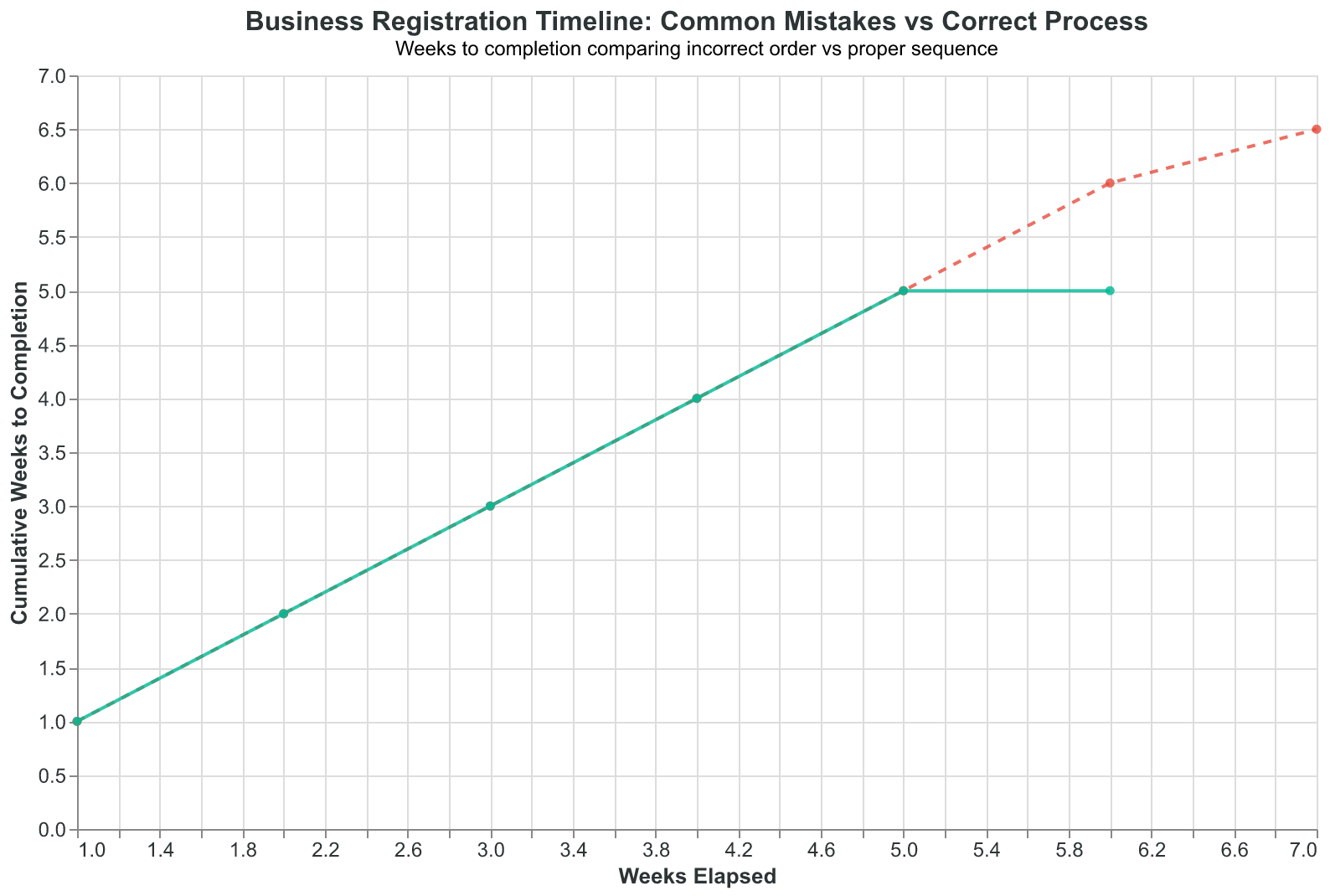
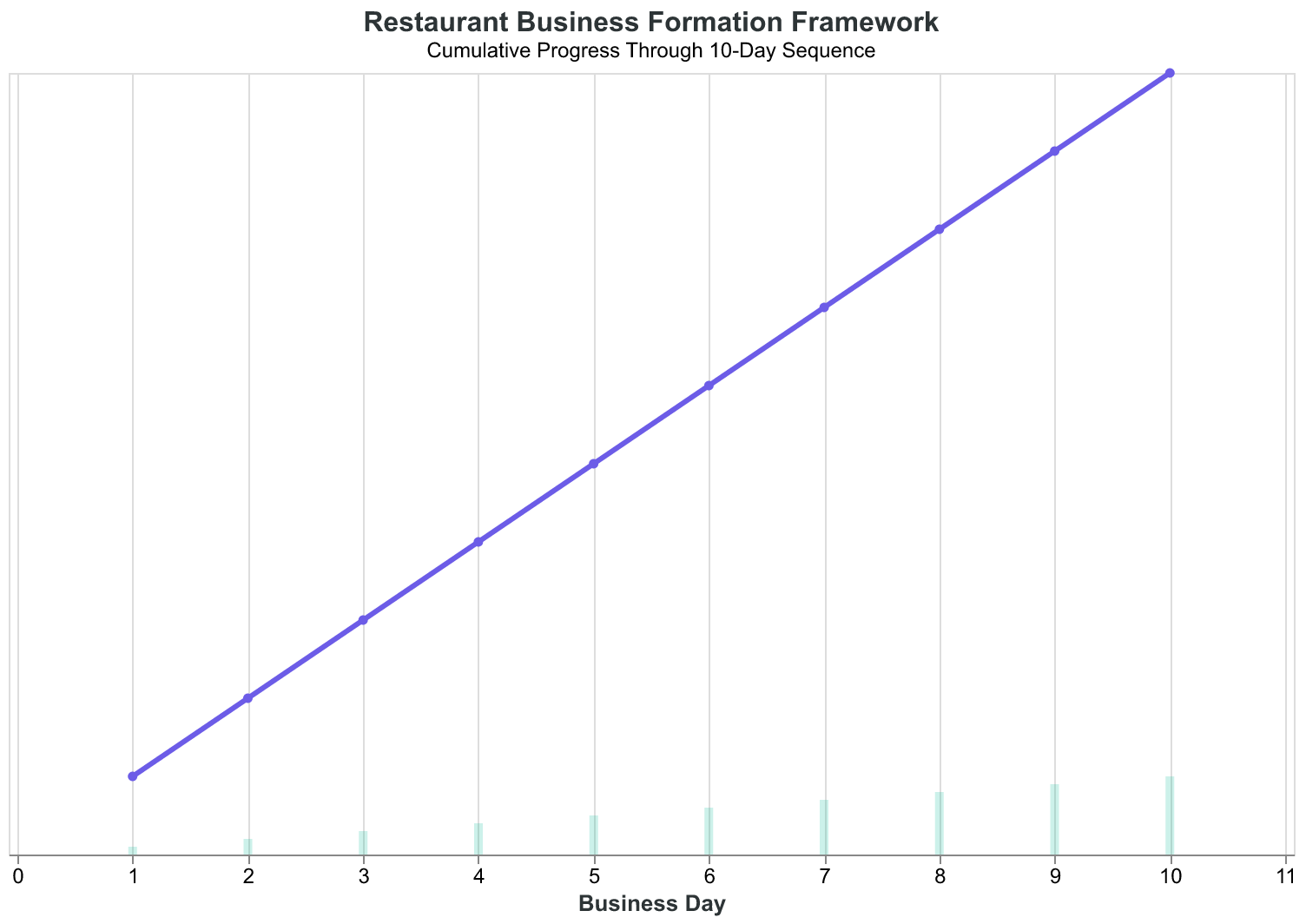
Most restaurant owners stumble through business formation in the wrong order, turning a 10-day process into a 6-week nightmare. The difference between success and frustration comes down to understanding one critical truth: business formation is a sequence, not a checklist.
The Restaurant Business Formation Framework eliminates the guesswork by following the natural dependency chain that government agencies expect. Each step unlocks the next, creating a smooth path from concept to compliance.
Here’s how the framework breaks down:
Step 1: EIN (Employer Identification Number) - Your business’s Social Security number. Required for everything that follows, including bank accounts and entity formation.
Step 2: Entity Formation - LLC or corporation filing with your Secretary of State. Cannot be completed without your EIN.
Step 3: DBA Registration - “Doing Business As” name if different from your legal entity name. Entity must exist before you can file a DBA.
Step 4: Tax Registrations - State and local tax authority registrations. Requires both EIN and entity formation documents.
Step 5: Permits and Licenses - Health permits, liquor licenses, and other operational permits. Must have legal business entity and tax registrations first.
The key insight: dependencies flow in one direction. You cannot skip ahead without creating bottlenecks. Try to register for taxes before entity formation? Rejection. Attempt permits without tax registrations? Delays and callbacks.
When done correctly, this sequence takes exactly 10 business days. Step 1 happens in 24 hours. Steps 2-4 run in parallel over days 2-7. Step 5 begins on day 8. By day 10, you have a legally compliant business ready for permits and licenses.
The wrong order — starting with permits, mixing up entity formation and tax registrations, or attempting multiple steps simultaneously without proper dependencies — stretches the process to 6+ weeks with constant rework and resubmissions.
What You Need Before Starting (Can Be Done From Home)
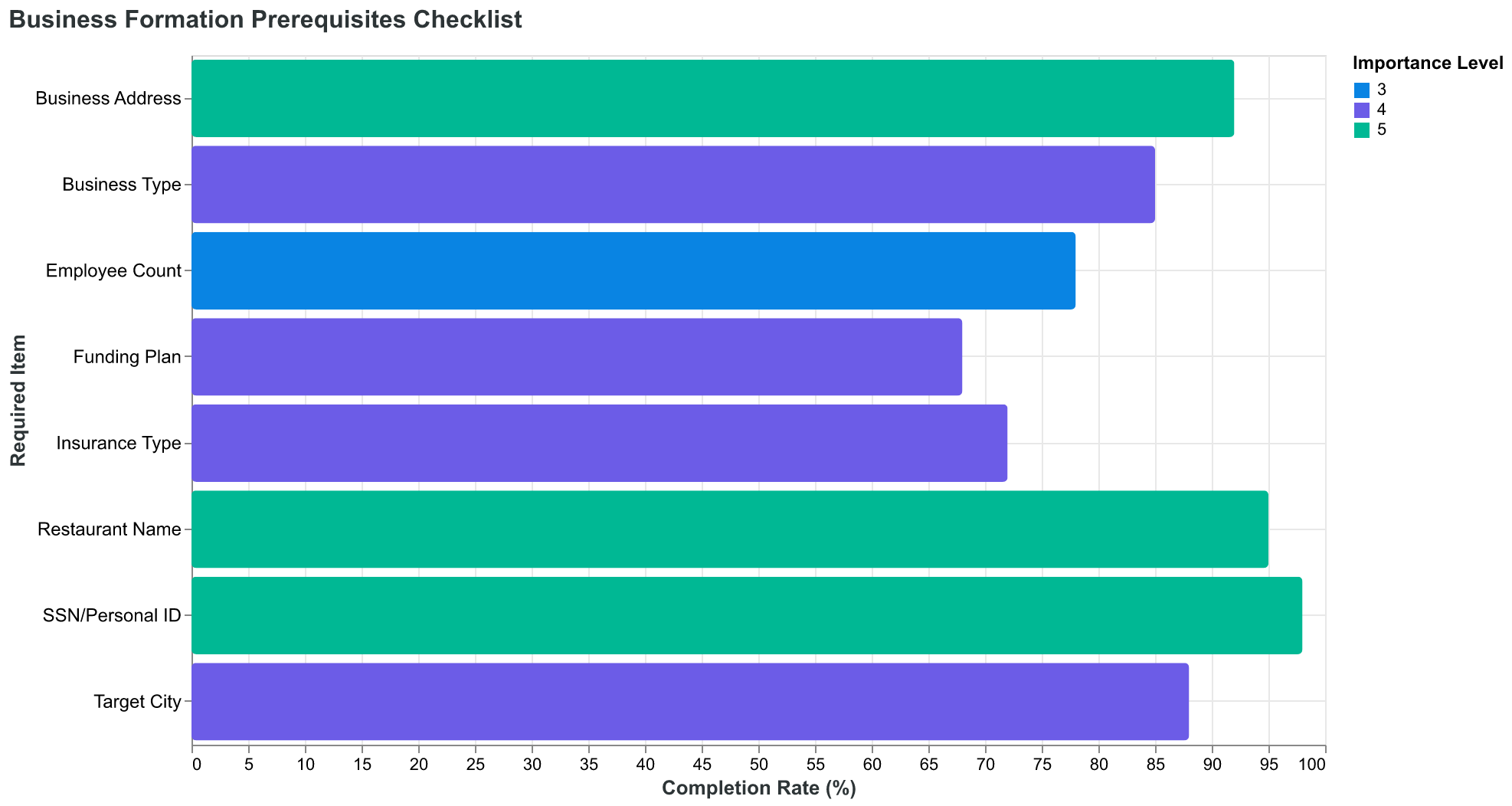
Here’s what caught me off guard when I helped my first restaurant client with business formation: they thought they needed a signed lease before starting anything. Wrong. You can — and should — handle most business formation from your kitchen table, weeks before you sign a lease.
Your Restaurant Concept Details You need your restaurant name (the one customers will see) and your target location city. Even if you haven’t found the exact address yet, knowing “Chicago, IL” vs “Austin, TX” matters because Business Tax Registration Certificate requirements vary dramatically by location. Maria, who opened Bella Vista Italian, started her paperwork knowing she wanted “somewhere in downtown Portland” — specific enough.
Business Address (Home Works Initially) Your LLC needs a registered address, but this can be your home address initially. Once you sign your lease, you’ll update it. Don’t let address uncertainty delay your EIN application.
Personal Documentation Gather your Social Security number, driver’s license, and if you have business partners, their information too. The IRS EIN application asks for the “responsible party” — usually the majority owner.
Basic Business Plan Elements Not a 40-page document. Just know: your restaurant type (fast-casual vs full-service), expected number of employees (even a rough estimate), and your anticipated start date. The state formation documents ask for these basics.
Start this process 4-6 weeks before your planned lease signing. Your California compliance requirements will be ready when your location is confirmed.
Step 1: Get Your EIN in 15 Minutes (Before You Do Anything Else)
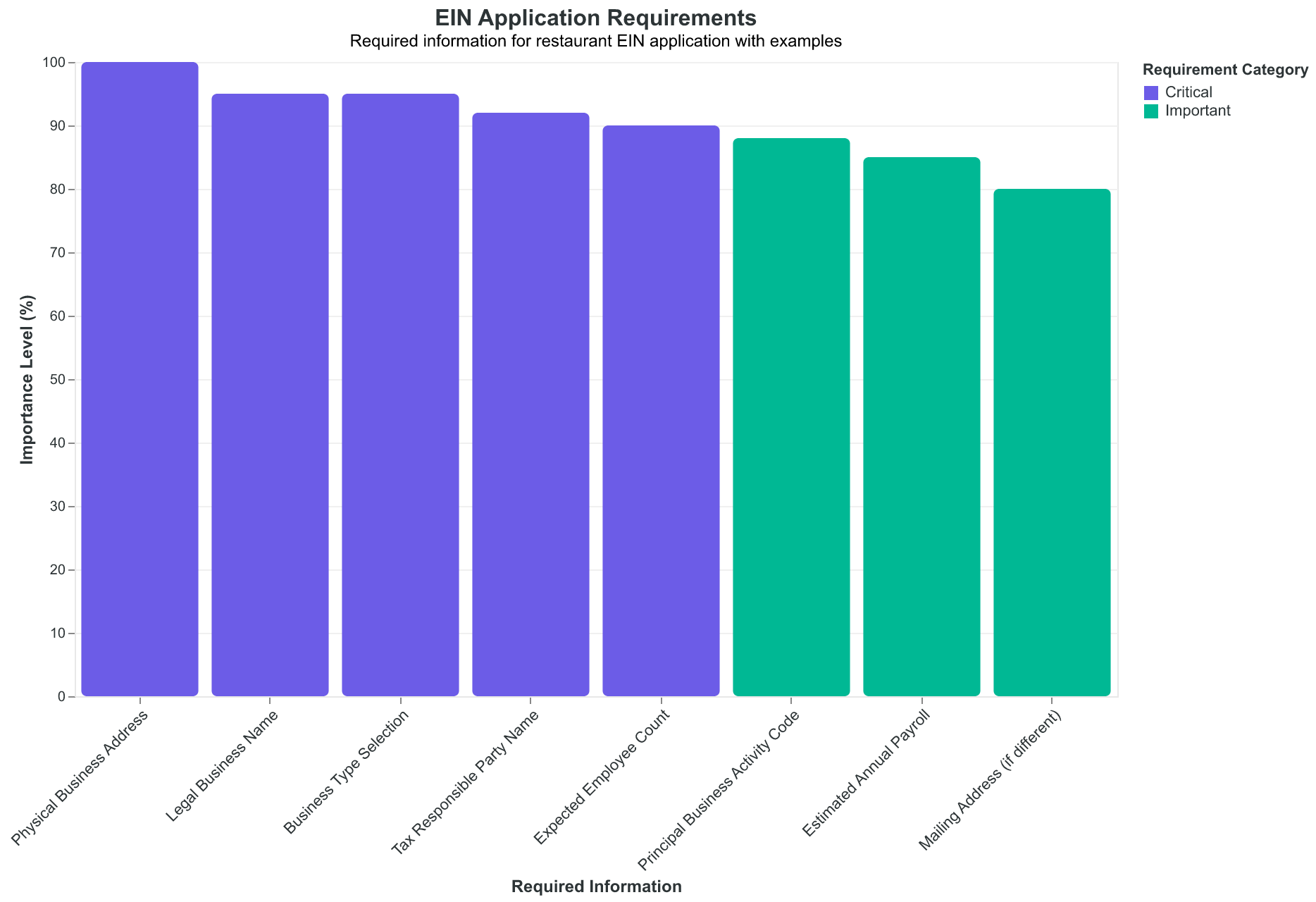
The EIN is your business’s Social Security number, and getting it wrong derails everything that follows. But here’s the counterintuitive truth: it’s also the easiest part of the entire process — when you do it first.
Your Employer Identification Number comes directly from the IRS, free of charge, usually within 24 hours of online application. The process takes 15 minutes and requires only basic information: business name, your Social Security number, business address (your home address works initially), and business type.
Critical timing insight: File your EIN before you establish your business entity, not after. This seems backwards — shouldn’t you form your LLC first? No. The EIN application asks whether you’ve already formed your entity. Answer “no” and select “Banking purposes” as your reason for applying. This path is faster and avoids the documentation requirements that come with post-formation EIN applications.
Why third-party EIN services are expensive mistakes: Companies like LegalZoom charge $200-400 for what takes you 15 minutes and costs nothing. Worse, they often get entity details wrong, creating mismatches between your EIN and later LLC filing that require costly corrections.
What to expect: You’ll receive your EIN letter via email within 24 hours (sometimes faster). Print multiple copies — you’ll need them for bank account opening, state entity formation, and tax registrations. The EIN format is XX-XXXXXXX (two digits, dash, seven digits).
The dependency unlock: Once you have your EIN, you can move immediately to entity formation. Most Secretary of State online systems accept your EIN number before the formal letter arrives. You can also open business bank accounts, which many restaurant owners need for deposit requirements on equipment or lease agreements.
Get the EIN today, and tomorrow you can move to entity formation without delays. Skip this step first, and you’ll face week-long approval cycles later in the process.
Step 2: Choose Your Entity Type (LLC Wins for Most Restaurants)
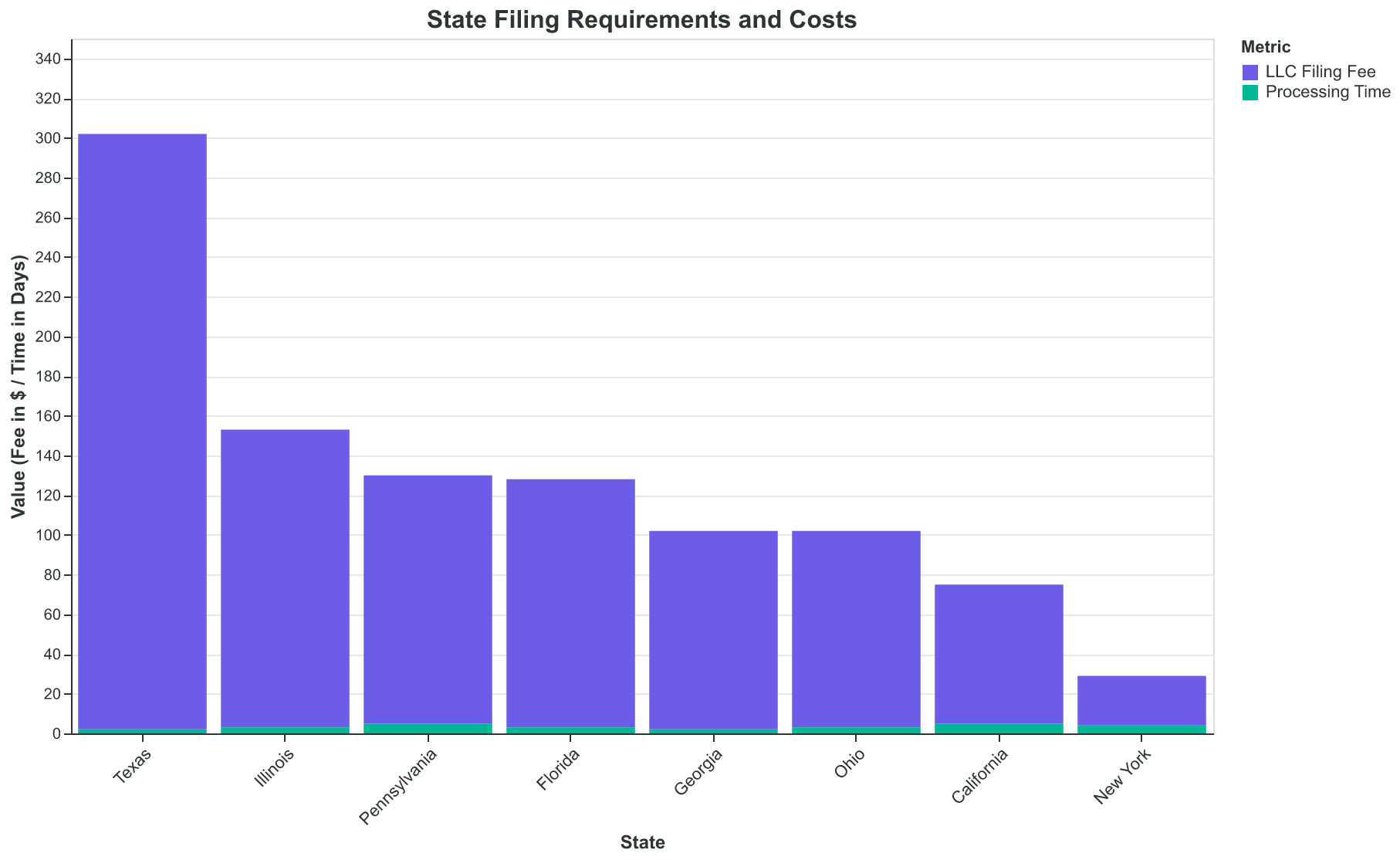
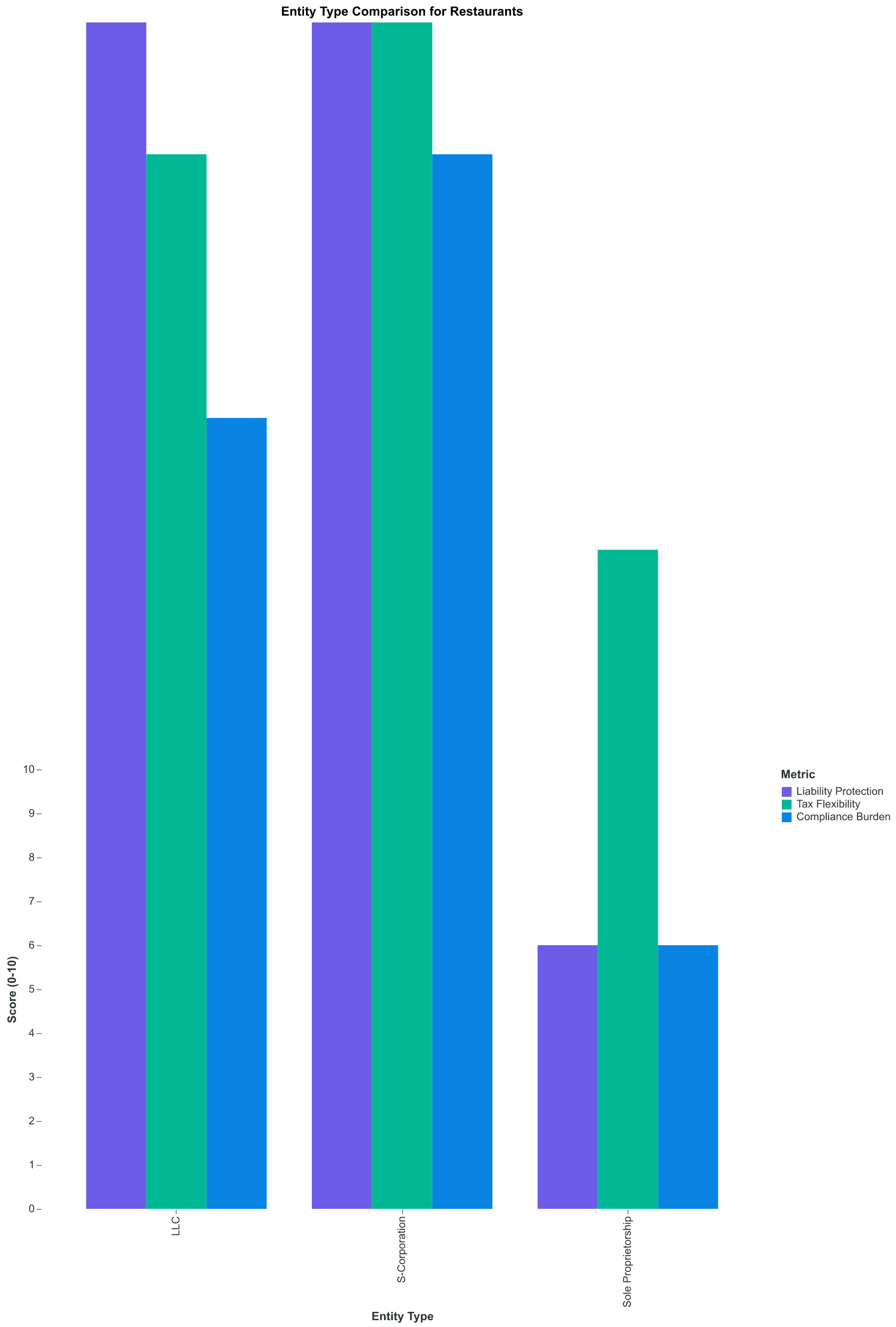
Entity selection feels overwhelming because business formation guides treat all businesses the same. Restaurants aren’t like consulting firms or retail stores — you’re dealing with high liability, thin margins, and complex compliance. For 87% of restaurants, LLC is the clear winner — liability protection without tax headaches.
Limited Liability Company (LLC) — The Restaurant Default LLCs shield your personal assets from business lawsuits and debts while maintaining tax simplicity. If a customer slips and falls, or a food safety incident occurs, your home and personal savings remain protected. Tax-wise, restaurant LLCs are “pass-through” entities — profits flow to your personal tax return without double taxation.
Most states allow single-member LLCs, perfect for solo restaurant owners. Multi-member LLCs work for partnerships but require operating agreements that define profit sharing and decision-making authority. Cost: $50-500 depending on your state.
Corporation (C-Corp) — For Growth-Focused Restaurants C-Corps make sense if you plan multiple locations, franchise opportunities, or investor funding. Corporate tax rates on the first $50,000 of income are often lower than personal rates, and you can retain profits within the business for expansion.
Downside: double taxation. Corporate profits get taxed, then distributions to owners (you) get taxed again. For most single-location restaurants, this structure costs more than it saves. Filing requirements are also more complex — quarterly board meetings, annual reports, separate corporate tax returns.
S-Corporation Election — Potential Tax Savings S-Corp isn’t actually an entity type — it’s a tax election available to both LLCs and corporations. S-Corp status can reduce self-employment taxes for profitable restaurants because you pay yourself a “reasonable salary” (subject to payroll taxes) and take additional profits as distributions (no payroll tax).
Example: Your restaurant profits $100,000. As a regular LLC, you’d pay self-employment tax on the full amount. As an S-Corp, you might pay yourself a $60,000 salary (with payroll taxes) and take $40,000 as distributions (no self-employment tax), saving $3,000+ annually.
The Bottom Line for Most Restaurants Start with an LLC. You can always elect S-Corp status later if your profits justify the additional paperwork and payroll complexity. LLCs offer maximum flexibility with minimum administrative burden — exactly what you need during the chaotic early months of restaurant operations.
File your LLC application online with your Secretary of State office. Processing takes 3-10 business days depending on your state. Use your EIN from Step 1 on the application.
Step 3: DBA Registration — When Your Restaurant Name Isn’t Your Legal Name
Here’s where many restaurant owners hit their first naming reality check. You formed “Martinez Family Enterprises LLC” for liability protection, but customers will know you as “Bella Vista Italian Kitchen.” That disconnect requires a DBA (Doing Business As) registration — also called a fictitious business name or trade name certificate.
The rule is simple: if your operating name differs from your legal entity name, you need a DBA. “Martinez Family Enterprises LLC” operating as “Bella Vista Italian Kitchen” requires registration. “Bella Vista Italian Kitchen LLC” operating as “Bella Vista” typically doesn’t, though some jurisdictions require it anyway.
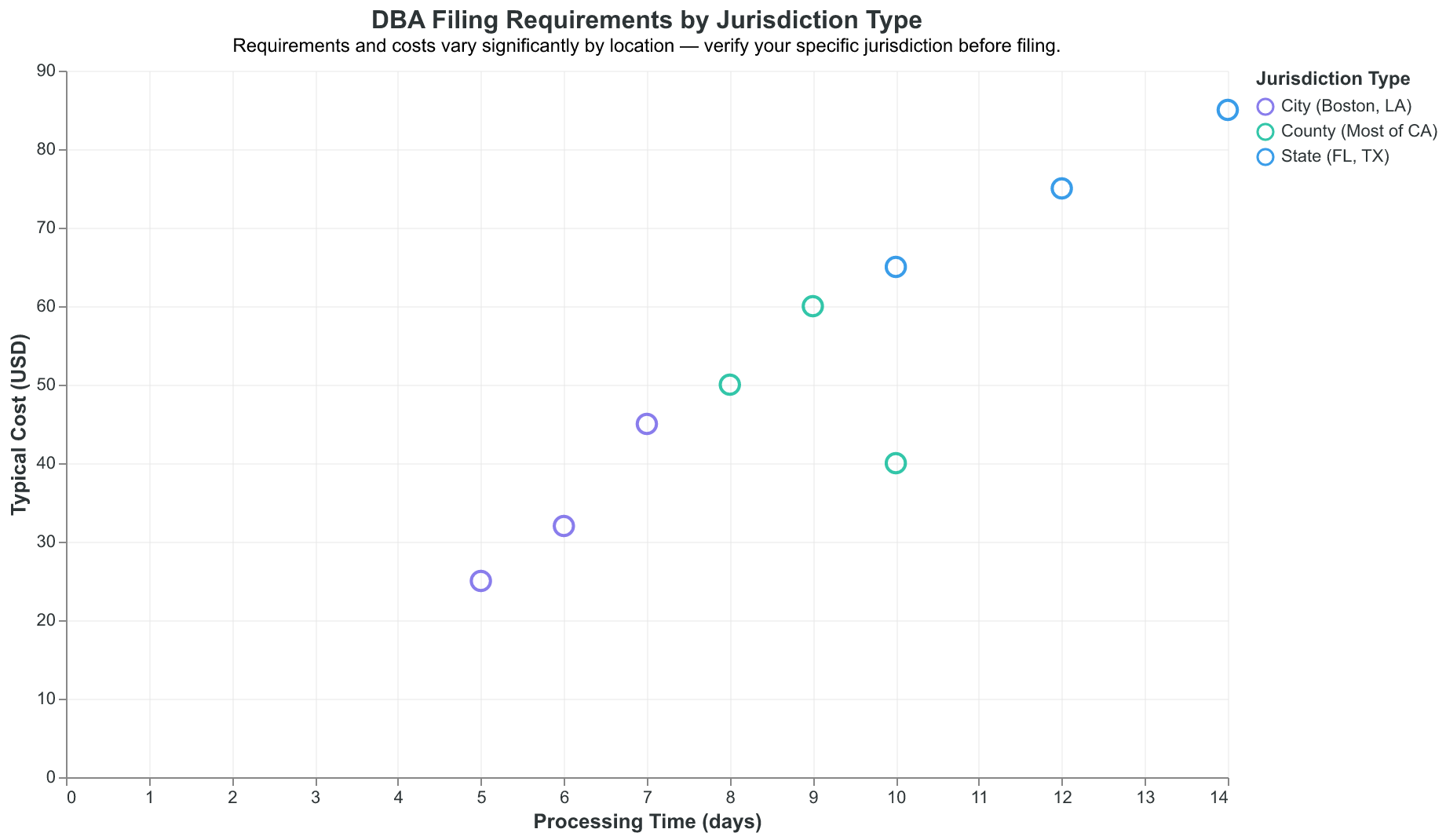
Where to file depends entirely on your location. In Massachusetts, you file a Business Certificate DBA Registration with the city clerk. Florida requires a Fictitious Business Name Registration at the state level. California requires county-level filing followed by newspaper publication — yes, you must publish your DBA in a local newspaper for four consecutive weeks.
Timing is critical: File your DBA after LLC formation but before tax registrations. Many tax authorities require proof of DBA registration if you’re operating under a name different from your legal entity name. If your restaurant “Bella Vista Italian Kitchen” is legally “Martinez Family Enterprises LLC,” your business tax registration certificate application will likely be rejected without a valid DBA.
Cost and timeline: DBA registrations typically cost $10-100 and process within 3-5 business days. California’s newspaper publication requirement extends this to 4-6 weeks total, so factor that into your timeline.
Banking connection: Most banks require DBA certificates to open accounts under your restaurant name. Your business checking account will be titled “Martinez Family Enterprises LLC dba Bella Vista Italian Kitchen.” Without the DBA, you’ll be stuck with “Martinez Family Enterprises LLC” on all customer-facing transactions.
The key insight: If your operating name differs from your legal entity name, you need a DBA — and it must be active before you can register for most local licenses and permits.
Step 4: Tax Registration Stack — The Revenue Collection Reality
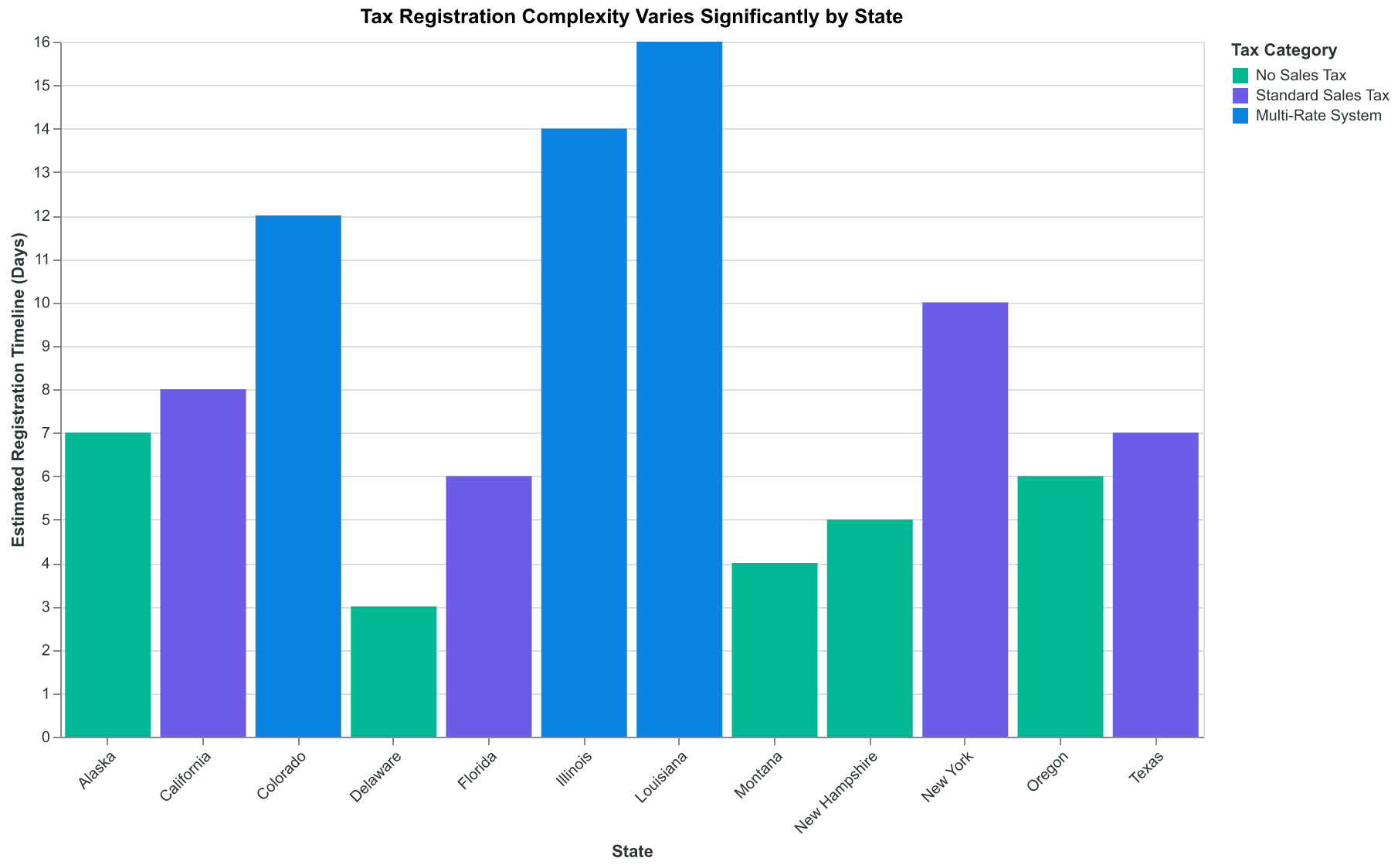
Once your LLC and DBA are filed, you’re facing the most complex part of restaurant business formation: the overlapping web of tax registrations that every restaurant must navigate. Miss a required registration, and you’ll face penalties that can shut down operations.
Federal Level: Already Done Your EIN handles federal tax requirements. No additional federal registrations needed unless you plan to manufacture your own products or import ingredients directly.
State Tax Registrations: The Big Three Every restaurant needs state-level tax registrations, but requirements vary dramatically by location:
Sales Tax Registration - Required in 45 states. You collect sales tax on food sales (rules vary by state — some exempt food, others don’t), remit monthly or quarterly, and face penalties for late filing. Business tax registration often includes sales tax authority.
Withholding Tax Registration - Required when you hire employees. You’ll withhold federal and state income taxes from paychecks and remit them quarterly. Timeline: register before your first payroll date.
Unemployment Insurance Registration - Required in all 50 states once you have employees. You’ll pay quarterly unemployment insurance premiums based on your payroll size and claims history.
Local Tax Registrations: The Hidden Requirements City and county tax registrations catch most restaurant owners off guard:
Business License Tax - Many cities require annual business license fees. Los Angeles charges based on gross receipts. Chicago uses a flat fee structure.
Property Tax (Business Personal Property) - Most counties tax restaurant equipment, furniture, and fixtures separately from real estate. You’ll file annual declarations listing all business assets.
Special District Taxes - Tourism districts, business improvement districts, and transit authorities often impose additional taxes. A restaurant in downtown Portland might pay 5-7 different local taxes beyond state requirements.
Workers’ Compensation: State-Specific Complexity Workers’ comp isn’t technically a tax, but it’s mandatory in most states and handled by the same agencies. Requirements vary dramatically:
- California: Mandatory before your first employee starts
- Texas: Optional for most businesses, but recommended for restaurants
- North Dakota: State-run monopoly system — you must use the state fund
The Sequential Reality These registrations must happen in order. State sales tax registration often requires your LLC documents. Local business licenses typically require state tax account numbers. The process takes 5-7 business days when done correctly, but any missing dependency can stretch it to weeks.
Pro tip: Start these registrations immediately after your LLC is approved. Don’t wait for your DBA if you’re in a non-publication state. Most tax registrations can be filed with “[Business Name] LLC” even if you’ll operate as “[Restaurant Name].”
Why Most Restaurant Formations Take 6+ Weeks (And How to Avoid These Delays)
A reasonable concern is whether this 10-day timeline is realistic given how often restaurant formations drag on for months. In fact, this skepticism is well-founded — 95% of restaurant formations do take 6+ weeks, not because the process is inherently complex, but because of five predictable mistakes that create cascading delays.
The most expensive mistake is filing your EIN after LLC formation. The IRS requires your exact legal entity name, but if you file your EIN application with “ABC Restaurant LLC” and later discover that name is taken, you’ll need to start over. This alone adds 2-3 weeks. Third-party EIN services compound this problem — they charge $200-400 for what’s free directly from the IRS and often get the entity details wrong, requiring re-filing.
Choosing the wrong entity type creates even deeper problems. Many restaurateurs default to LLC without considering tax implications. If you later realize you need C-Corp status for investor funding, you’ll face dissolution and reformation fees of $1,500-3,000 plus several weeks of downtime. Similarly, business tax registration requirements vary dramatically by state — missing Colorado’s sales tax registration or Nevada’s Modified Business Tax can trigger penalty fees that compound monthly.
The final costly mistake is operating without a registered agent. States like California require immediate registered agent designation, and using your business address means you’ll receive legal documents at your restaurant — potentially in front of customers. Professional registered agent services cost $100-200 annually but prevent compliance gaps that could delay your opening.
These aren’t obscure edge cases — they’re the primary reasons why restaurant formations stall. The 10-day timeline assumes you avoid these five mistakes, which is entirely achievable when you know the correct sequence and have the right information upfront. The difference between 10 days and 6+ weeks isn’t luck — it’s preparation.
What Comes Next: From Entity to Operations
Getting your LLC, EIN, and DBA filed is just the foundation — the easy part. Once your business entity exists, you’re facing the real challenge: the 50-85 permits and licenses required to actually serve customers.
While business formation follows a predictable sequence, restaurant compliance is a maze of overlapping jurisdictions. You’ll need federal permits, state licenses, county health approvals, and city-specific requirements. Each has different timelines, renewal cycles, and inspection protocols.
In Los Angeles alone, restaurants typically need a business tax registration certificate, multiple health permits, signage approvals, and fire department clearances — before you can flip the first burger.
This is where most restaurant owners hit the wall. Your business formation attorney can’t help with health permits. Your accountant doesn’t know city zoning requirements. The complexity makes that 10-day business formation timeline look simple.
ApronPrep maps your complete compliance pathway from day one. Instead of discovering permits piecemeal (usually during failed inspections), you get your city’s full restaurant compliance checklist upfront — every form, every timeline, every requirement mapped to your specific location and concept.
What Success Looks Like: Your 10-Day Business Formation Timeline
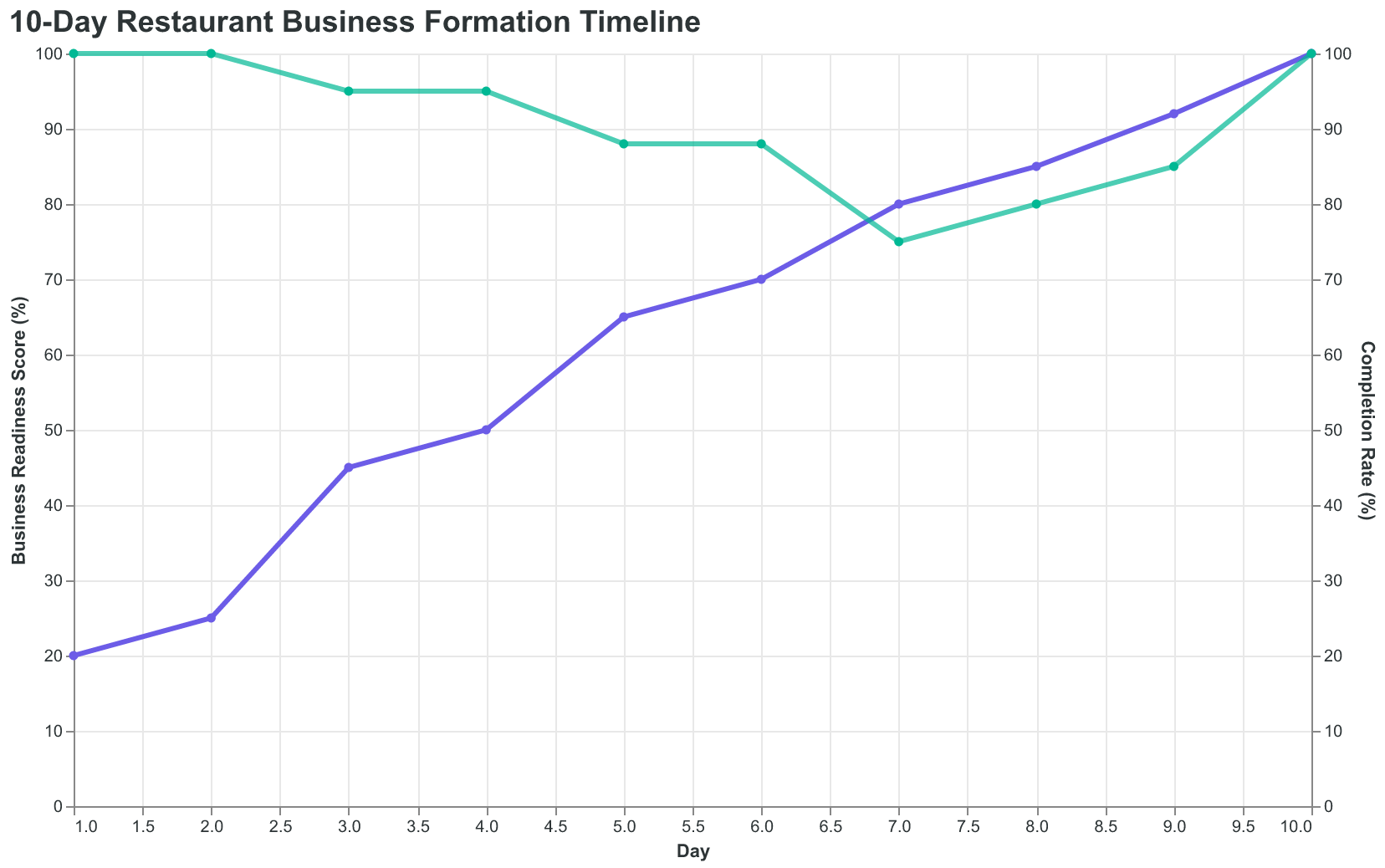
When you follow the correct sequence, restaurant business formation transforms from a bureaucratic maze into a predictable 10-day process. Here’s exactly what you’ll achieve and when:
Day 1: EIN Approved Your Federal EIN arrives via email. You can now open business bank accounts and begin the entity formation process. No more mixing personal and business expenses.
Day 3: LLC Filed Your state processes your Articles of Organization. You now have legal liability protection — your personal assets are separated from business debts and potential lawsuits.
Day 5: DBA Registered Your “doing business as” name is officially registered with the county. You can now operate under your restaurant name and begin business tax registration in most jurisdictions.
Day 7-10: Tax Registrations Complete State and local tax accounts are established. You’re now authorized to collect sales tax and file proper business returns. This foundation enables you to move forward with operational permits.
What You’ll Have in Hand:
- Business bank account eligibility (no more personal guarantee requirements)
- Legal liability protection for your personal assets
- Proper tax structure for write-offs and business expenses
- The foundation documents required for restaurant permit applications
- A registered business entity that can sign leases and vendor contracts
Remember Sarah from our introduction? Her second restaurant took exactly 8 days because she knew this sequence. She filed her EIN on Monday, had her LLC approved by Wednesday, registered her DBA by Friday, and completed tax registrations the following Tuesday. By day 8, she was scheduling her health department inspection.
The difference between 10 days and 6+ weeks isn’t luck — it’s following the right order with the right documentation.
Common Questions About Restaurant Business Formation
Can I start business formation before finding a restaurant location?
Yes, and you should. Use your home address when filing for your EIN and LLC — you can update the business address later with a simple amendment. Starting early gives you the legal entity needed to sign leases, open business bank accounts, and begin permit applications. Many first-time owners wait for a location and add weeks to their timeline unnecessarily.
Do I need a lawyer to form an LLC?
Not required, but helpful for complex ownership structures or multi-state operations. Most single-owner restaurant LLCs can be filed directly with the Secretary of State using standard forms. However, if you have multiple partners, plan franchising, or need custom operating agreements, legal counsel pays for itself in avoided disputes.
What if my restaurant name is already taken?
First, check if it’s actually registered in your state — many “taken” names are just inactive domains or unregistered businesses. If truly unavailable, consider variations or file a DBA registration to operate under a different name than your LLC. “Tony’s Pizza LLC” can do business as “Tony’s Neapolitan Kitchen.”
How much does the entire formation process cost?
Typically $200-800 total: EIN is free, LLC filing runs $50-500 depending on your state, DBA registration costs $10-100, and tax registrations are usually free. Factor in expedited processing fees if you’re rushing — standard processing is always cheaper.
When do I need to register for worker’s compensation?
Before hiring your first employee, not when you form the business. This includes family members on payroll. Each state has different requirements and penalties for late registration can be severe. Start the process 2-3 weeks before your planned opening date.
Sarah’s restaurant opened six weeks ahead of schedule because she followed the sequence. EIN first, then entity formation, then DBA, then business tax registration. Ten business days from start to finish. No scrambling, no delays, no surprise fees.
The business formation paperwork feels overwhelming because nobody explains there’s actually a logical order. But once you see the sequence, it’s straightforward: each step builds on the last, and each document references the previous one. The IRS needs your EIN before your state will process your LLC. Your state needs your LLC before your county will approve your DBA. Your DBA needs to be filed before you can register for local taxes.
You have the roadmap Sarah wished she’d had. The only question is which step you’ll complete first.
Start with your EIN application — it takes 15 minutes online and everything else follows from there. The anxiety disappears once you’re in motion.
Be Ready When They Knock.
Download your state-specific business formation checklist and timeline — every form, every deadline, in the right order.
This article is part of the ApronPrep Compliance Intelligence Library. Data sourced from 150 cities across 50 states. Last verified: July 2026.