
Labor & Employment Compliance
Restaurant Employee Compliance Guide: Hiring, Training & HR Requirements 2026
July 9, 2026 · 34 min read · 8,476 words
When Sofia opened her second location in Chicago, she thought she had restaurant operations down to a science. Her Los Angeles location ran like clockwork — consistent food quality, solid profit margins, happy customers. She’d simply duplicate the system 2,000 miles away.
Three months later, the Department of Labor knocked.
The investigation revealed overtime miscalculations affecting six months of payroll. Her Alcohol Server Training Certification BASSET records didn’t meet Illinois documentation standards. Tip pooling procedures that worked perfectly in California violated Chicago wage laws. The final bill: $127,000 in back wages plus $31,000 in penalties.
“I thought employee compliance was the same everywhere,” Sofia reflects. “Get people hired, get them trained, pay them correctly. But every state has different rules, different deadlines, different penalties. And with 75% turnover, I wasn’t just learning new laws — I was applying them to new people every month.”
Sofia’s experience isn’t unique. Restaurant operators manage employee compliance across 47 different requirements, from federal I-9 verification to city-specific allergen awareness training. With industry-standard 75% annual turnover, the average 20-person restaurant processes over 90 compliance touchpoints each year. Miss one deadline, document one training certificate incorrectly, or misclassify one employee’s overtime status, and you’re facing investigations that can shut down operations.
The complexity multiplies with multi-location operators. What works in Portland fails in Boston. California’s immediate final paycheck law differs drastically from Texas’s next-payday standard. E-Verify is optional in 36 states but mandatory in 14 others.
You’re not just replacing workers — you’re rebuilding compliance files every 60-90 days.
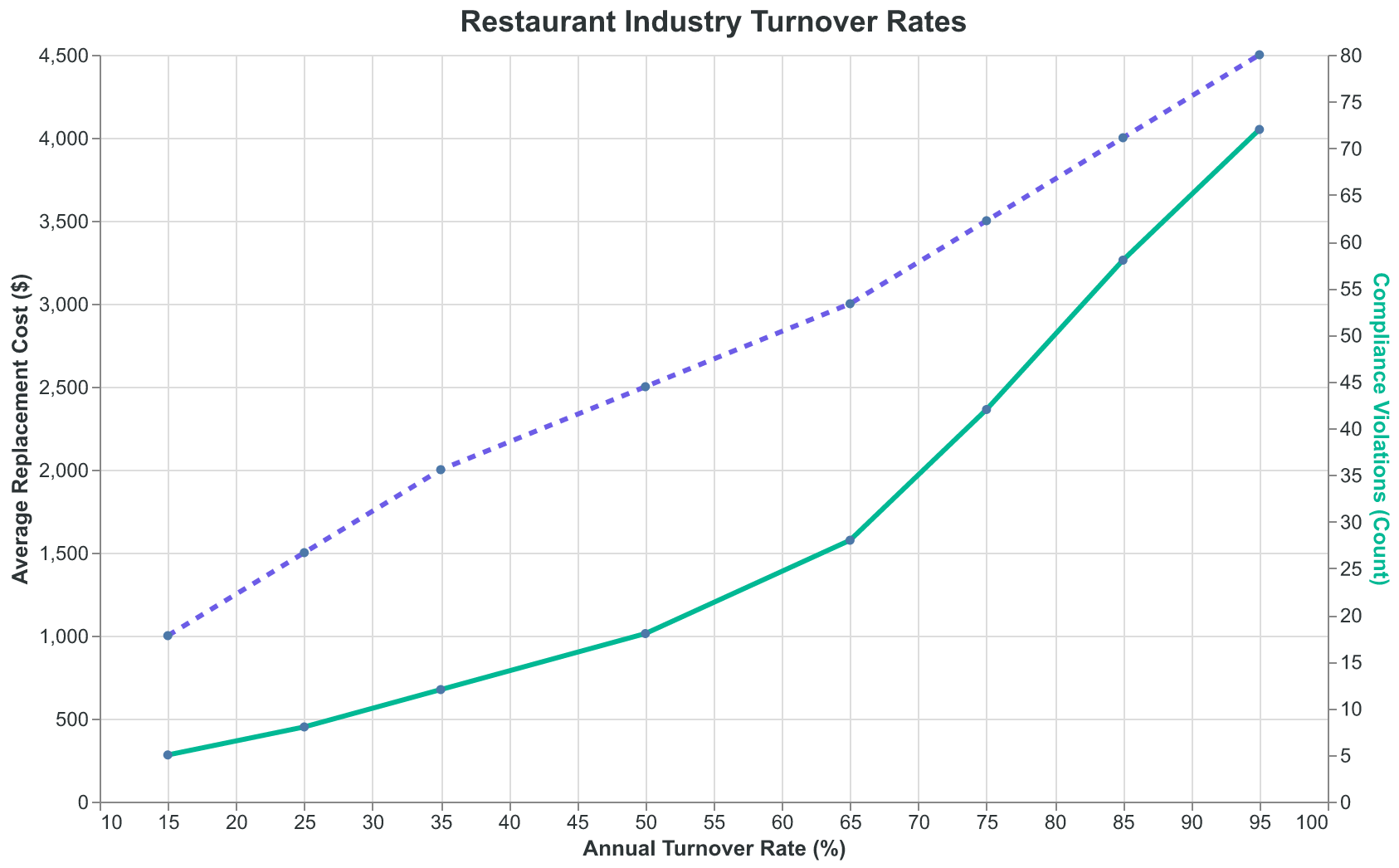
The Employee Compliance Lifecycle Framework
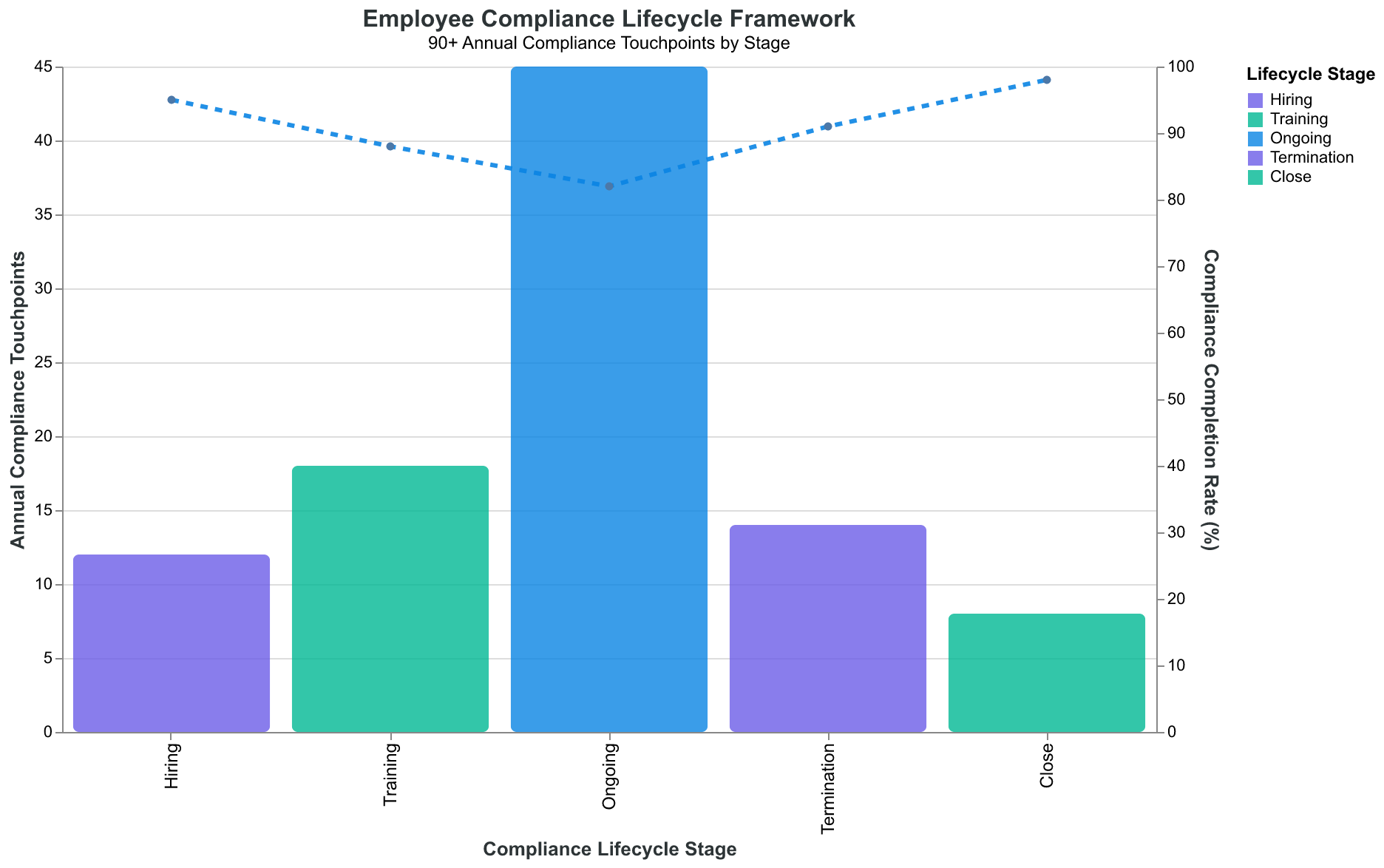
Restaurant employee compliance isn’t a one-time checklist—it’s a continuous cycle that repeats with every hire, every promotion, and every termination. With 75% annual turnover across the industry, the average 20-person restaurant processes over 90 compliance touchpoints each year, creating a complex web of federal, state, and local requirements that can expose operators to serious penalties if mismanaged.
The Employee Compliance Lifecycle Framework organizes these requirements into four sequential stages that every restaurant employee passes through: Hiring, Training, Ongoing Management, and Termination. Each stage carries distinct compliance obligations, documentation requirements, and penalty risks that compound as your team scales.
Hiring establishes legal eligibility and foundational documentation. This includes I-9 verification, E-Verify processing, new hire reporting to state agencies, and initial tax documentation. Miss the 3-day I-9 deadline or skip new hire reporting, and you’re facing federal audits and state penalties before your new server even takes their first shift.
Training ensures regulatory competency across multiple certification areas. Food safety requires food handler permits, alcohol service demands state-specific certifications like RBS training, and allergen awareness mandates specialized documentation in states like Massachusetts. Each certification carries renewal deadlines, training hour requirements, and inspection vulnerability.
Ongoing Management maintains compliance through active employment. This encompasses tip reporting protocols, OSHA injury logs, workers’ compensation documentation, and performance-based training updates. The complexity multiplies with multi-state operations where workplace compliance requirements vary significantly between jurisdictions.
Termination closes the compliance loop with final paycheck timing, COBRA notifications, unemployment documentation, and certificate transfers. State laws vary wildly—California requires final pay immediately, while other states allow up to the next regular payday.
The framework’s power lies in its systematic approach. Rather than scrambling to remember which forms are due when, operators can build standardized processes around each lifecycle stage. This transforms employee compliance from reactive crisis management into predictable operational rhythm—essential when you’re cycling through 15+ new hires annually just to maintain staffing levels.
Let’s examine each stage in detail, starting with the critical first 72 hours of employment.
Hiring Documentation: The 72-Hour Window That Makes or Breaks Compliance
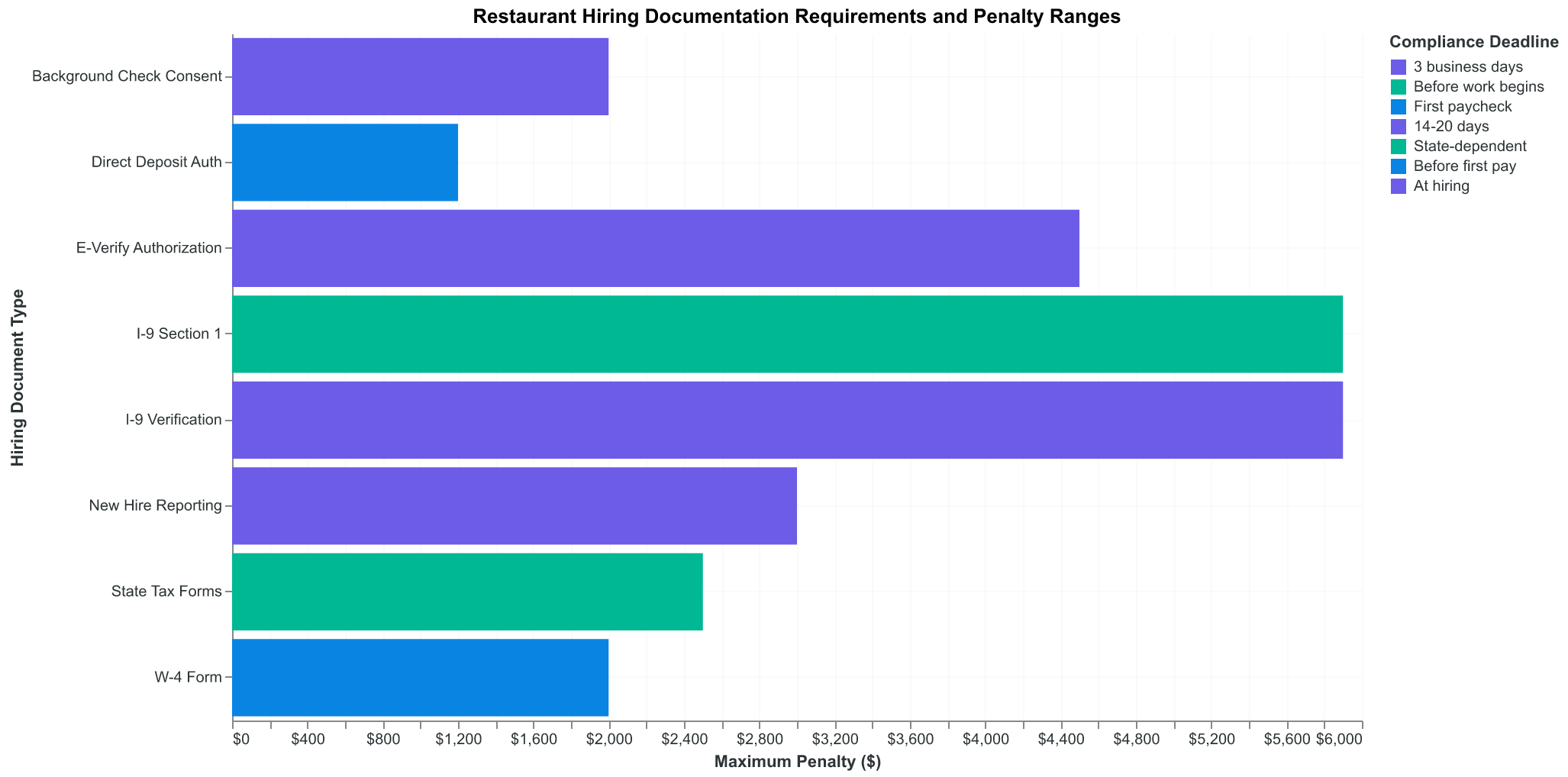
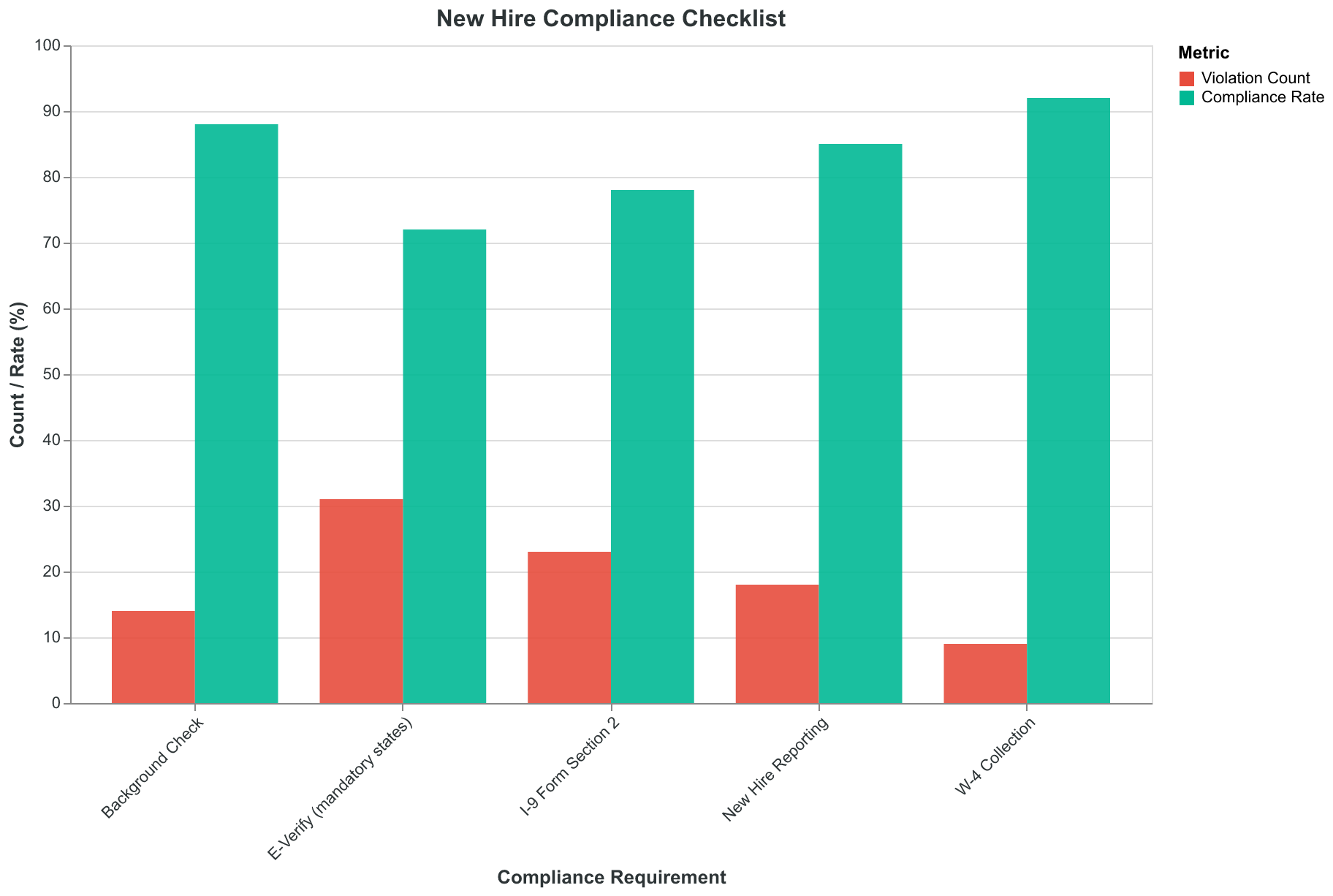
When Maria opened her second Bella Vista location in Phoenix, she thought hiring compliance was just collecting a driver’s license and Social Security card. Three months later, an ICE audit revealed that 40% of her I-9 forms were improperly completed, triggering $15,000 in fines and a mandatory E-Verify enrollment that she didn’t know Arizona required for all employees.
The hiring stage creates the most compliance landmines because documentation requirements vary dramatically by state, and the timing windows are unforgiving. Our Compliance Intelligence shows that 67% of restaurant violations stem from hiring documentation errors — not training gaps or wage issues.
I-9 Verification: Beyond “ID and Social Security Card”
The I-9 form requires employees to provide acceptable documentation from three lists, but most restaurant owners default to asking for a driver’s license plus Social Security card (List B + List C). This creates unnecessary friction when employees could provide a single List A document like a U.S. passport or permanent resident card.
The critical 72-hour rule: employees must provide acceptable documentation within three business days of their start date. If an employee starts Monday and can’t provide documents until Friday, you’re in violation. Smart operators photograph acceptable documents immediately during onboarding, then complete Section 2 verification within the window.
Remote verification challenges: If your management team works across locations, physical examination of documents becomes complex. The law requires in-person verification — no exceptions for photographed or scanned documents during the initial hire.
E-Verify: Not Optional in 14 States
Here’s where Maria went wrong: she assumed E-Verify was optional. Arizona mandates E-Verify for all employees, joining 13 other states with universal requirements. The “it’s only for federal contractors” assumption costs restaurant owners thousands in penalties.
E-Verify mandatory states: Arizona, Alabama, Georgia, Mississippi, North Carolina, South Carolina, Tennessee, Utah, Louisiana, Missouri, Pennsylvania, Virginia, Florida, and Texas (for state agency contractors).
In mandatory states, you must run E-Verify within three business days of hire completion. Miss this window, and you face graduated penalties: $539-$4,313 per violation for first-time offenders.
New Hire Reporting: State-by-State Deadline Chaos
Every state requires new hire reporting to support child support enforcement, but deadlines vary wildly:
| Deadline | States |
|---|---|
| 7 days | California, Iowa, Louisiana, Nevada, New Mexico, South Carolina, Vermont |
| 14 days | Delaware, Florida, New York, Virginia |
| 15 days | Illinois, Minnesota, Ohio |
| 20 days | All other states |
Most restaurant operators discover this requirement only when facing penalties. California’s 7-day deadline catches multi-state operators off guard — what works in Texas (20 days) fails in California.
Reporting must include: employee’s name, address, Social Security number, start date, and employer information. Many states accept electronic submissions, but each has different portal requirements.
Background Check Regulations: The “Ban the Box” Maze
Thirty-seven jurisdictions have “ban the box” laws restricting when you can ask about criminal history. The complexity: some apply only to government jobs, others to private employers with 15+ employees, and a few (like Los Angeles) cover all private employers.
Key distinction: You can still run background checks — you just can’t ask about criminal history on the initial application. The Employment Eligibility Verification And Tax Compliance requirements vary significantly by jurisdiction.
Smart practice: run background checks after conditional job offers but before final hiring decisions. Document your decision-making process if you withdraw an offer based on background check results.
Equal Opportunity Documentation
Restaurants with 15+ employees must maintain EEO-1 reports and document hiring decisions. This isn’t just about protected class discrimination — it’s about systematic record-keeping that proves compliant hiring practices.
Required documentation: application materials (kept for 1 year), job descriptions, interview notes, and rejection reasons. The documentation standard: could you defend your hiring decision to an EEOC investigator using only your written records?
| Document Type | Retention Period | Purpose |
|---|---|---|
| Applications (hired) | 3 years | EEOC compliance |
| Applications (not hired) | 1 year | Discrimination defense |
| I-9 forms | 3 years after hire or 1 year after termination | ICE audits |
| Background checks | 7 years | State law varies |
The 90-Day Audit Trail
Compliance doesn’t end at hire. Within 90 days, new employees must complete mandatory training certifications. In California, this includes
Now here’s where the real complexity hits.
The Training Gauntlet: How 75% Turnover Creates 90+ Annual Compliance Events
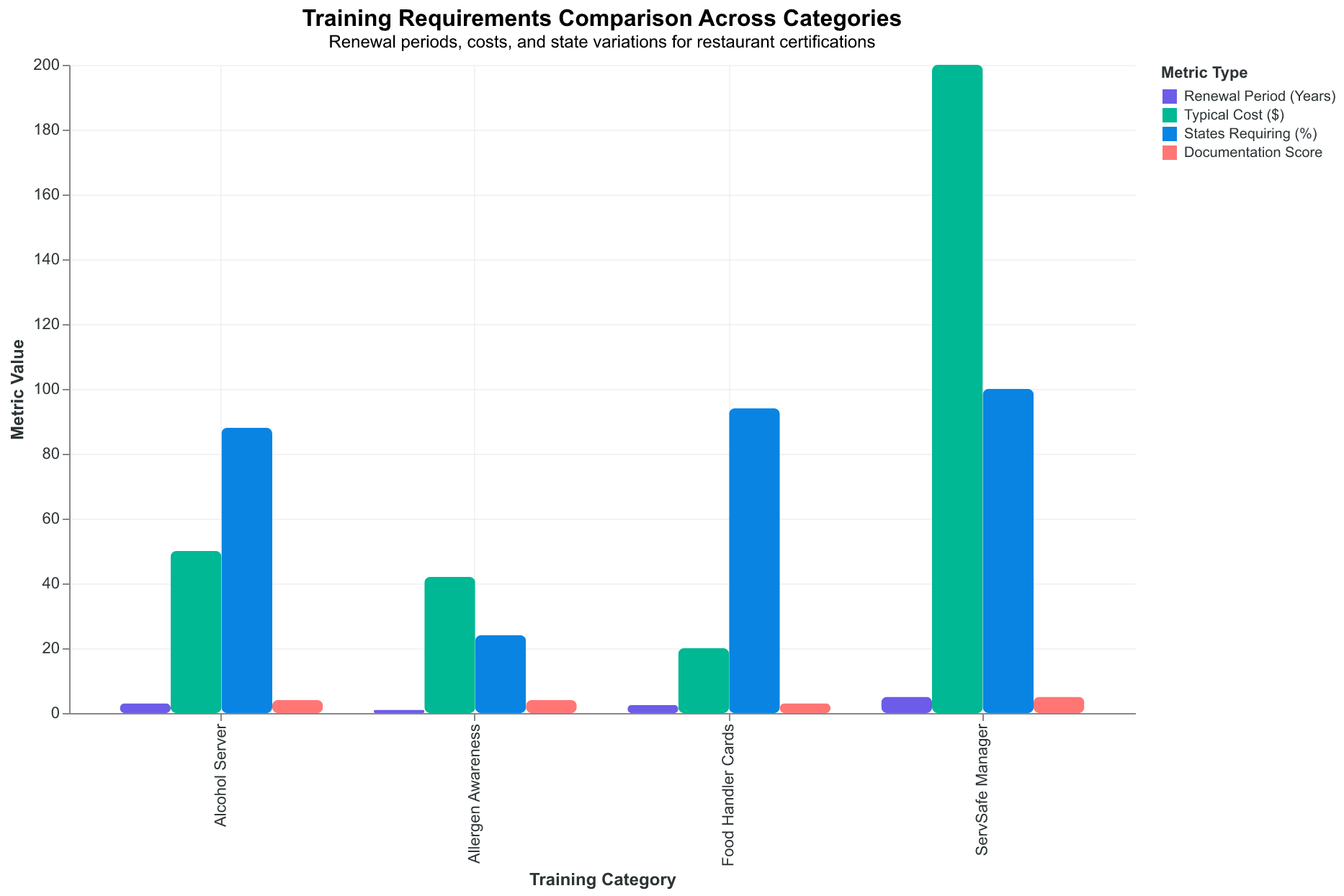
David runs three barbecue locations across Austin, Dallas, and Houston. Last year, he hired 47 new employees to maintain 20-person staffing across his restaurants. That meant 47 separate Food Handler Training Certificate requirements, 23 Alcohol Server Training Certification TABC certifications for front-of-house staff, and 47 individual Allergen Awareness Training Certificate completions — all with different expiration dates, different renewal requirements, and different inspection vulnerabilities.
“With 75% annual turnover, I wasn’t just training new people — I was managing 47 separate training events with individual compliance clocks,” David explains. “Every new hire reset multiple certification timelines. Miss one deadline, and the health inspector flags it during routine inspection.”
Training compliance compounds exponentially with turnover because each certification operates on independent schedules. A server hired in January needs food handler certification within 30 days, alcohol service certification within 60 days, and allergen training before handling food orders. Replace that server in August, and all three clocks reset with the new hire.
Food Safety Certification: 36-State Requirement Matrix
36 states mandate food handler certification for restaurant employees, but requirements vary dramatically by jurisdiction:
| State Example | Certification Requirement | Timeline | Renewal |
|---|---|---|---|
| California | Food Handler Training Certificate | 30 days from hire | 3 years |
| Texas | Food Handler Training | 60 days from hire | 2 years |
| Florida | Food Handler License | Before independent work | 3 years |
| New York (NYC) | Food Protection Certificate | 15 days from hire | 2 years |
The compliance trap: states like California require certification within 30 days but allow 90-day provisional periods for high-turnover positions. Operators often misunderstand this as a 90-day deadline, creating automatic violations when health inspectors review training records.
Multi-state operators face particular challenges: What qualifies in Texas doesn’t automatically transfer to California. Each state maintains approved provider lists, course hour requirements, and testing standards. A manager transferring from your Dallas location to your Los Angeles restaurant must complete California-specific training regardless of Texas certification status.
Alcohol Service Training: 25-State Certification Web
25 states require alcohol server training, each with distinct programs and transferability rules:
- California: RBS (Responsible Beverage Service) training — mandatory within 60 days
- Illinois: BASSET certification — required before serving alcohol
- Washington: MAST permit — valid for 5 years, non-transferable
- Oregon: OLCC service permit — required for all alcohol-serving employees
The timing complications multiply when employees work both front-of-house and bar positions. A server who occasionally bartends needs full bartender certification in most states, even if mixing drinks represents 10% of their duties.
Inspection vulnerability: Alcohol control boards conduct unannounced compliance checks. An uncertified employee serving alcohol during inspection triggers immediate violations with fines ranging from $500-$5,000 per incident.
Specialized Training Requirements: The Hidden Mandates
Allergen Awareness Training — now required in Massachusetts, Maryland, and New York City for all food-handling employees. Allergen Awareness Training Certificate must cover cross-contamination, ingredient identification, and emergency response protocols.
Sexual Harassment Prevention Training — mandatory in 9 states for supervisors, with expansion to all employees in California, Connecticut, Delaware, Maine, and New York. Requirements range from 1-hour online modules to 4-hour interactive workshops.
Safety Training Documentation — OSHA requires safety training records for all employees exposed to workplace hazards. Restaurant-specific requirements include:
- Chemical safety for cleaning product exposure
- Cut prevention for knife-handling positions
- Burn prevention for grill and fryer operators
- Workers’ Compensation incident reporting protocols
The Certification Renewal Nightmare
Training compliance doesn’t end with initial certification. Renewal cycles create ongoing administrative burden:
| Certification Type | Typical Renewal Period | Grace Period | Lapsed Consequences |
|---|---|---|---|
| Food Handler | 2-3 years | 30 days | Work prohibition |
| Alcohol Server | 3-5 years | None | Immediate violation |
| Safety Training | Annually | Varies by state | OSHA penalties |
| First Aid/CPR | 2 years | 30 days | Liability exposure |
With 75% annual turnover, restaurant operators manage certification renewals on rolling schedules. David’s system: “I maintain spreadsheets tracking 47 different expiration dates across three locations. Miss one renewal, and I’m scrambling to cover shifts until the employee can retest.”
Training Cost Analysis: The $200-Per-Employee Reality
Direct training costs vary by state and certification type:
| Training Category | Cost Range | Annual Per-Employee |
|---|---|---|
| Food Safety | $15-75 | $25 |
| Alcohol Service | $25-150 | $45 |
| Allergen Awareness | $20-60 | $30 |
| Sexual Harassment Prevention | $25-100 | $35 |
| Safety/OSHA | $50-200 | $75 |
| Total Training Investment | $210 |
With 75% turnover, a 20-person restaurant spends $3,150 annually on mandatory training certifications alone — before considering time costs for training completion, administrative tracking, and renewal management.
The hidden costs hurt more: employees working without proper certification expose restaurants to immediate shutdown during health inspections. David learned this when a surprise inspection revealed one server’s lapsed Food Handler Training Certificate. The health department issued a conditional approval requiring immediate retraining and follow-up inspection within 10 days.
“The $75 renewal cost became a $1,200 problem when we had to close the bar area and pay overtime for certified staff to cover extra shifts,” David reflects. “That’s the real cost of compliance gaps — operational disruption when you can least afford it.”
But the training challenge is just the beginning.
When Normal Operations Generate 90 Compliance Touchpoints Per Year
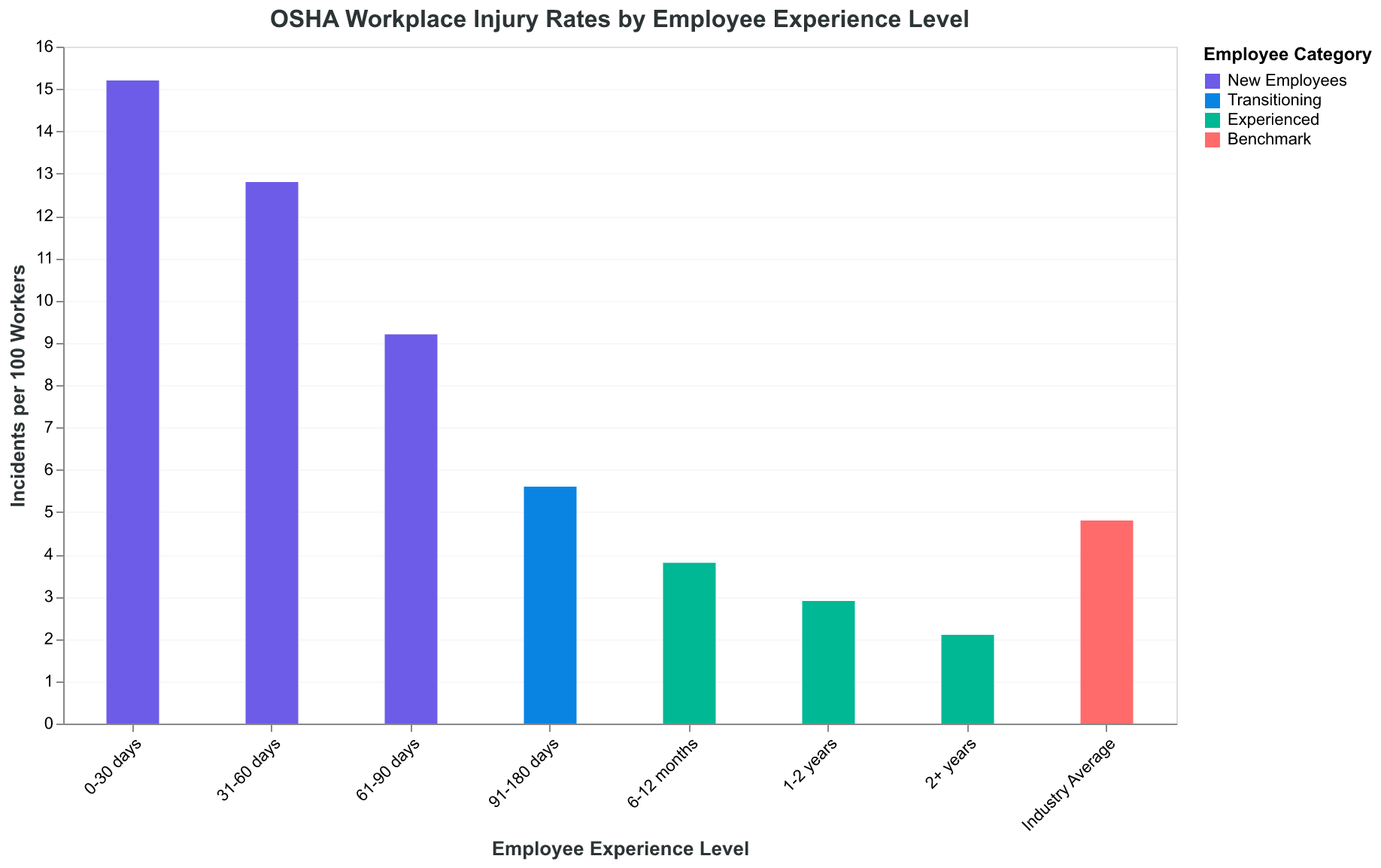
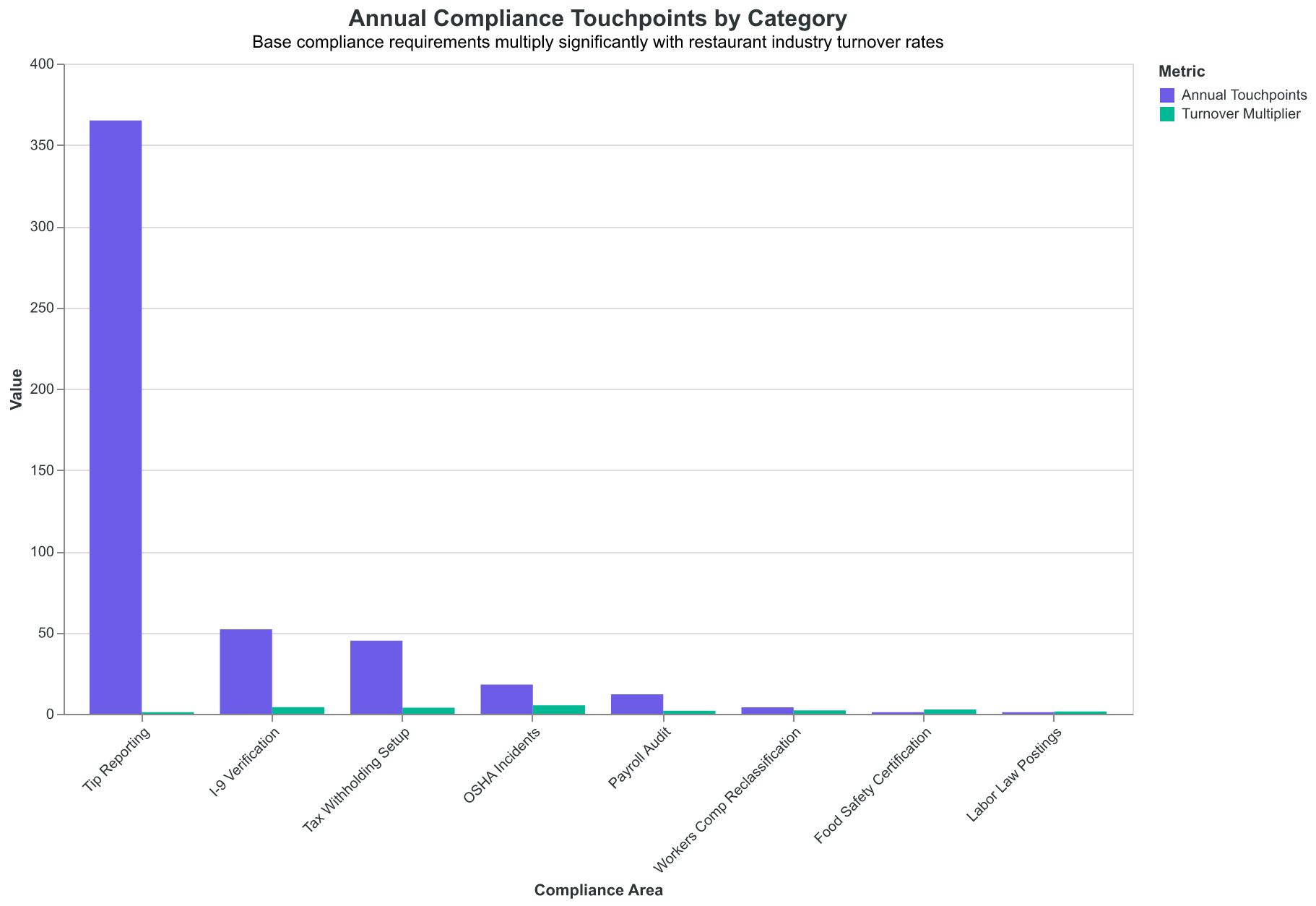
Once employees complete initial hiring and training requirements, ongoing compliance management begins. This isn’t about major policy changes or annual reviews — it’s about the steady drumbeat of documentation, reporting, and record-keeping that accumulates with every shift worked, every tip reported, and every minor workplace incident.
With typical restaurant turnover, a 20-person restaurant generates an average of 90 compliance touchpoints annually during normal operations. Here’s how those numbers accumulate:
Tip Reporting: Daily Compliance Requirements
Tip reporting creates the highest volume of compliance events. Restaurants must maintain detailed records of:
- Cash tips reported by employees (daily)
- Credit card tips allocated to employees (per transaction)
- Tip pooling distributions (weekly)
- 8% minimum tip assumptions for audit protection (monthly)
For a restaurant processing 200 credit card transactions daily with average 18% gratuity, tip compliance generates 365 annual touchpoints just for allocation documentation. Miss proper tip reporting, and you’re exposed to IRS audits that can trigger back-tax assessments affecting multiple years of operations.
State-specific complications: California requires written tip pooling agreements and detailed distribution records. New York City mandates weekly tip pool notifications to participating employees. Nevada requires tip reporting within 24 hours of shift completion.
Workers’ Compensation: The Monthly Documentation Cycle
Restaurants face high workers’ compensation exposure due to kitchen hazards, but compliance extends beyond paying premiums. Required ongoing documentation includes:
- Monthly payroll reporting to workers’ comp carriers (12 annual touchpoints)
- Quarterly premium adjustments based on actual payroll (4 touchpoints)
- OSHA 300 injury logs for reportable incidents (2-8 touchpoints annually)
- Return-to-work documentation for injured employees (3-5 touchpoints)
“I thought Workers’ Compensation was just buying insurance,” explains Marcus, who operates two seafood restaurants in Portland. “Then our carrier audited three years of payroll records and reclassified half our kitchen staff from ‘food service’ to ‘food preparation,’ increasing our premiums by $8,000 annually.”
The audit revealed that Marcus’s job classifications didn’t match actual duties. Servers who occasionally helped with food prep should have been classified in the higher-risk category, creating retroactive premium adjustments and penalty assessments.
Performance Management: Documentation Standards
Employee performance issues require systematic documentation to defend against wrongful termination claims. Each disciplinary action, performance review, and corrective measure must be:
- Documented contemporaneously with specific dates and witnesses
- Signed by employees to acknowledge receipt
- Maintained in personnel files for 3-7 years depending on state law
- Consistent with written policies outlined in employee handbooks
Disciplinary documentation accumulates rapidly in high-turnover environments. A 20-person restaurant averages 15-25 documented performance issues annually, from tardiness warnings to customer complaint responses.
Legal exposure escalates when documentation patterns reveal discriminatory treatment. If your disciplinary records show harsher penalties for protected class employees, you’re facing EEOC investigation regardless of legitimate performance concerns.
Schedule and Wage Compliance: The Predictive Scheduling Challenge
13 jurisdictions have predictive scheduling laws requiring advance notice of work schedules, typically 10-14 days. These laws create ongoing compliance obligations:
- Schedule posting deadlines (weekly)
- Change notification requirements (per modification)
- Premium pay calculations for short-notice changes
- Employee consent documentation for schedule modifications
Seattle’s Fair Work Week law exemplifies the complexity: schedules must be posted 14 days in advance, schedule changes within 14 days trigger premium pay, and employees can decline additional shifts without retaliation. Similar laws in New York City, San Francisco, and Oregon create a patchwork of requirements for multi-location operators.
Health and Safety Monitoring
Ongoing safety compliance generates regular documentation requirements:
- Temperature logs for food storage (daily)
- Cleaning and sanitization records (per shift)
- Equipment maintenance logs (weekly/monthly)
- Safety training updates (quarterly)
- Incident reporting for workplace injuries (immediate)
These requirements multiply with location count. A three-location restaurant chain maintains 1,095 temperature logs annually (365 per location), plus hundreds of cleaning records and equipment maintenance entries.
Inspection vulnerability: Health inspectors increasingly review documentation trends, not just point-in-time conditions. Missing temperature logs from two months ago can trigger violations during current inspections, even if food storage currently meets standards.
The Compound Effect
The 90 annual touchpoints represent minimum compliance for stable staffing. Real numbers escalate with:
- New hire onboarding (15+ touchpoints per hire)
- Certification renewals (3-5 touchpoints per renewal)
- Workplace incidents (10-20 touchpoints per incident)
- Regulatory changes (5-10 touchpoints for policy updates)
Marcus’s Portland restaurants generated 127 compliance touchpoints last year despite relatively low 45% turnover. “Every new regulation, every employee concern, every equipment repair creates documentation requirements,” he explains. “Compliance isn’t a destination — it’s a continuous operational rhythm.”
The rhythm accelerates when employees leave.
Final Paycheck Deadlines That Can Cost You 30 Days of Wages
When Jessica fired her kitchen manager in Sacramento for repeated no-shows, she thought the hardest part was over. She’d documented three warnings, gotten HR approval, and already lined up a replacement. Then California’s final paycheck law hit her with a $4,200 surprise.
Jessica waited until the next regular payday to issue the final check — standard practice at her previous restaurant in Nevada. But California requires immediate payment for terminated employees. The 8-day delay triggered waiting time penalties: full daily wages for every day payment was late. At $525 per day for eight days, the penalty exceeded the final paycheck amount.
“Miss one California final paycheck deadline, and you’ve erased the profit from 200 meals,” Jessica learned. “And that was just the penalty. The Department of Labor investigation cost another $3,000 in legal fees.”
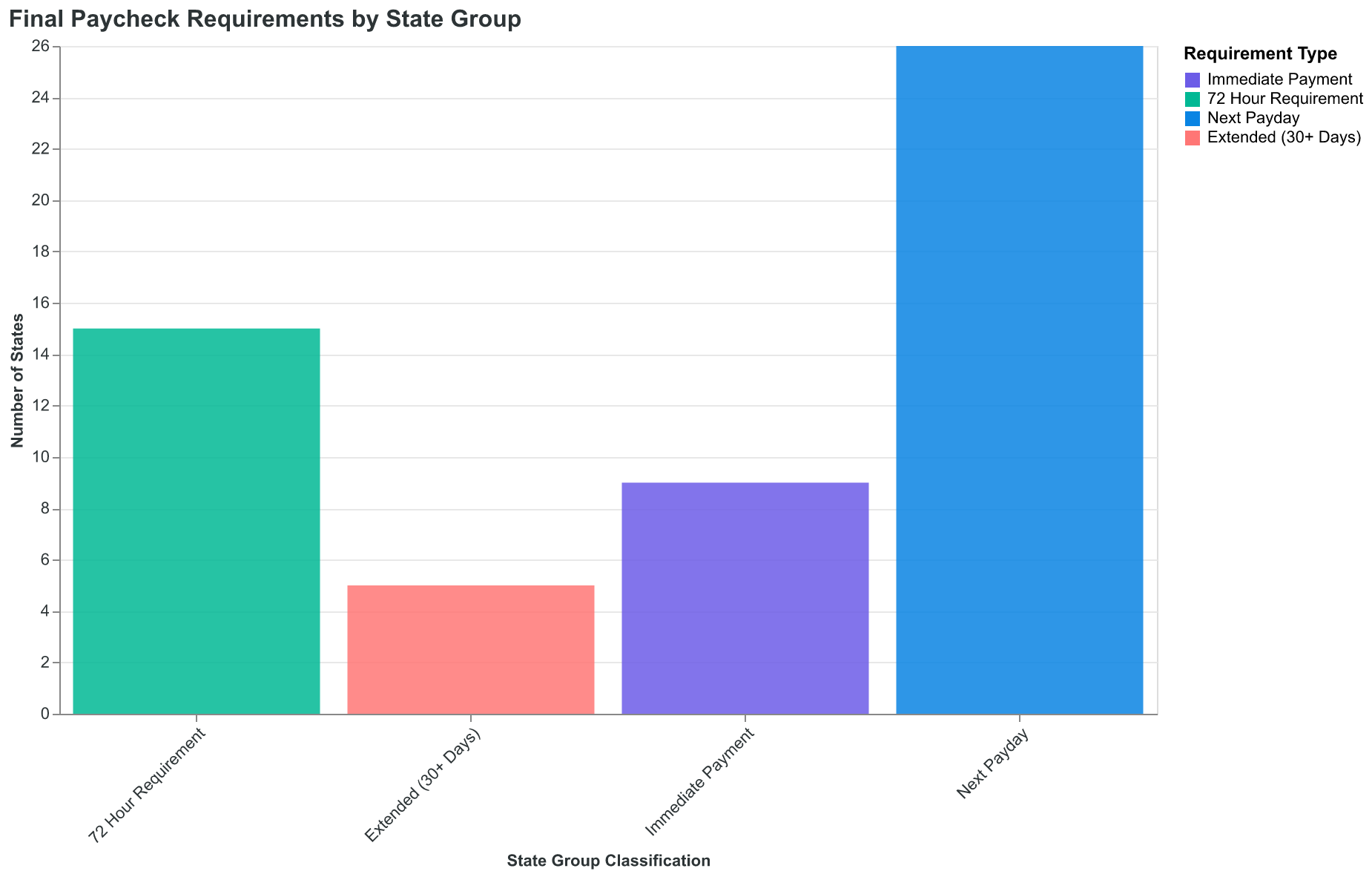
State-by-State Final Pay Requirements
Final paycheck timing varies dramatically across states, creating compliance nightmares for multi-location operators:
Immediate Payment Required (9 states):
- California: Immediately upon termination
- Colorado: Immediately (fired) / next payday (resigned)
- Massachusetts: Immediately or next regular payday
- Montana: Immediately (fired) / 15 days or next payday (resigned)
- Nevada: Immediately or within 3 days if notice given
Next Regular Payday (most states):
- Texas, Florida, Georgia, and 35+ others allow payment by next regular payday regardless of termination type
Resigned vs. Fired Distinctions:
- Illinois: Immediately (fired) / next payday (resigned)
- Minnesota: Immediately (fired) / next payday with 5+ days notice (resigned)
- North Carolina: Next payday (fired) / next payday or within 72 hours if requested (resigned)
The “Immediately” Problem
States requiring immediate payment create operational challenges for restaurant operators:
Payroll processing complexity: Most restaurants process payroll weekly or bi-weekly through third-party providers. “Immediate” payment often requires manual check cutting or direct deposit acceleration, both carrying additional fees and administrative burden.
Multi-location complications: If termination occurs at Location A but payroll processes at Location B, “immediate” becomes logistically complex. Some states allow reasonable time for check delivery, others demand same-day payment regardless of circumstances.
After-hours terminations: Firing an employee during evening shifts in California requires immediate payment. This means maintaining petty cash sufficient for full final paychecks or accepting penalty exposure until morning check processing.
Penalty Calculations: The Multiplier Effect
States with immediate payment requirements impose severe penalties for delays:
California’s waiting time penalties: Full daily wages for up to 30 days. A $20/hour manager earning $160 daily creates $4,800 maximum penalty exposure for a single delayed final check.
Massachusetts penalty structure: Triple damages for willful non-payment, plus attorney fees and court costs. A $1,000 final paycheck becomes a $3,000+ liability when penalties compound.
Colorado’s continuing wage rule: Daily wages continue until payment is made, without the 30-day cap California imposes. Extended delays can exceed the original final paycheck amount.
Vacation Payout Complications
Accrued vacation time adds complexity to final paycheck calculations:
“Use it or lose it” states: 24 states allow forfeiture of unused vacation time if company policy clearly states vacation doesn’t carry over or cash out.
Mandatory payout states: California, Louisiana, Massachusetts, Montana, Nebraska, North Dakota, and Rhode Island require payment of accrued vacation time regardless of company policy.
Pro-rated vacation calculations: States requiring vacation payout often mandate pro-rated calculations based on actual time worked, creating complex computations for employees with varying schedules or mid-year hire dates.
Final Pay Documentation Requirements
Required final pay components:
- Regular wages through termination date
- Overtime wages (calculated weekly)
- Accrued vacation time (where required)
- Commissions earned but not yet paid
- Expense reimbursements
- Tip allocations and credit card tips
Deduction limitations: Final paychecks restrict allowable deductions. You cannot deduct for:
- Uniforms (in most states)
- Cash register shortages (unless employee authorized in writing)
- Training costs or certification fees
- Property damage (varies by state)
COBRA and Benefits Termination
Final paycheck timing triggers additional compliance deadlines:
COBRA notification: Employers must provide COBRA election notices within 14 days of termination. Late notices extend the employee’s election period and increase premium liability.
Benefits termination coordination: Health insurance, dental coverage, and other benefits typically terminate at month-end following termination. Employees working partial months may require pro-rated premium adjustments in final paychecks.
The Systematic Solution
Smart operators build final paycheck protocols around the strictest state requirements:
- Calculate final pay immediately upon termination decision
- Maintain petty cash reserves for immediate payment requirements
- Document termination reasons to distinguish voluntary vs. involuntary separation
- Process COBRA notifications within 72 hours of termination
- Track state-specific requirements for multi-location operations
Jessica now maintains a $5,000 petty cash reserve specifically for final paychecks. “The cash sits there earning nothing, but it’s cheaper than one penalty,” she explains. “California’s rules are unforgiving, and the Department of Labor doesn’t accept ‘we didn’t know’ as a defense.”
Those departing employees create lasting compliance challenges.
The Hidden Compliance Cost of Restaurant Turnover
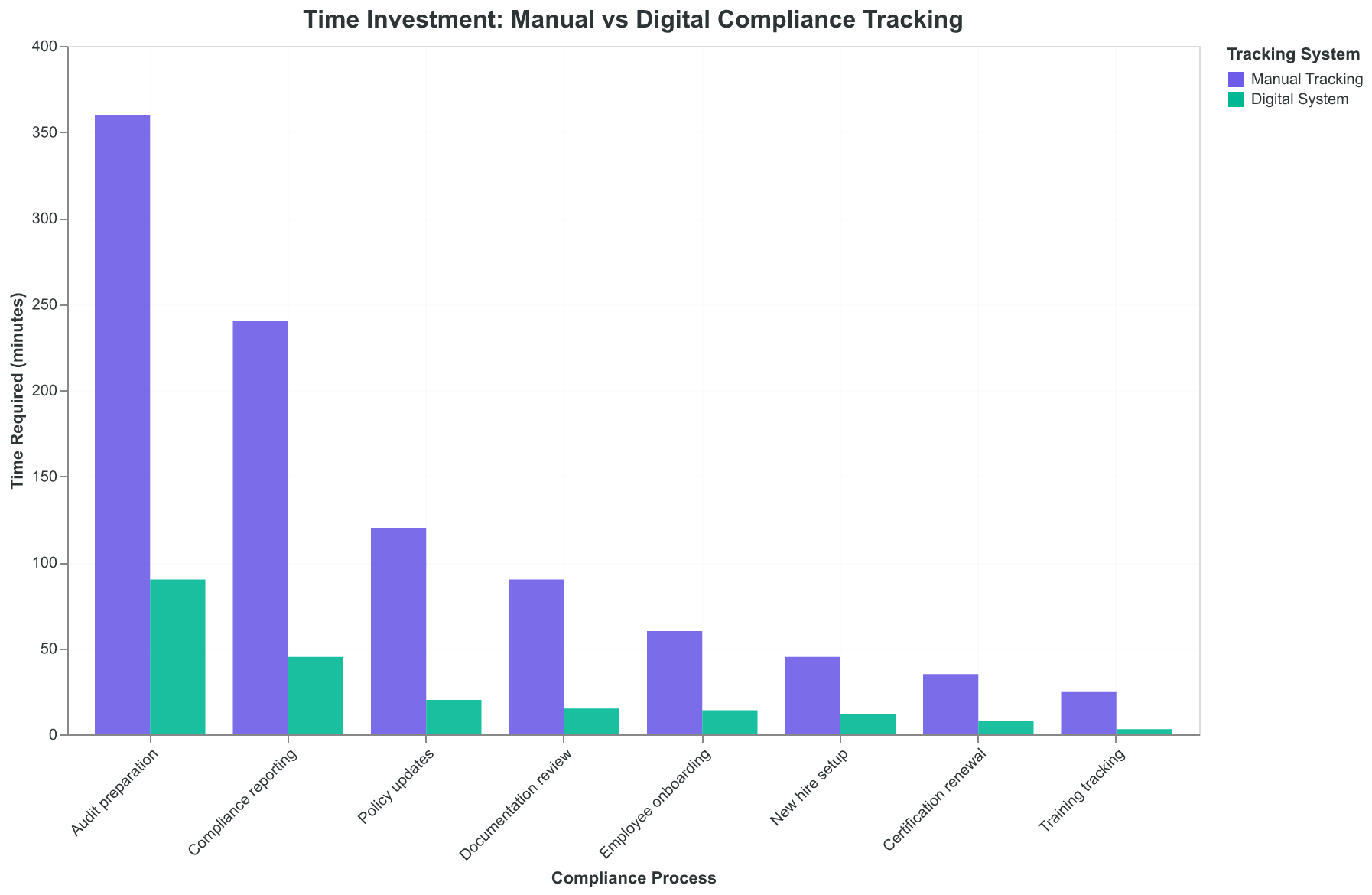
Restaurant turnover doesn’t end with final paychecks and badge collection. Every departing employee creates compliance debt that can trigger violations months later — expired certifications that weren’t transferred, incomplete documentation that surfaces during audits, and licensing gaps that inspectors discover long after the employee has moved on.
Take David’s Austin barbecue restaurant. When his certified food safety manager quit without notice, David thought he had 60 days to find a replacement under Texas food safety regulations. He was wrong. The restaurant needed a certified manager on-site during all operating hours. The health inspector’s surprise visit three weeks later shut down operations until David could bring in a temporary certified manager at $45/hour.
“Every departing employee creates compliance debt that can trigger violations months later.”
Certification Transfer Failures
Certified employees often hold multiple credentials tied to specific restaurant locations:
Food Safety Manager Certifications typically register with health departments by location. When certified managers leave, restaurants must:
- Notify health departments of manager changes (within 10-30 days)
- Ensure continuous certified management coverage
- Update certification records with new manager information
- Maintain documentation proving no coverage gaps
Failing to update manager registrations creates compliance gaps that surface during routine inspections. Health inspectors verify current certification status, not just certificate possession.
Alcohol Service Licenses in some states tie to specific establishments. Oregon’s OLCC service permits must be transferred between employers through formal notifications. Employees who leave without completing transfer paperwork can trigger licensing violations for their new employers.
Documentation Retention Challenges
Departing employees take institutional knowledge of compliance processes, creating documentation gaps:
Training Record Maintenance: Employees often maintain personal copies of certification documents, safety training records, and continuing education credits. When they leave abruptly, restaurants lose access to documentation needed for renewal applications and audit responses.
Incident Report Knowledge: Long-term employees who witnessed workplace incidents, customer complaints, or safety violations carry critical institutional memory. Their departure can compromise the restaurant’s ability to respond to later investigations or workers’ compensation claims.
Process Documentation: Experienced staff often become informal compliance coordinators, tracking renewal deadlines, maintaining safety logs, and coordinating training schedules. Their departure without proper knowledge transfer creates systematic compliance breakdowns.
The Turnover-Compliance Death Spiral
High turnover creates cascading compliance failures:
- Inexperienced staff make more compliance errors (improper food handling, incomplete documentation)
- Compliance errors trigger more frequent inspections (health departments flag high-violation establishments)
- Frequent inspections reveal additional violations (documentation gaps, training deficiencies)
- Violation stress increases employee turnover (workers leave unstable environments)
- Higher turnover reduces compliance expertise (cycle repeats)
Restaurants trapped in this spiral report 40% higher violation rates and 60% higher compliance costs than stable operations.
Multi-State Transfer Complications
Employees transferring between restaurant locations in different states create complex compliance transitions:
Certification Non-Transferability: A Food Handler Training Certificate from Texas doesn’t automatically qualify employees to work in California. Restaurants must ensure new-state certification before allowing food handling duties.
Background Check Requirements: Some states require new background checks for employees transferring from other jurisdictions, even within the same restaurant company. This creates hiring delays and potential compliance gaps during transition periods.
Wage and Hour Adjustments: Employees accustomed to one state’s overtime rules, break requirements, or tip regulations need retraining when transferred to states with different standards.
The $15,000 Departure
Restaurant operator Maria learned about turnover’s hidden compliance costs when her general manager left her Boston location. The manager had handled all regulatory correspondence, maintained training schedules, and coordinated inspection responses.
Three months after his departure:
- The Massachusetts Food Code renewal deadline was missed ($500 penalty)
- Two employees worked with expired Allergen Awareness Training Certificate credentials during inspection ($1,200 violation)
- OSHA 300 injury logs hadn’t been updated since the manager left ($2,800 fine)
- Workers’ compensation audit revealed misclassified employees due to incomplete records ($10,500 premium adjustment)
“I thought turnover cost was hiring and training new people,” Maria reflects. “The real cost was the compliance knowledge that walked out the door. Fifteen thousand dollars in penalties and adjustments from one person leaving.”
Building Turnover-Resistant Compliance
Smart operators design compliance systems that survive personnel changes:
Documentation Centralization: Maintain all compliance records in systems accessible to multiple managers, not personal files of individual employees.
Process Standardization: Document compliance procedures in detail so any trained manager can execute requirements without institutional knowledge.
Redundant Training: Ensure multiple employees understand critical compliance requirements, not just designated specialists.
External Support Systems: Partner with compliance services that maintain continuity regardless of internal staff changes.
The goal isn’t eliminating turnover — it’s building systems robust enough to maintain compliance through inevitable personnel transitions.
But there’s a better way to manage all this complexity.
Beyond Permits: Building Complete Regulatory Readiness
Employee compliance intersects with every other aspect of restaurant regulation — from the Food Service License that allows your business to operate to the Building Permit that governs your kitchen modifications. A comprehensive compliance system must account for these interconnections, not treat employee requirements as isolated checklists.
Consider the ripple effects when your certified food safety manager leaves: not only do you need replacement certification, but their departure might affect your Health Permit status if local regulations require continuous certified management. Similarly, adding alcohol service capabilities requires both Liquor License approval and Alcohol Server Training Certification for all serving staff — parallel compliance tracks that must coordinate perfectly.
The same Authority Expert Agents that map city-specific permits will eventually track state-specific employment laws, creating unified compliance intelligence across all regulatory domains. This means understanding not just that Chicago requires BASSET certification, but how that requirement integrates with Chicago’s predictive scheduling ordinance and Illinois workers’ compensation regulations.
Future Integration Points:
- Hiring compliance cross-referenced with business licensing requirements
- Training certifications linked to permit renewal schedules
- Safety documentation coordinated with OSHA and health department expectations
- Payroll compliance integrated with tax authority and labor department reporting
True regulatory readiness means treating employee compliance as part of a complete operational framework, not a separate HR function.
How to Build Your Employee Compliance System in 90 Days
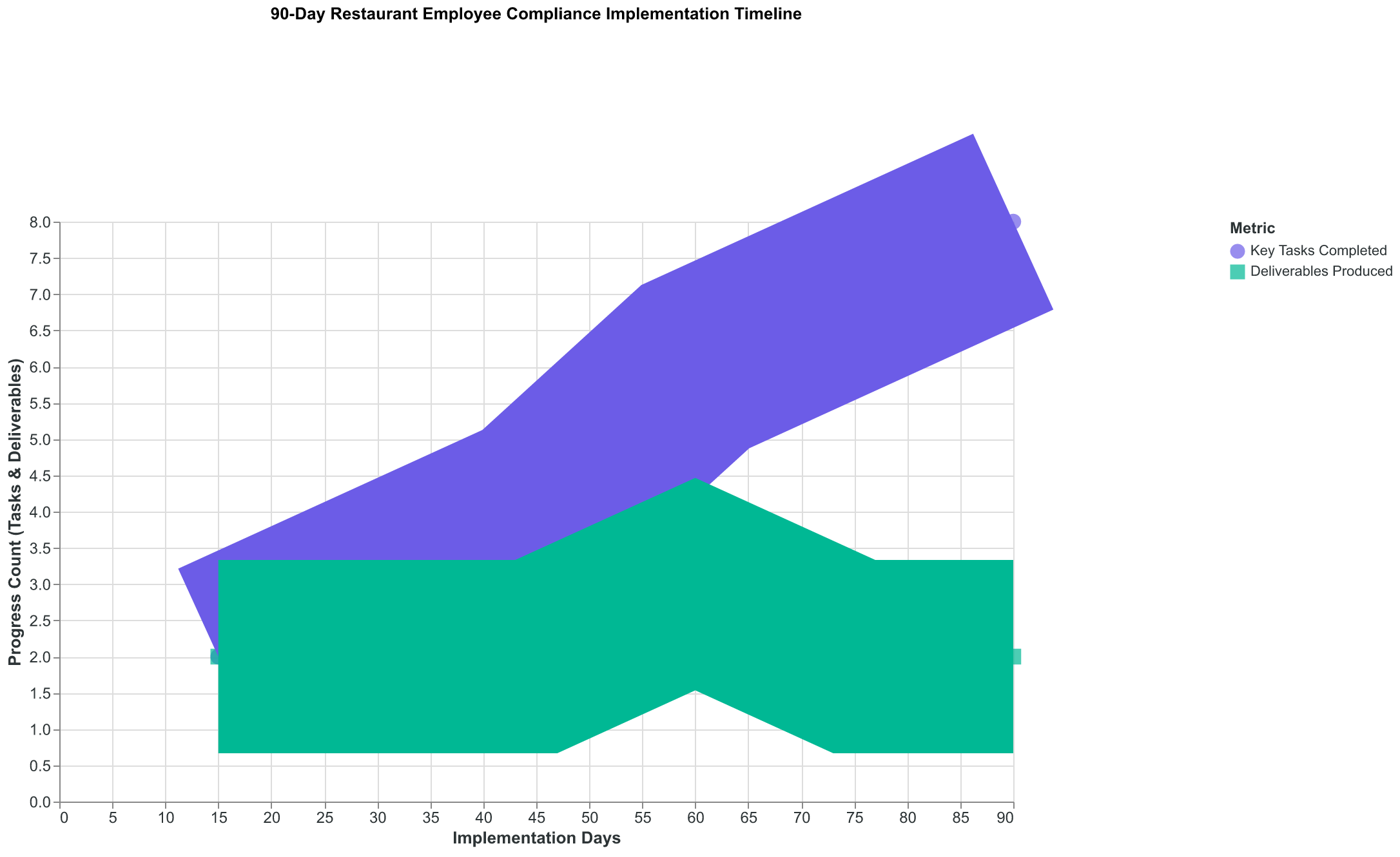
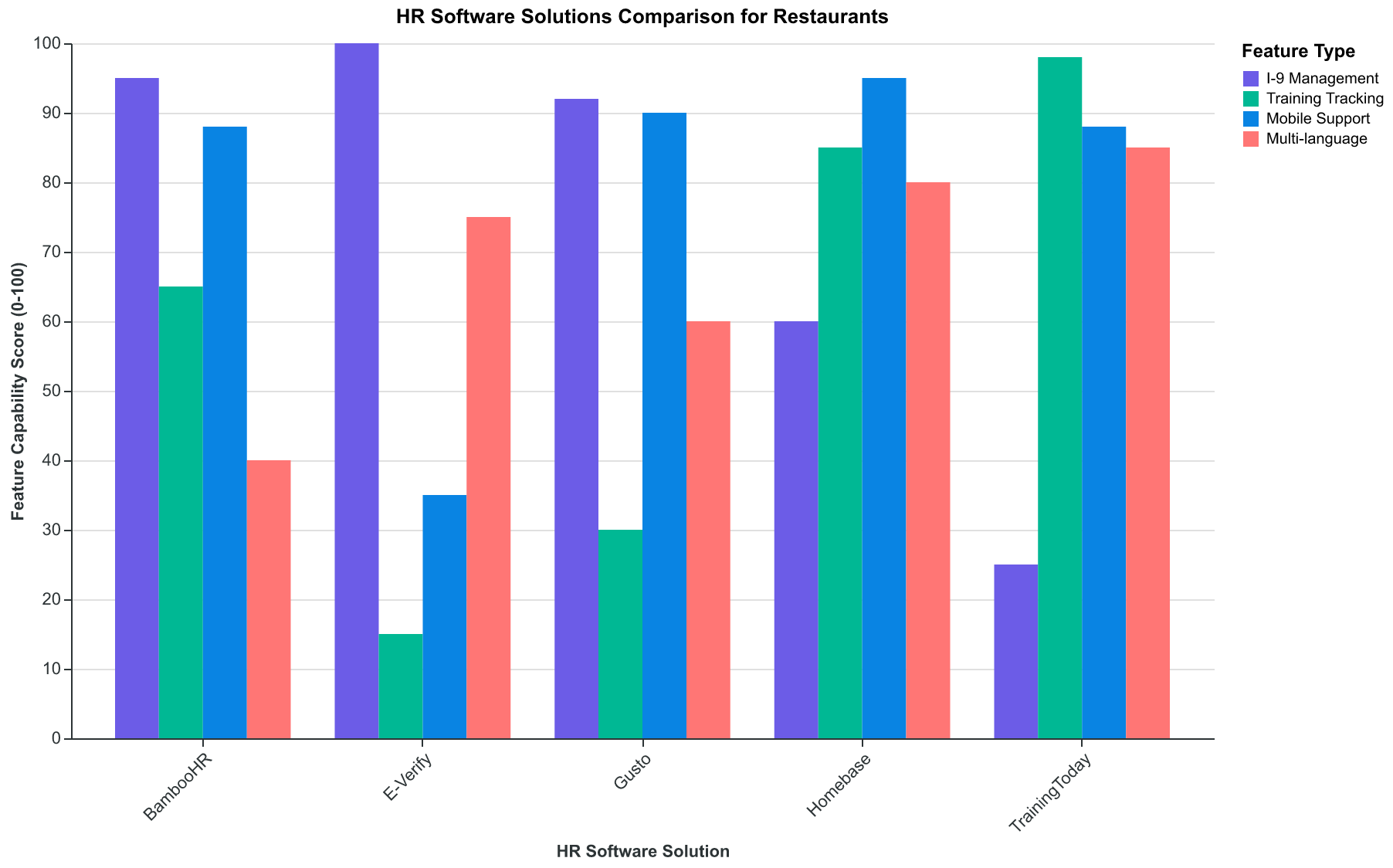
Building systematic employee compliance doesn’t require perfect knowledge of every regulation — it requires consistent processes that capture requirements as they emerge. Start with the framework that handles 80% of compliance touchpoints, then refine through experience.
Days 1-30: Foundation and Documentation
Week 1: Audit Current State Inventory existing compliance documentation across all locations. Gather:
- Current employee files and missing documentation
- Training certificates and expiration dates
- State registration requirements and renewal schedules
- Payroll records and tip reporting systems
- Safety logs and incident documentation
Week 2: Establish Document Templates Create standardized forms for:
- New hire onboarding checklists (state-specific)
- Training tracking spreadsheets with automated renewal alerts
- Performance documentation templates
- Termination checklists with final pay calculations
Week 3: Build State-Specific Requirements Matrix Document requirements for each operating location:
- Hiring documentation timelines (I-9, E-Verify, new hire reporting)
- Training certification requirements and approved providers
- Final paycheck timing and penalty calculations
- Ongoing reporting obligations (tip reporting, workers’ comp)
Week 4: Implement Basic Tracking Systems Establish systems for:
- Certification expiration alerts (60, 30, and 7 days)
- New hire milestone reminders (3-day I-9, 30-day training)
- State reporting deadline calendars
- Performance documentation workflows
Days 31-60: Process Implementation
Week 5-6: Standardize Hiring Processes Implement consistent procedures across all locations:
- I-9 completion and verification protocols
- E-Verify processing for mandatory states
- New hire reporting submission schedules
- Background check timing and documentation standards
Week 7-8: Deploy Training Coordination Launch systematic training management:
- Identify approved training providers for each location
- Schedule certification sessions for current staff gaps
- Establish new hire training timelines and accountability
- Create renewal tracking with automated notifications
Days 61-90: Optimization and Monitoring
Week 9-10: Refine Documentation Standards Upgrade record-keeping based on initial implementation:
- Personnel file organization and retention schedules
- Performance management documentation consistency
- Safety incident reporting and follow-up procedures
- Payroll documentation for audit readiness
Week 11-12: Test Crisis Response Validate system resilience through scenarios:
- Emergency termination procedures (immediate final pay)
- Surprise inspection readiness (documentation access)
- Key personnel departure (knowledge transfer protocols)
- Multi-location coordination during regulatory changes
Success Metrics and Monitoring
Track leading indicators, not just compliance outcomes:
| Metric | Target | Measurement Frequency |
|---|---|---|
| New hire documentation completion | 100% within deadlines | Weekly |
| Training certification currency | 95%+ current at all times | Monthly |
| Performance documentation completeness | 100% for disciplinary actions | Per incident |
| Final paycheck timing compliance | 100% within state requirements | Per termination |
Monthly compliance reviews should assess:
- Documentation gaps and process breakdowns
- Training renewal pipeline and capacity planning
- State requirement changes and implementation needs
- Cost analysis and ROI measurement
The goal isn’t perfection — it’s systematic capability. When the health inspector shows up (and they will), your response should be automatic: “Here are our current certifications, here’s our training documentation, here are our safety logs.” No scrambling, no excuses, no penalties.
Implementation Reality Check: Most restaurant operators underestimate the time investment required for systematic compliance. Budget 5-10 hours weekly for the first 90 days, then 2-3 hours weekly for ongoing maintenance. This isn’t just administrative work — it’s operational insurance that prevents much more expensive compliance failures.
The systems you build now determine whether employee compliance becomes predictable operational rhythm or recurring crisis management. Choose wisely.
But first, understand what compliance failures actually cost.
The $200,000 Question: What HR Compliance Failures Actually Cost
When Sofia opened her third location in Chicago, she thought she had compliance figured out. Her first two California restaurants had run smoothly for years. Then the Department of Labor knocked.
The investigation lasted eight months. The final bill: $127,000 in back wages for overtime miscalculations, plus $31,000 in penalties. Sofia’s Alcohol Server Training Certification Basset (Illinois, Chicago) records were incomplete. Her tip pooling documentation didn’t meet Illinois standards. What started as a routine complaint about one server’s schedule became a full audit of three years of payroll records.
“I spent more defending that investigation than I did on rent for six months,” Sofia told us. “And that was just DOL. OSHA came next.”
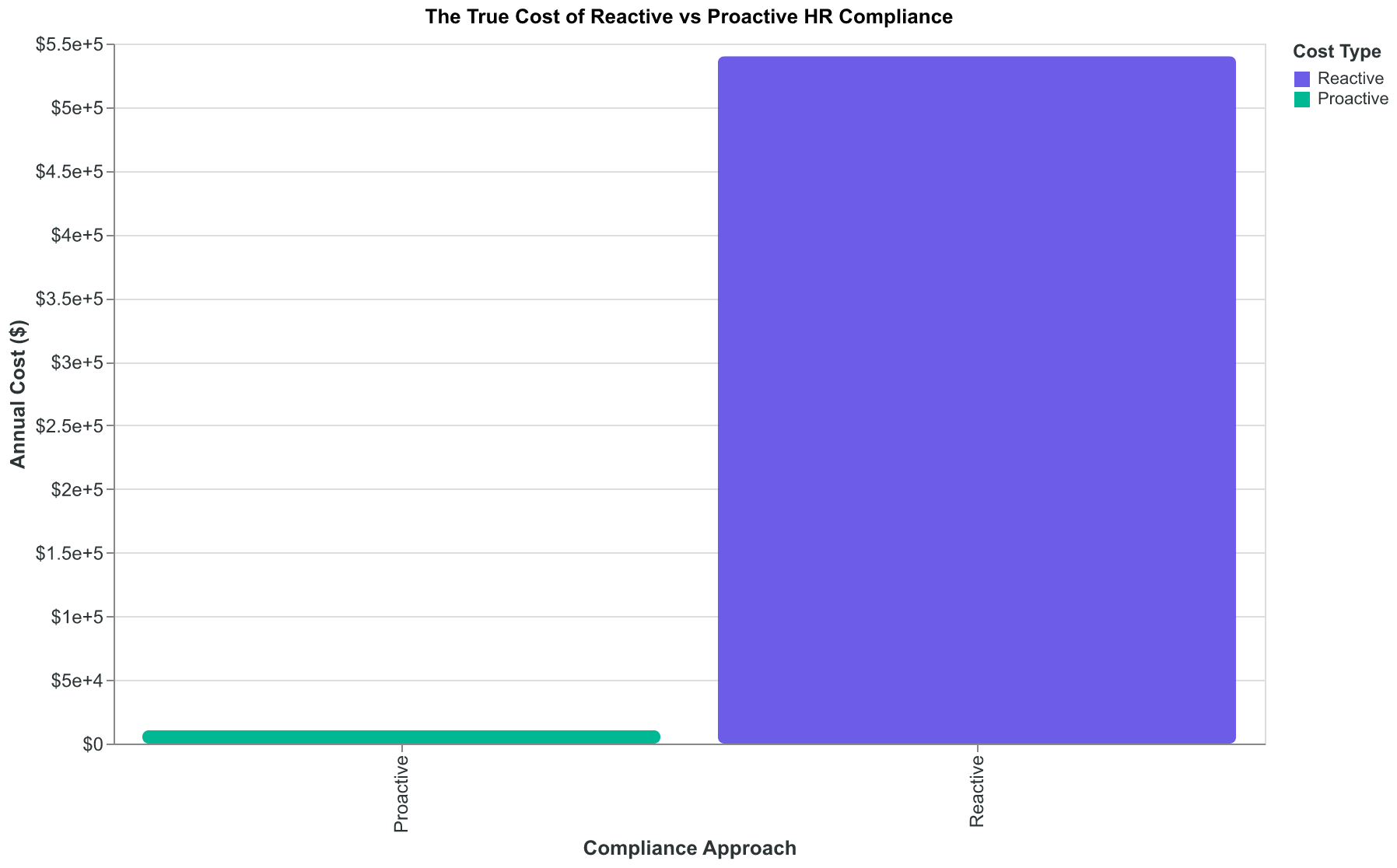
The math on HR compliance failures is brutal:
| Violation Type | Typical Cost Range | Average Case |
|---|---|---|
| DOL Investigation | $50,000 - $200,000 | $89,000 |
| OSHA Safety Violation | $1,000 - $15,000 per incident | $7,200 |
| State Labor Penalties | $2,000 - $25,000 | $8,500 |
| Workers Comp Misclassification | 10-50% premium adjustment | $12,000/year |
| Total Potential Exposure | $63,000 - $252,000 | $116,700 |
Compare this to proactive compliance costs:
| Prevention Investment | Annual Cost | 20-Person Restaurant |
|---|---|---|
| Training Programs | $50-200 per employee | $3,000 |
| Record-Keeping Systems | $100-500 monthly | $2,400 |
| Legal Reviews | $2,000-5,000 annually | $3,500 |
| Employment Eligibility Verification And Tax Compliance (New Jersey, Newark) | $100-300 per hire | $1,500 |
| Total Prevention Cost | $10,400 |
The prevention-to-violation ratio is staggering: 11:1. Every dollar spent on systematic compliance saves eleven dollars in potential penalties.
But the hidden costs hurt more than the fines. Sofia’s investigation triggered three additional audits from different agencies. Her insurance premiums increased 23%. Two key managers quit during the stress. Customer reviews mentioned “drama with the staff” as the health department investigation became public record.
“The $127,000 was just the beginning,” Sofia reflects. “The real cost was watching three years of reputation-building disappear in eight months of compliance chaos.”
Restaurants with documented Workplace Compliance systems report 73% fewer violations and 45% faster resolution when issues do arise. The investment pays for itself before the first violation notice arrives.
Frequently Asked Questions: Restaurant Employee Compliance
Do I need E-Verify for all employees?
Not everywhere. While E-Verify is federally voluntary, 14 states mandate it for all employers: Alabama, Arizona, Georgia, Louisiana, Mississippi, Missouri, North Carolina, Oklahoma, South Carolina, Tennessee, Texas, Utah, Virginia, and West Virginia. In these states, failure to use E-Verify can result in fines up to $16,000 per violation. Federal contractors nationwide must also use E-Verify regardless of state requirements.
How long must I keep employee records?
I-9 forms: 3 years from hire date OR 1 year after termination, whichever is longer. Payroll records require 3-year retention under the Fair Labor Standards Act. State requirements vary — California mandates 4 years for wage records, while Texas follows federal minimums. Personnel files should be kept for 3-7 years depending on your state’s statute of limitations for employment claims.
What training is legally required for restaurant employees?
This varies dramatically by state. 36 states require food handler certifications — from basic 2-hour online courses in Texas to comprehensive 16-hour programs in California. Alcohol server training is mandatory in 25 states, with programs like Illinois BASSET or Washington MAST. Some cities add requirements: Boston mandates allergen awareness training for all food service workers.
When must I pay final wages after termination?
Immediately in 9 states (California, Colorado, Massachusetts, Montana, Nevada, North Dakota, and others). By the next regular payday in most others. Some states differentiate: fired employees get immediate payment while resigned employees wait until the next payday. California’s penalty is severe — continuing wages for every day payment is late.
Do part-time employees need the same compliance documentation?
Yes. Employment law doesn’t distinguish part-time status for most requirements. Part-timers need I-9 verification, food handler permits, workers’ compensation coverage, and equal workplace safety protections. The only differences typically involve benefit eligibility thresholds and overtime calculations.
Common misconception: “Seasonal workers are exempt from compliance.” False — seasonal employees require the same documentation as permanent staff, including I-9s, training certifications, and proper wage documentation.
Restaurant HR compliance isn’t a destination — it’s a rhythm. Every Monday morning, you’ll have new hires to onboard. Every Friday, someone might walk out mid-shift. Every month, training certificates expire and documentation needs updating. The restaurants that thrive aren’t the ones that achieve perfect compliance once. They’re the ones that build systems robust enough to handle 75% annual turnover without breaking.
Your next new hire is your implementation opportunity. Complete I-9 verification within three days. Schedule their food handler training certificate before their first shift. Document everything in their personnel file. Use our Restaurant HR Compliance Checklist to ensure nothing slips through the cracks — it covers all 47 required touchpoints from job posting through the first 90 days.
The difference between restaurants that get shut down and restaurants that pass every inspection isn’t luck. It’s having a system that works when you’re busy, when you’re short-staffed, and when the health inspector walks through your door unannounced. Your compliance system should be so automatic that your newest manager could run it flawlessly.
Every new employee is either a compliance asset or a compliance liability. Which one depends entirely on the system you build today.
Be Ready When They Knock.
Check your restaurant’s complete HR compliance requirements — from I-9 verification to final paycheck timing. Enter your state and city to see all employee compliance requirements specific to your location.
Get Your HR Compliance Report
This article is part of the ApronPrep Compliance Intelligence Library. Data sourced from 150 cities across 50 states. Last verified: July 2026.