
Food Safety & HACCP
Restaurant Food Safety Compliance Guide: Permits to Operations (2026)
July 6, 2026 · 11 min read · 2,856 words
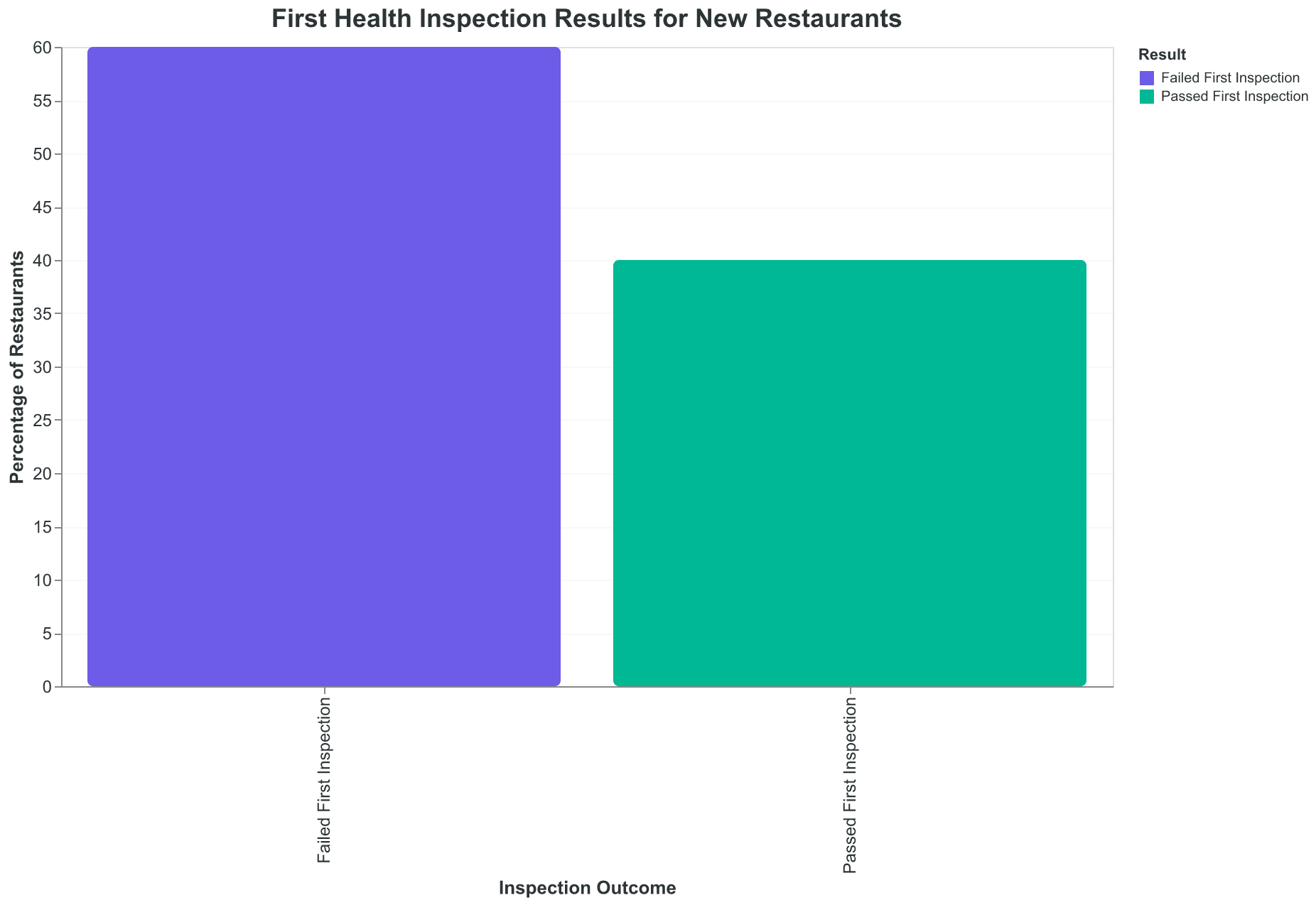
60% of new restaurants fail their first health inspection. Not because their kitchens are dirty or their staff untrained, but because they fundamentally misunderstand how food safety compliance actually works.
The failure isn’t in the walk-in cooler or the hand-washing station. It’s in the three-month gap between getting your Food Service Establishment License and understanding that food safety compliance operates as a multi-layered system spanning pre-opening permits, daily operations protocols, and ongoing maintenance requirements.
Most owners think compliance is binary: pass inspection, open doors. The reality is a continuous cycle where permit approvals, operational procedures, and maintenance documentation must align perfectly — or health departments shut you down regardless of how clean your kitchen looks.
The Restaurant Food Safety Lifecycle Framework
Restaurant food safety compliance isn’t a single checklist—it’s a three-phase lifecycle that determines whether your restaurant opens on time, stays open, and avoids the violations that force 60% of new restaurants to close.
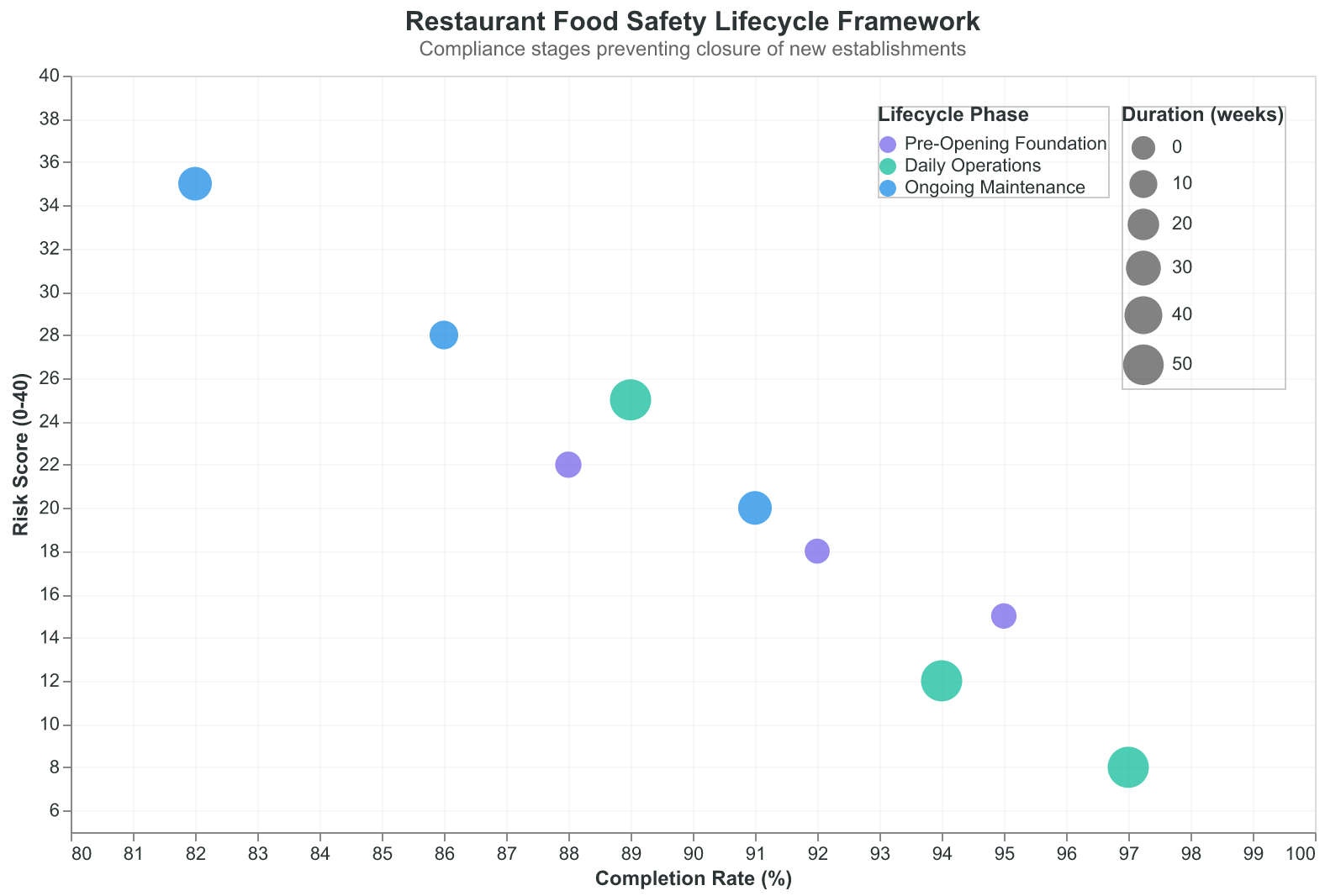
The Restaurant Food Safety Lifecycle Framework maps compliance into three distinct phases, each requiring different tools, timelines, and expertise:
Phase 1: Pre-Opening Foundation establishes your legal right to serve food through permits, certifications, and plan reviews. This includes securing your Food Service Establishment License, completing Food Establishment Plan Review, and obtaining required staff certifications. Miss a permit here, and your opening delays by weeks.
Phase 2: Daily Operations transforms compliance from paperwork into habit through monitoring systems, documentation protocols, and staff procedures. This is where temperature logs, cleaning schedules, and inventory tracking become your daily defense against violations.
Phase 3: Ongoing Maintenance keeps you compliant through renewals, updates, and inspection readiness. Certifications expire, regulations change, and health inspectors arrive unannounced—this phase ensures you’re always prepared.
Each phase builds on the previous one, but the requirements, timelines, and consequences are completely different. A permit mistake in Phase 1 delays your opening. A procedure failure in Phase 2 triggers a violation. Neglecting Phase 3 risks shutdown.
The framework works because it matches your compliance strategy to your operational reality: intensive preparation before opening, systematic execution during operations, and proactive maintenance for longevity.
Pre-Opening Permits: Where 40% of New Restaurants Get Stuck
Jake Martinez thought he’d done everything right. His Chicago restaurant concept was solid, his lease was signed, and construction was 80% complete. Then the health department rejected his Food Establishment Plan Review because his three-compartment sink was positioned six inches too close to the prep station. Cost of correction: $8,000 and a six-week delay.
“Nobody told me the exact positioning mattered,” Jake explains. “The contractor said it met code. The architect signed off. But the health inspector measured from a different reference point.”
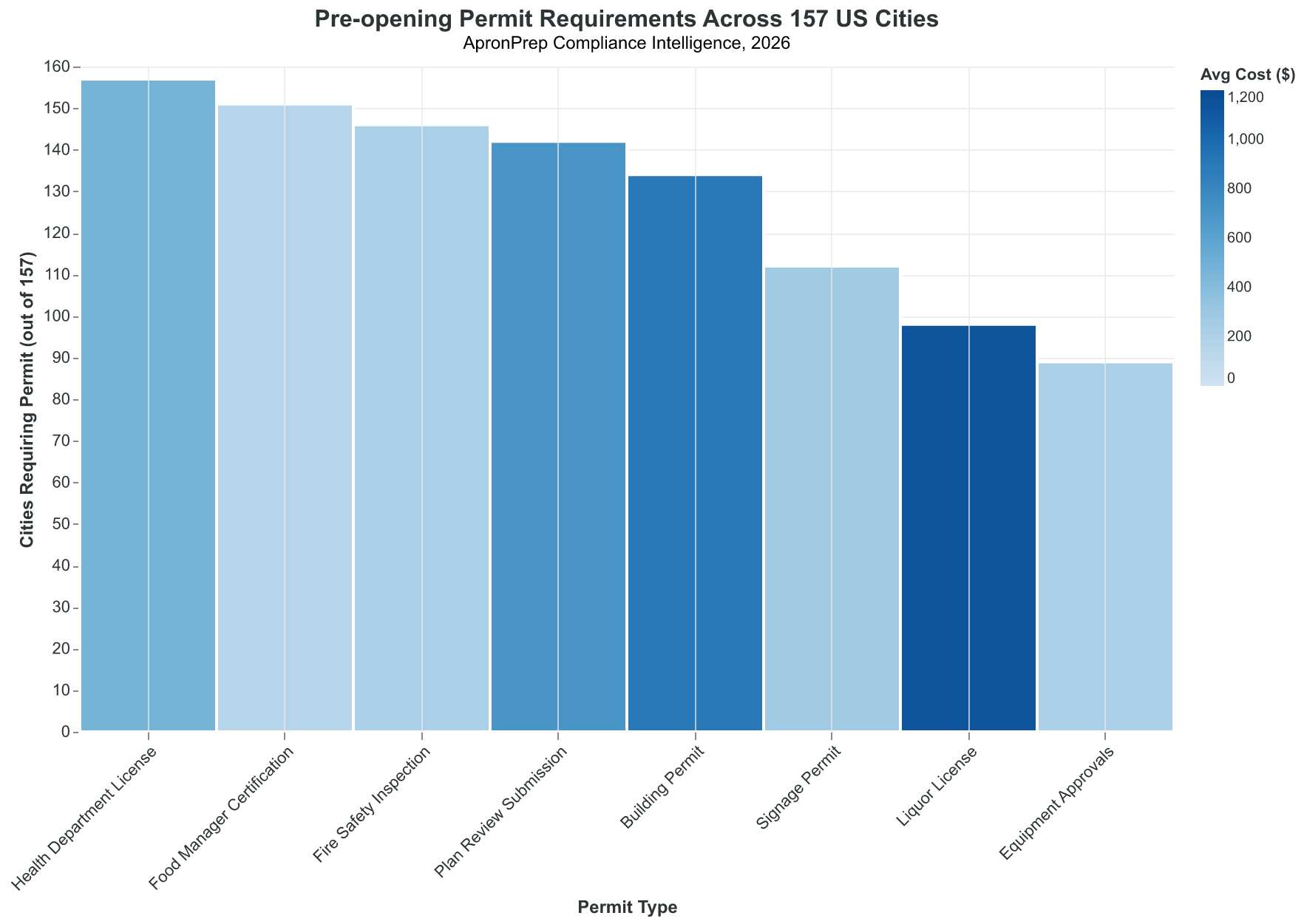
This is where 40% of new restaurants lose weeks or months of opening timeline. The pre-opening permit phase isn’t just paperwork — it’s a complex approval process where every detail must align with local health codes, fire safety requirements, and building regulations simultaneously.
| Permit Type | Average Processing Time | Common Delays | Cost of Delays |
|---|---|---|---|
| Food Service License | 30-60 days | Missing manager certifications | 2-4 weeks |
| Building Permit | 45-90 days | Plan revision requirements | 3-6 weeks |
| Fire Safety Inspection | 14-30 days | Equipment positioning issues | 1-3 weeks |
| Grease Trap Permit | 21-45 days | Size calculation errors | 2-5 weeks |
The cascade effect is brutal: one missed requirement creates a domino effect that delays opening by weeks. When Sarah Kim’s bubble tea shop in Portland was delayed because her Hood Suppression System installation triggered additional electrical permits, her soft opening pushed back a month — right past the summer foot traffic she was counting on.
Successful restaurant owners treat pre-opening permits like construction: everything happens in sequence, delays compound, and getting ahead of requirements prevents costly corrections.
Daily Operations: Where Violations Actually Happen
When health inspectors walk into Rosa’s Italian Kitchen, they’re not looking for pristine surfaces—they’re hunting for documentation gaps. Rosa learned this the hard way when her spotless restaurant failed inspection because she couldn’t prove her walk-in cooler maintained 38°F overnight.
“The inspector didn’t care that my refrigerator looked clean,” Rosa explains. “She wanted to see temperature logs for the past 30 days. No logs, automatic violation.”
This is where most restaurants stumble. Daily compliance isn’t about perfection—it’s about proof. Each operational area maps directly to inspection checkpoints that require documented evidence:
| Operation | Daily Requirement | Inspection Checkpoint | Violation Cost |
|---|---|---|---|
| Temperature Control | Log temps every 4 hours | Calibrated thermometers + 30-day logs | $500-$2,000 |
| Food Storage | FIFO rotation dating | Date labels on all items | $200-$800 |
| Employee Hygiene | Handwashing compliance | Soap dispensers + health certificates | $300-$1,500 |
| Sanitization | 3-compartment sink logs | Chemical test strips + cleaning schedules | $400-$1,200 |
The pattern is consistent: inspectors assume non-compliance unless you can prove otherwise. When Marco’s Pizzeria started using digital temperature monitoring that automatically generated logs, his inspection scores jumped from 78 to 94 points.
“Now I sleep at night,” Marco says. “The system documents everything automatically. If they want proof, I hand them a printed report.”
Smart operators build compliance into their workflows rather than treating it as an add-on task. They know that health department inspections focus on systems, not cleanliness. The cleanest kitchen in the world fails if it can’t document compliance.
The Paper Trail That Keeps Your Doors Open
Health inspectors don’t just look at your kitchen — they audit your records. The difference between a passing grade and a violation often comes down to whether you can produce the right documentation within 30 seconds of being asked.
“Show me your temperature logs from last Tuesday” isn’t a request — it’s a test. Restaurants that pass keep meticulous records. Those that fail scramble through loose papers or claim their system is “all digital” while fumbling with tablet passwords.
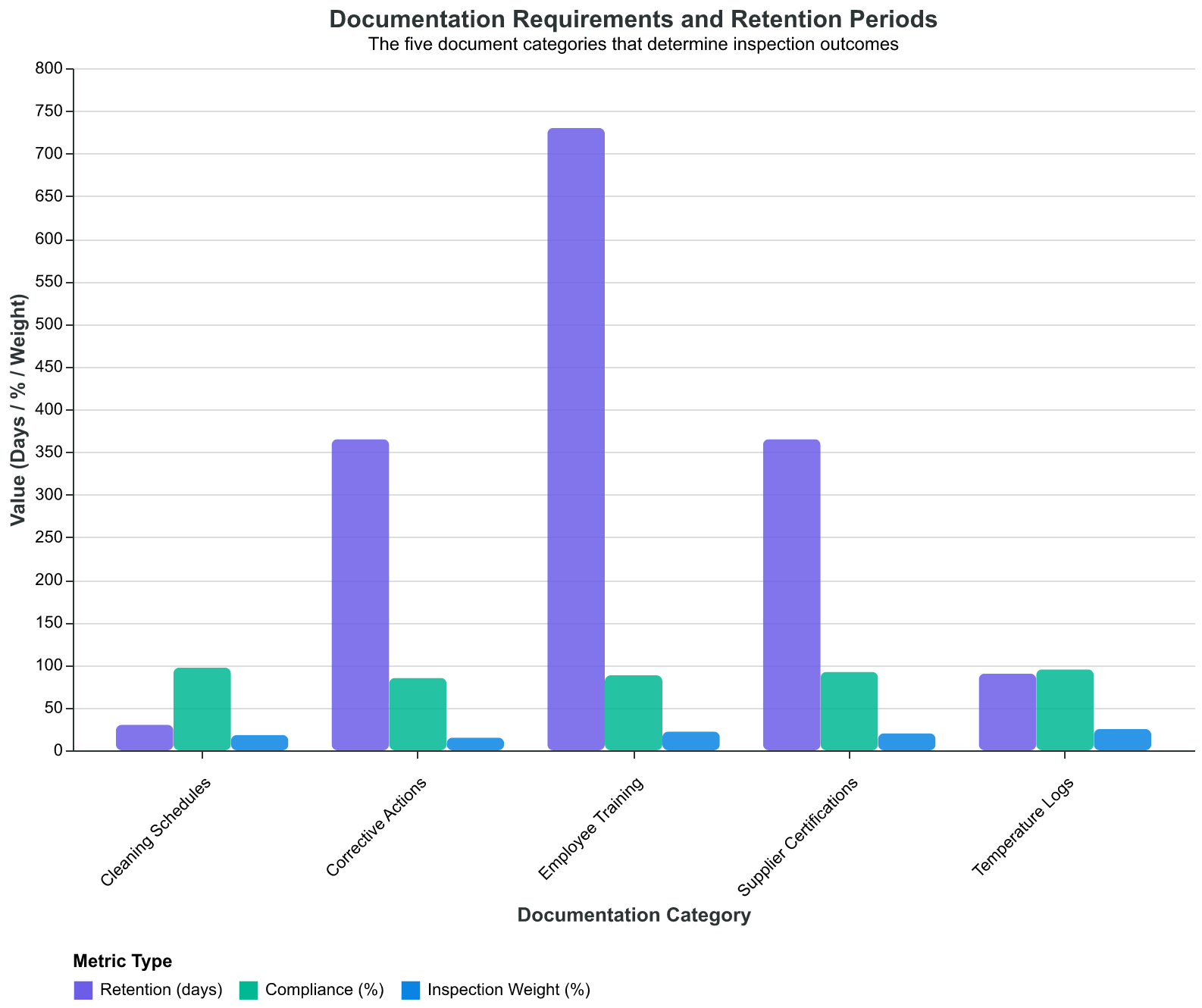
The documentation backbone includes five critical categories:
| Document Type | Retention Period | Inspector Focus |
|---|---|---|
| Temperature logs (refrigeration/cooking) | 90 days | Trend patterns, not just numbers |
| Employee training records | Duration of employment + 2 years | Food handler certifications and completion dates |
| Supplier certifications | Current + previous vendor | HACCP compliance and delivery temperatures |
| Cleaning schedules | 30 days | Actual completion vs. planned schedule |
| Corrective action reports | 1 year | Response time and resolution methods |
Digital platforms like FoodDocs and Jolt automate much of this record-keeping, sending alerts when logs are missed and generating inspection-ready reports. But automation only works if staff understand what inspectors need to see. A tablet displaying “all good” doesn’t satisfy an inspector who wants to see the 2:30 PM temperature reading that triggered your walk-in cooler alarm three days ago.
The most compliant restaurants treat documentation like insurance — boring until you need it, then absolutely critical.
When Inspectors Knock: The First 30 Seconds Determine Everything
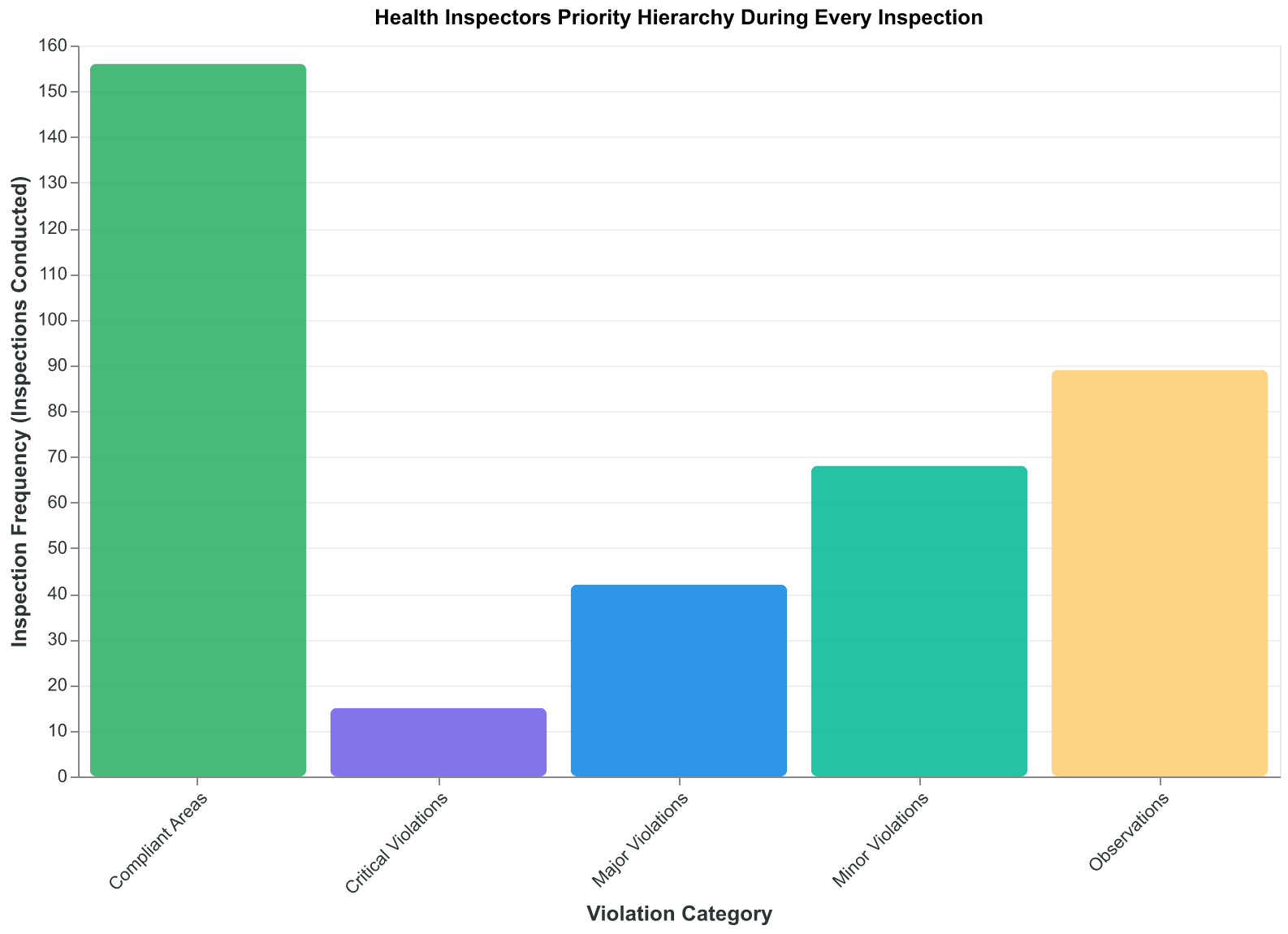
Health inspectors form their assessment within moments of walking through your door, and what they see first sets the tone for the entire inspection. Maria Santos, who runs three successful taquerias in Phoenix, learned this the hard way during her first inspection: “The inspector walked straight to the hand-washing station, checked if soap was stocked, then looked up at the wall for our Food Protection Manager Certification. Those first two checks told him whether we were serious about compliance.”
Inspectors follow a predictable pattern because they’re scoring against standardized criteria. They check critical violations first—those that can cause immediate foodborne illness—then major violations that indicate systemic problems. The scoring system is unforgiving: a single critical violation can shut you down immediately, regardless of how well you perform in other areas.
| Inspection Priority | Inspector Checks | Immediate Consequences |
|---|---|---|
| Critical (0 tolerance) | Temperature control, employee handwashing, manager certification visible | Immediate closure possible |
| Major (point deductions) | Food storage, cleaning chemicals separated, equipment maintenance | Reinspection required |
| Minor (documentation) | Permit posting, employee training records, cleaning schedules | Notation only |
The reality that catches most new owners off-guard is that inspectors can arrive unannounced during any business hour. There’s no grace period, no “we’re still getting organized” allowance. Your Food Service Establishment License means you’re declaring readiness for inspection from day one of operations.
The Renewal Trap: Where Most Restaurants Lose Compliance
Maria’s Italian Kitchen passed their initial health inspection with flying colors in January 2023. Eighteen months later, they received a violation notice during a routine inspection — not for food safety, but for operating with an expired Food Service Establishment License. The $2,500 fine could have been avoided with a simple renewal.
This scenario repeats across thousands of restaurants because owners treat compliance as a one-time setup rather than ongoing operations. The reality: restaurant compliance operates on multiple renewal cycles that rarely align.
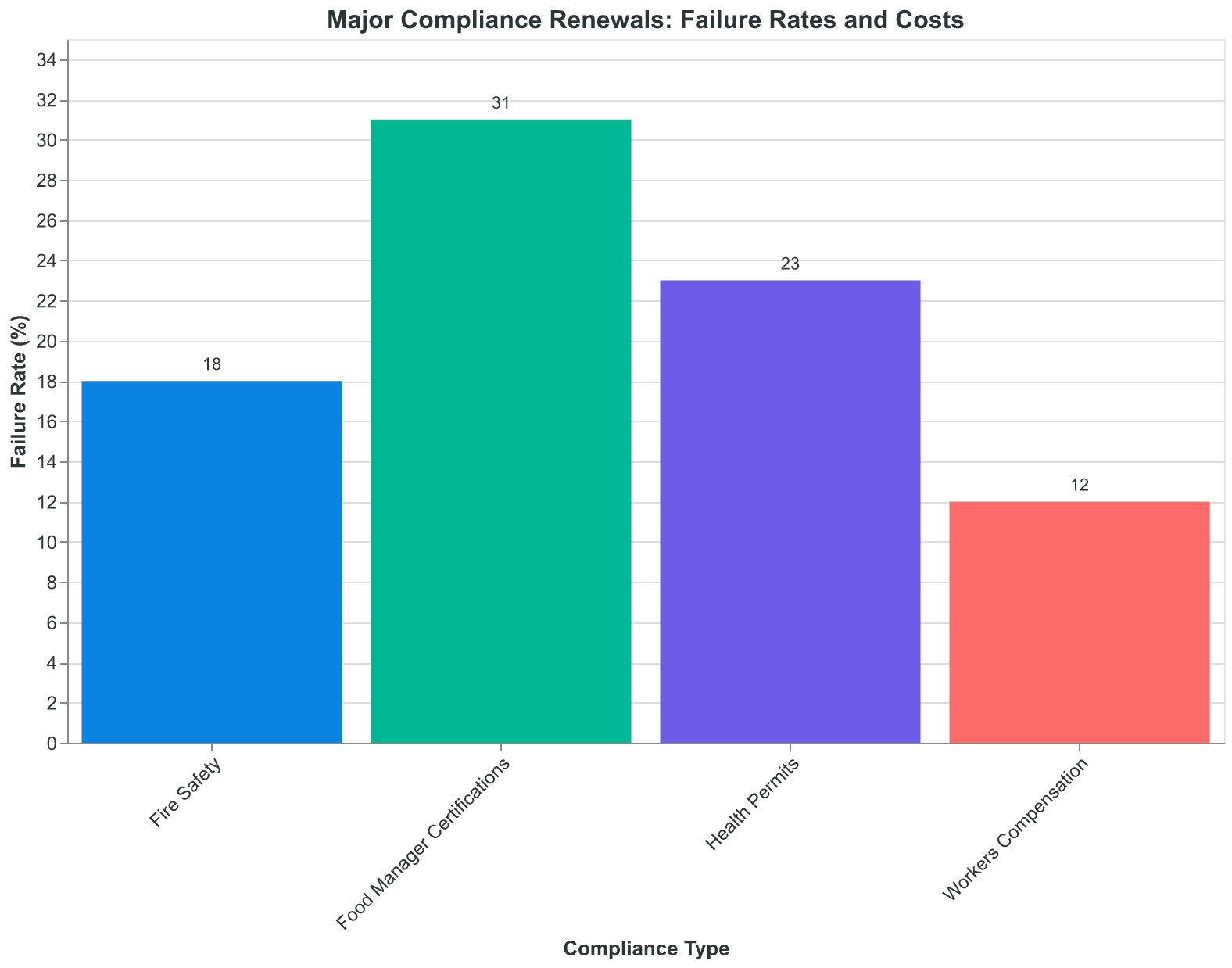
| Compliance Item | Renewal Frequency | Typical Cost | Failure Rate |
|---|---|---|---|
| Health Department Permit | Annual | $200-800 | 23% |
| Food Protection Manager Cert | 5 years | $150-300 | 31% |
| Fire Safety Inspection | 1-3 years | $300-600 | 18% |
| Workers’ Comp Certificate | Annual | $1,200-3,000 | 12% |
The highest failure rates occur during Food Protection Manager Certification renewals because the five-year cycle falls outside normal operational rhythms. Restaurants often discover expired certifications only when health inspectors arrive.
Regulatory updates add another layer of complexity. When California updated allergen disclosure requirements in 2024, 40% of restaurants received violations during their next inspection — not for unsafe practices, but for outdated signage and menu formatting that no longer met current standards.
The solution isn’t better memory. It’s treating compliance as a continuous operational system with automated renewal tracking, regulatory update monitoring, and proactive reinspection scheduling.
The Compliance Tool Stack: Who Handles What
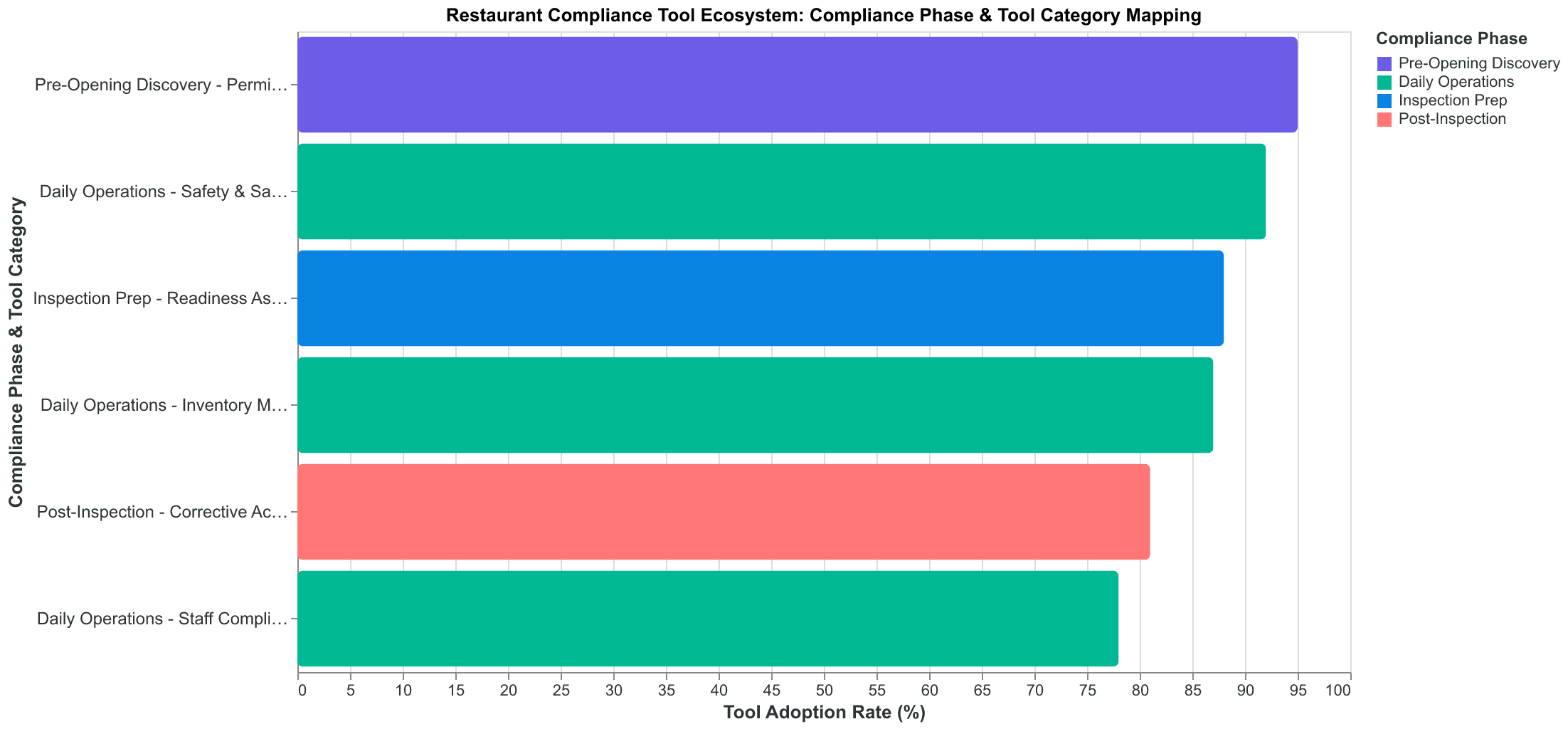
The mistake most restaurant owners make isn’t choosing the wrong compliance tools — it’s trying to handle everything with a single solution. Food safety compliance spans legal research, operational monitoring, and ongoing maintenance. No single platform excels at all three.
Restaurant compliance operates across distinct domains that require specialized tools:
Discovery Layer (Pre-Opening): ApronPrep specializes in permit research and requirement mapping. Traditional consultants charge $3,000-8,000 but often miss local requirements. Generic legal databases overwhelm you with irrelevant regulations.
Operations Layer (Daily): Toast, Resy, and similar POS systems handle customer-facing operations but lack compliance depth. FoodDocs and Jolt excel at temperature monitoring and HACCP logs. None handle permit renewals or regulatory updates.
Maintenance Layer (Ongoing): Most restaurants cobble together calendar reminders and spreadsheets. This works until you’re managing multiple locations with staggered renewal cycles.
| Tool Category | Best For | Doesn’t Handle | Annual Cost |
|---|---|---|---|
| Compliance Research | Permit identification, requirement mapping | Daily operations, renewals | $500-2,000 |
| Operations Monitoring | Temperature logs, cleaning schedules, staff training | Legal research, permit applications | $1,200-4,800 |
| Renewal Management | Certification tracking, regulatory updates | Initial setup, daily monitoring | $300-1,500 |
The most successful operators build a three-layer stack: discovery tools for the setup phase, operational tools for daily compliance, and renewal tools for ongoing maintenance. They know that trying to force one tool to handle everything creates gaps that inspectors exploit.
Integration matters more than individual tool excellence. The best compliance stack shares data between layers so your operational monitoring informs renewal planning, and regulatory updates trigger operational procedure reviews.
Getting the pre-opening foundation right determines everything that follows.
Implementation Roadmap: From Concept to Compliant Operations
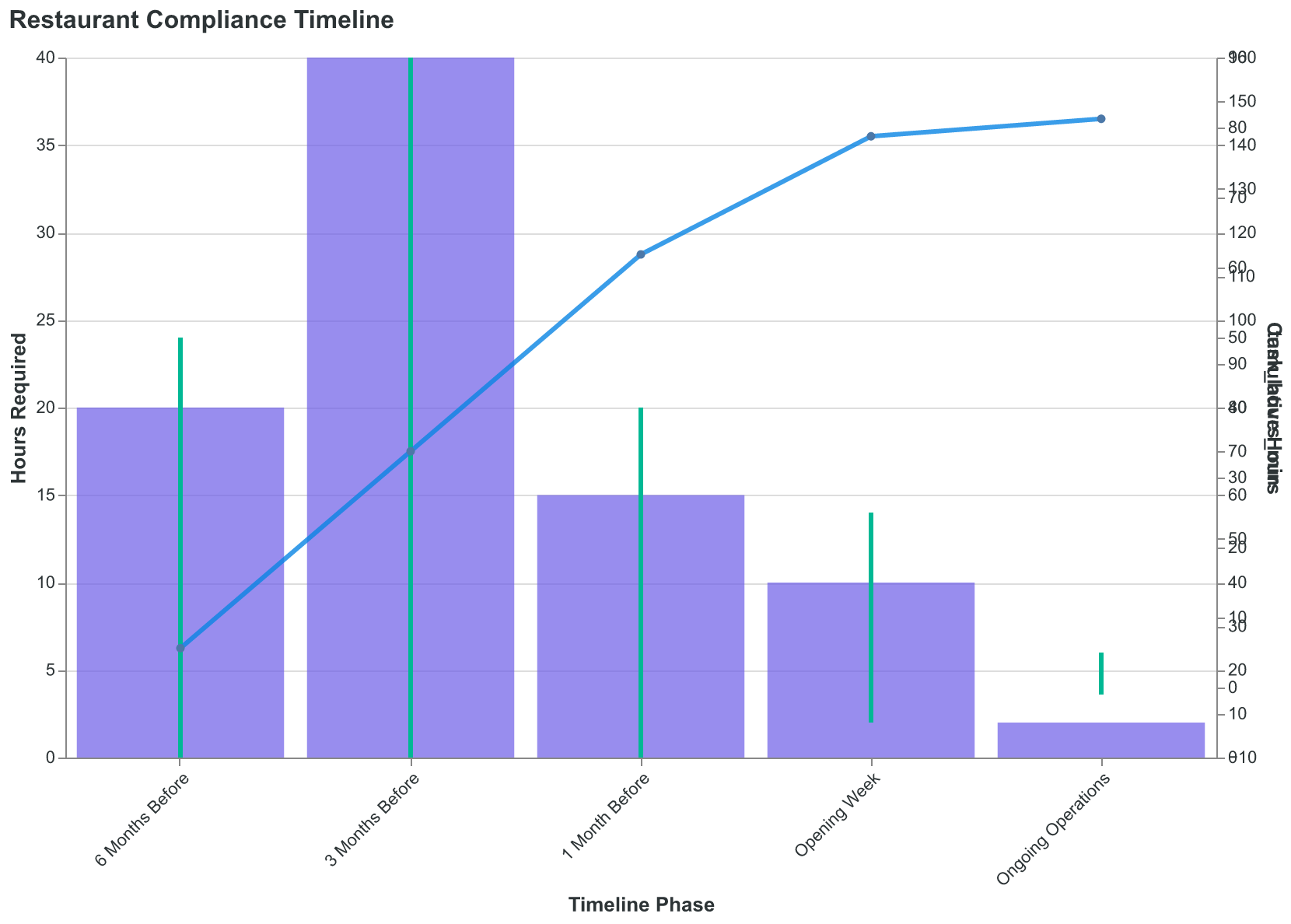
Food safety compliance follows a predictable timeline. Start early — the permit approval process alone takes 2-4 months in most cities, and that’s assuming your paperwork is perfect.
6 Months Before Opening: Foundation Phase (20-30 hours) Secure your location and begin permit research. File for your Food Service Establishment License and Building Permit immediately — these drive your entire timeline. Most cities require 60-90 days for plan review.
3 Months Before: Systems Installation (40-50 hours) Order equipment that meets health code specifications. Submit your Food Establishment Plan Review with detailed kitchen layouts. Schedule your electrical and plumbing rough-in inspections. Any changes to your approved plans reset the clock.
1 Month Before: Staff and Documentation (15-25 hours) Complete Food Protection Manager Certification training for all supervisors. Set up your HACCP logs, cleaning schedules, and temperature monitoring systems. This is when most owners realize they’re missing critical documentation.
Opening Week: Final Verification (10-15 hours) Schedule your Pre Opening Food Inspection only after all equipment is installed and staff is trained. Keep your compliance dossier organized — inspectors want to see systems, not just paperwork.
Ongoing Operations: Maintenance Mode (2-3 hours monthly) Monthly compliance audits prevent violations. Track permit renewals 90 days early — California (Los Angeles, Restaurant) requirements change annually. Set calendar reminders for staff certification renewals.
Most delays happen because owners underestimate permit dependencies. Your building permit must be approved before equipment installation. Equipment must pass inspection before your food service license activates. Plan backwards from your opening date, not forwards from today.
Common Questions Across the Compliance Journey
What happens if I fail the initial health inspection? You typically get 10-14 days to correct violations before a re-inspection. Critical violations (temperature control, cross-contamination) must be fixed immediately. Non-critical violations can be addressed during the correction period. Some jurisdictions allow conditional permits while you resolve minor issues.
How often do permits need renewal? Most food service establishment licenses renew annually, but timelines vary by jurisdiction and permit type. Plan renewal 60-90 days before expiration to avoid lapses. Some permits auto-renew with payment; others require new applications.
Can I operate during the permit application process? No. You cannot serve food without valid permits and passing inspections—the pre-opening phase must be completed before any customer service. Some jurisdictions offer temporary permits for training periods, but customer service requires full compliance.
Do food trucks need the same permits as brick-and-mortar restaurants? Food trucks need mobile vendor permits instead of fixed-location permits, but health department requirements remain similar. Fire safety and building permits differ significantly. Commissary kitchen agreements are typically required for food prep and storage.
How do I know if regulations have changed since opening? Subscribe to health department notifications and industry newsletters. Many jurisdictions now offer digital alert systems. Annual permit renewals often include regulatory updates. Consider quarterly compliance audits to catch changes before they become violations.
Food safety compliance isn’t about checking boxes — it’s about protecting the customers who trust you with their health and safeguarding the business license that keeps your doors open. The restaurants that survive their first five years understand this isn’t a one-time hurdle but a continuous system spanning pre-opening permits, daily protocols, and ongoing maintenance.
Start with your foundation. Get your pre-opening requirements right, because everything else builds on that base. The framework is here. The only question is whether you’ll implement it systematically or leave compliance to chance.
Be Ready When They Knock.
Check your city’s compliance requirements — free. Enter your city and restaurant type to see every permit, license, and inspection you need before opening.
Get Your Compliance Checklist
This article is part of the ApronPrep Compliance Intelligence Library. Data sourced from 150 cities across 50 states. Last verified: July 2026.