
Permits & Licensing Guide
Restaurant Liquor License Guide: Requirements, Costs & Timeline 2026
July 14, 2026 · 17 min read · 4,247 words
Marcus Chen stood in his empty Portland ramen shop at 5:47 AM on what should have been opening day. The neon sign was installed, the kitchen equipment gleaming, his staff trained and ready. Then the health inspector walked in with a single question that killed two years of planning: “Where’s your liquor license?”
Marcus had applied for what he thought was the right permit — a beer and wine license for his 28-seat restaurant. But Oregon requires a different license class for establishments serving ramen with alcohol, and his application had been automatically rejected three weeks earlier. The mandatory hearing notice? Buried in his spam folder.
What Marcus discovered that morning was devastating: he’d need to restart the entire liquor licensing process. No beer to pair with his tonkotsu. No sake service. No opening day. His landlord was already asking about next month’s rent.
The Oregon Alcohol Control board’s next available hearing slot was four months out. Marcus had budgeted for food costs, equipment, and staff training. He hadn’t budgeted for the hidden complexity of liquor licensing — or the $12,000 he’d lose in rent waiting for approval.
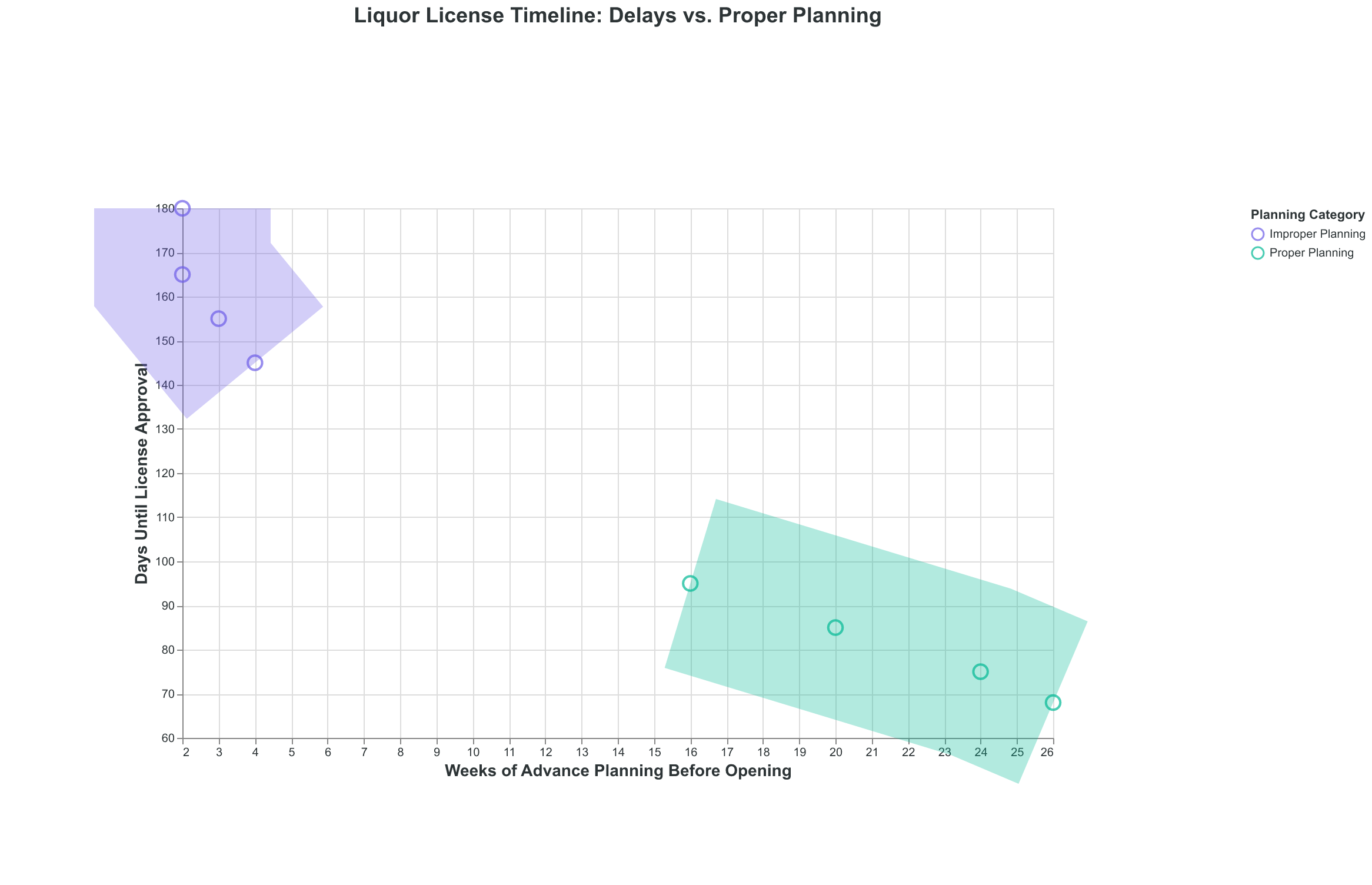
Marcus isn’t alone. Liquor licensing delays shut down 23% of planned restaurant openings nationwide, turning dream launches into compliance nightmares.
The 3-Tier Liquor License Framework: Understanding Your Options
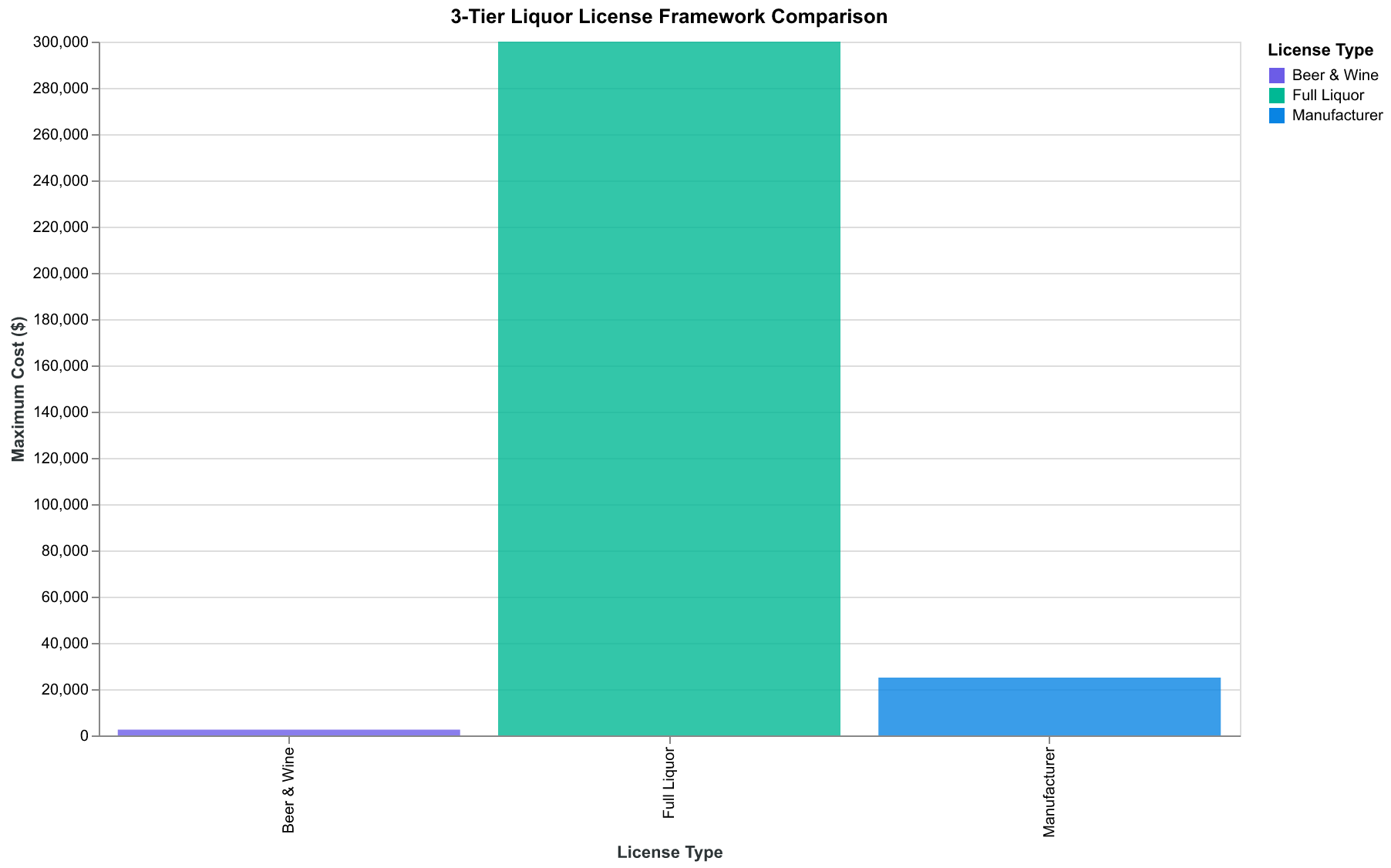
Restaurant liquor licensing isn’t just about filing paperwork — it’s about navigating a complex regulatory maze that varies dramatically by state and can cost anywhere from $500 to $300,000+ depending on your location and license type. The 3-Tier Liquor License Framework breaks down this complexity into three distinct categories that every restaurant owner must understand before applying.
The framework organizes liquor licenses into three fundamental tiers: Beer & Wine Licenses (the most accessible entry point, typically $300-$2,500), Full Liquor Licenses (comprehensive but expensive, $1,000-$300,000+ in quota states), and Manufacturer Licenses (for breweries and distilleries with restaurant components, $500-$25,000). Each tier has different requirements, costs, and compliance obligations that compound based on your state’s specific regulations.
What makes this framework critical is how these tiers interact with state-specific variations. While every state follows this basic structure, the actual requirements diverge wildly. California’s California Liquor License On Premises process differs completely from New York’s system or Illinois regulations. Some states operate quota systems where licenses trade on secondary markets for hundreds of thousands of dollars, while others issue licenses on-demand for modest filing fees.
The framework also accounts for the hidden timeline reality: while filing fees might be manageable, the actual licensing process involves public hearings, background checks, and compliance reviews that stretch 4-6 months minimum. Factor in potential protests from existing licensees or community groups, and you’re looking at potential delays that can derail opening schedules.
The key insight: liquor licensing success requires matching your restaurant concept to the right tier, understanding your state’s specific requirements, and planning for true costs and timelines well before you need to serve your first drink. Let’s examine each tier in detail.
The Three License Categories Every Restaurant Owner Needs to Know
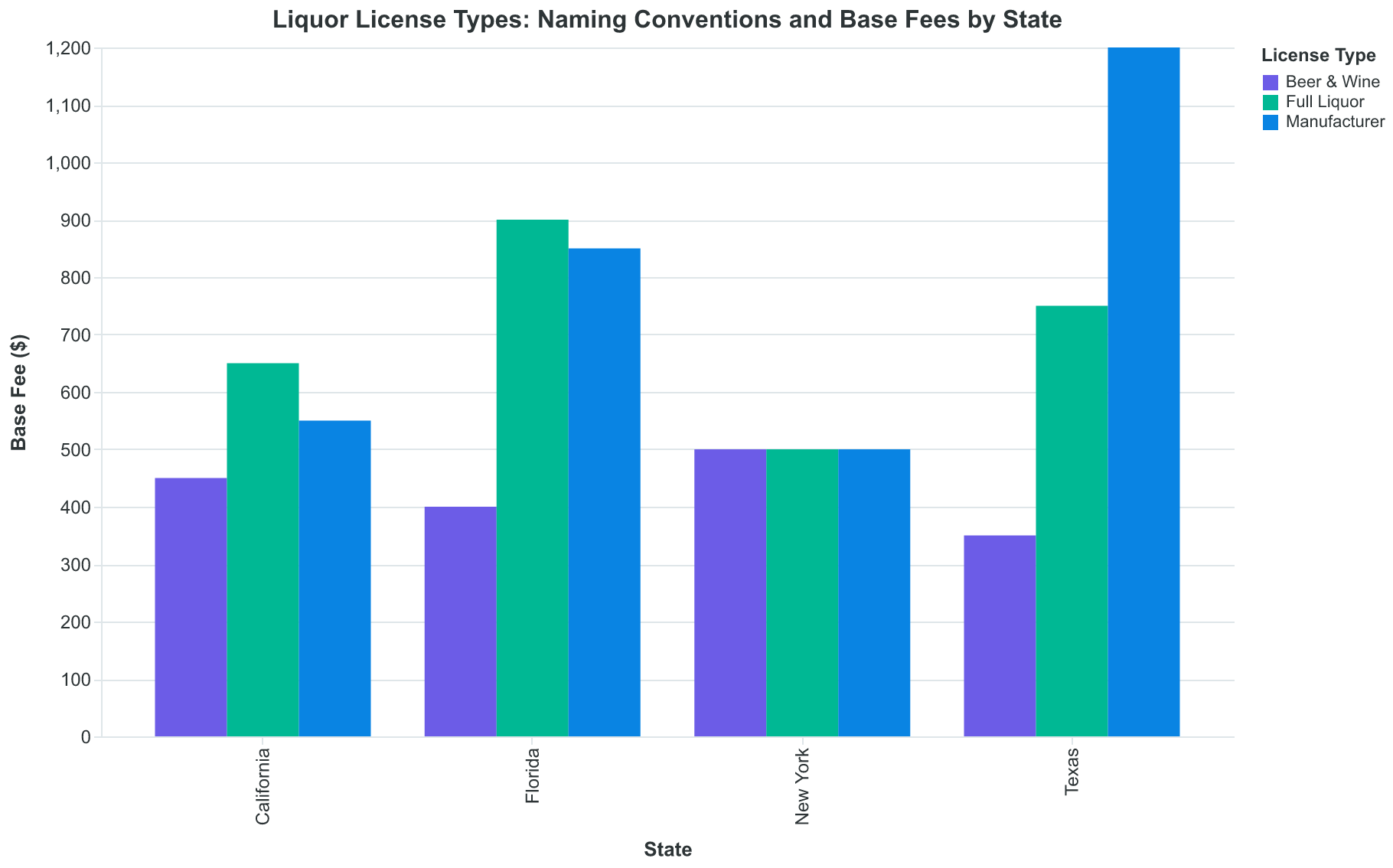
Restaurant liquor licenses fall into three core categories, regardless of what your state calls them. Understanding these distinctions upfront prevents the costly mistake of applying for the wrong license type — a delay that can push your opening back months.
Beer & Wine Licenses are your entry point into alcohol service. These cover beer, wine, and sometimes cider for on-premises consumption. Most states price these between $500-$2,000 in filing fees, with approval timelines of 30-90 days. California calls this a Type 41 license, while Texas uses the term “Wine and Beer Retailer’s Permit.” The application process is typically straightforward: submit paperwork, pass a background check, and wait for approval. No public hearings required in most jurisdictions.
Full Liquor Licenses unlock spirits, cocktails, and complete beverage programs. This is where costs escalate significantly — filing fees range from $1,000-$15,000, and approval can take 60-180 days. More importantly, many states require public hearings where community members can object to your application. New York’s On-Premises License requires a 30-day public comment period, while California’s Type 47 license mandates posted notices at your location. Texas calls this a “Mixed Beverage Permit,” and the hearing requirement varies by county.
Manufacturer Licenses operate under completely different rules. These cover breweries, distilleries, and wineries that produce alcohol on-site. The requirements are more complex — you need federal permits, state manufacturing licenses, and often special zoning approvals. A brewery in Colorado needs a Federal Brewer’s Notice, state Manufacturer’s License, and local special use permit. The timeline stretches 6-12 months minimum.
| State | Beer & Wine | Full Liquor | Manufacturer |
|---|---|---|---|
| California | Type 41 ($500) | Type 47 ($13,800) | Type 23/01 ($300-$1,000) |
| Texas | Wine & Beer Permit ($1,500) | Mixed Beverage Permit ($6,000) | Brewer’s Permit ($1,000) |
| New York | Beer/Wine License ($4,352) | On-Premises License ($4,352) | Manufacturing License ($1,420) |
| Illinois | Beer/Wine License ($750) | Liquor License ($2,500) | Brewer/Distiller ($1,000) |
| Florida | Beer & Wine License ($28) | Full Liquor License ($1,820) | Manufacturer License ($936) |
Why Your State’s Liquor Laws Could Make or Break Your Timeline
Jenna Rodriguez discovered this the hard way when expanding her successful Austin taco chain to New Jersey. In Texas, her Mixed Beverage Permit cost $6,000 and took 45 days to approve. She assumed New Jersey would be similar — maybe a bit more expensive, but manageable.
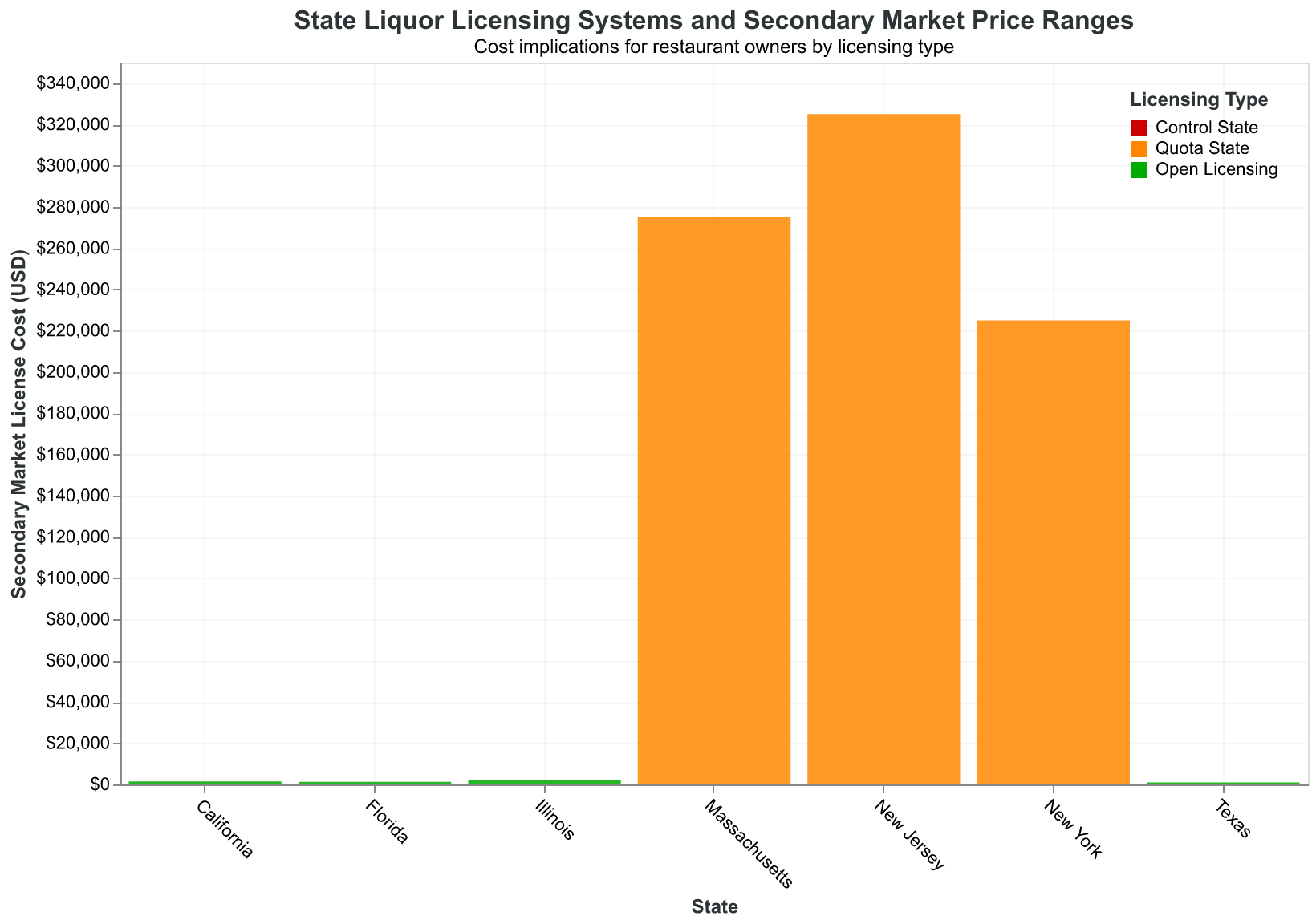
What cost $1,000 in Texas was now a $300,000+ secondary market purchase in New Jersey, plus a mandatory public hearing that could be protested by existing license holders who viewed her as competition. Her carefully planned 90-day buildout timeline collapsed into an 18-month nightmare of legal fees, community meetings, and negotiations with license brokers.
Quota vs. Non-Quota States: The Fundamental Divide
States fall into two camps that determine everything about your licensing experience. Non-quota states like California, Texas, and Florida issue licenses to qualified applicants who meet basic requirements. You apply, pay the filing fee, pass background checks, and receive your license. Competition comes from market forces, not artificial scarcity.
Quota states like New Jersey, Connecticut, Massachusetts, and parts of New York strictly limit available licenses based on population formulas. When licenses aren’t available from the state, you must purchase existing licenses from current holders — creating secondary markets where prices fluctuate based on supply and demand.
| Non-Quota States | Typical Cost | Timeline | Quota States | Secondary Market Price | Transfer Timeline |
|---|---|---|---|---|---|
| California | $500-$13,800 | 60-120 days | New Jersey | $200,000-$400,000 | 4-8 months |
| Texas | $1,500-$6,000 | 30-90 days | Connecticut | $150,000-$300,000 | 3-6 months |
| Florida | $28-$1,820 | 45-75 days | Massachusetts | $100,000-$250,000 | 6-12 months |
| Arizona | $500-$2,500 | 30-60 days | Pennsylvania | $50,000-$150,000 | 4-10 months |
| Nevada | $600-$8,000 | 60-90 days | New York (NYC) | $300,000-$500,000 | 8-18 months |
State-Specific Complications That Kill Timelines
Beyond quota systems, individual states add unique requirements that catch restaurant owners unprepared. Massachusetts (Boston) requires documented community support and prohibits new licenses within 500 feet of schools or churches. New York City mandates “method of operation” hearings where you must prove your restaurant concept aligns with community character.
Illinois (Chicago) ties liquor licenses to aldermen approval — making local politics a factor in your application. Some Chicago wards haven’t approved new full liquor licenses in over a decade, regardless of state law.
California seems straightforward until you hit Department of Alcoholic Beverage Control district variations. What passes easily in Los Angeles might face months of review in San Francisco due to local density concerns.
The pattern is clear: research your specific jurisdiction’s requirements before you sign a lease. The state ABC website gives you baseline requirements, but city and county overlays determine your actual timeline and costs.
The True Cost: Why Your Budget Is Wrong
Sarah thought she had it figured out. The California ABC website showed a $15,240 filing fee for her California Liquor License On Premises. She budgeted $20,000 total — plenty of cushion, right?
Six months later, she’d spent $47,000 and still didn’t have her license.
The filing fee is just the entry ticket. Here’s what actually happens: First, you’ll spend 20-40 hours preparing your application — time most restaurant owners bill at $50/hour if they’re honest about opportunity cost. Then comes the attorney. Even straightforward applications run $2,000-$5,000 in legal fees because one mistake triggers months of delays.
Background checks and fingerprinting add another $300-$800 per person listed on the license. The premises inspection? Another $500-$1,200 depending on your city’s fee structure. TIPS training for your management team: $200-$500.
But here’s where budgets really explode: quota states. When Connecticut, New Jersey, or Massachusetts cap the number of licenses available, you’re not buying from the state — you’re buying from whoever owns an existing license. A full liquor license in downtown Hartford? $180,000. Manhattan? We’ve seen transfers exceed $500,000.
Even in non-quota states, the hidden costs multiply. Liquor liability insurance runs $2,000-$8,000 annually — and you can’t operate without it. Annual renewals aren’t just paperwork; they’re $500-$2,000 recurring fees plus compliance documentation that takes hours to prepare.
| Cost Category | Low End | High End | Hidden Factors |
|---|---|---|---|
| Filing Fees | $300 | $15,240 | Varies by state & license type |
| Attorney Fees | $2,000 | $5,000 | Complexity & delays drive costs |
| Secondary Market | $0 | $500,000+ | Only in quota states |
| Background/Fingerprints | $300 | $800 | Per person on license |
| Insurance (Annual) | $2,000 | $8,000 | Based on capacity & location |
| Training & Certification | $200 | $500 | Often mandatory |
| First-Year Total | $4,800 | $529,540 | Plus opportunity cost of delays |
The restaurant owners who succeed budget for the high end and celebrate when costs come in lower. Those who budget for filing fees alone discover why 60% of restaurant startups fail before opening.
“Nobody warned me about the secondary market,” says Marcus, whose Dallas concept burned through an extra $85,000 purchasing a license from a closing competitor. “The state website made it look like a $1,200 filing fee. Reality was 70 times that.”
Public Hearings: When Your Community Gets a Vote
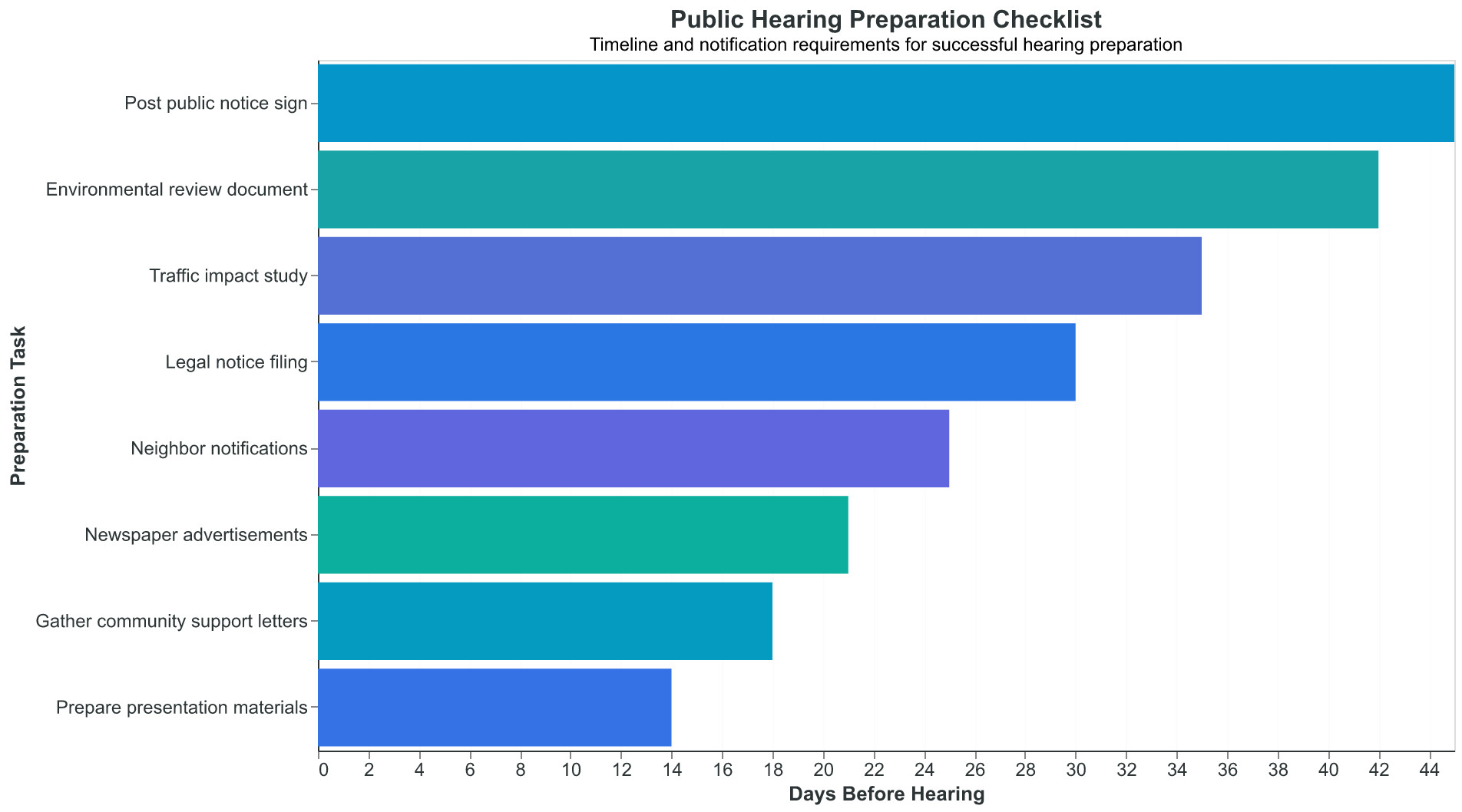
Twenty-eight states require public hearings for restaurant liquor licenses — and they’re exactly what they sound like. Your neighbors, local business owners, and concerned citizens get to voice their opinions about whether you should serve alcohol. Think of it as democracy in action, with your business plan as the ballot measure.
Sarah Martinez learned this firsthand when opening her tapas restaurant in Boston. The Massachusetts (Boston) hearing process required posting a 4-foot by 3-foot sign on her storefront for 30 days, publishing notices in two local newspapers, and personally notifying every property owner within 300 feet of her location. “I knocked on 47 doors,” she recalls. “Most people were excited about a new restaurant, but three were worried about parking and late-night noise.”
Hearing Preparation Checklist
| Task | Timeline | Notes |
|---|---|---|
| Post public notice sign | 30-60 days before hearing | Must meet size/content requirements |
| Newspaper advertisements | 2-4 weeks before hearing | Usually 2 publications required |
| Neighbor notifications | 21-30 days before hearing | Certified mail recommended |
| Prepare presentation materials | 2 weeks before hearing | Include floor plans, operating hours |
| Gather community support letters | 2-3 weeks before hearing | Local business owners, residents |
| Traffic impact study (if required) | 4-6 weeks before hearing | Major metropolitan areas only |
The hearing itself follows a predictable pattern: you present your case (10-15 minutes), the public comments (usually 20-30 minutes), board members ask questions (10-15 minutes), then they deliberate. Common objections include parking concerns (prepare a traffic study), noise complaints (offer specific operating hours), and “changing neighborhood character” (bring support letters from existing businesses).
Sarah’s strategy worked: she committed to closing the bar area by 11 PM on weeknights, hired a valet service for peak hours, and presented 23 support letters from neighboring businesses. The Licensing Board approved her application unanimously. “The key was addressing their concerns before they became objections,” she explains. “I didn’t just want their approval — I wanted them to be excited about having us in the neighborhood.”
The decision typically comes within 30 days of the hearing, though some jurisdictions decide on the spot.
Server Training: The Hidden License Requirement That Protects Your Business
Your liquor license doesn’t just permit you to sell alcohol — it makes you legally responsible for how it’s served. Every state requires some form of server training, and the requirements aren’t suggestions. Missing training deadlines can trigger immediate license suspension — making this one of your highest-priority compliance requirements.
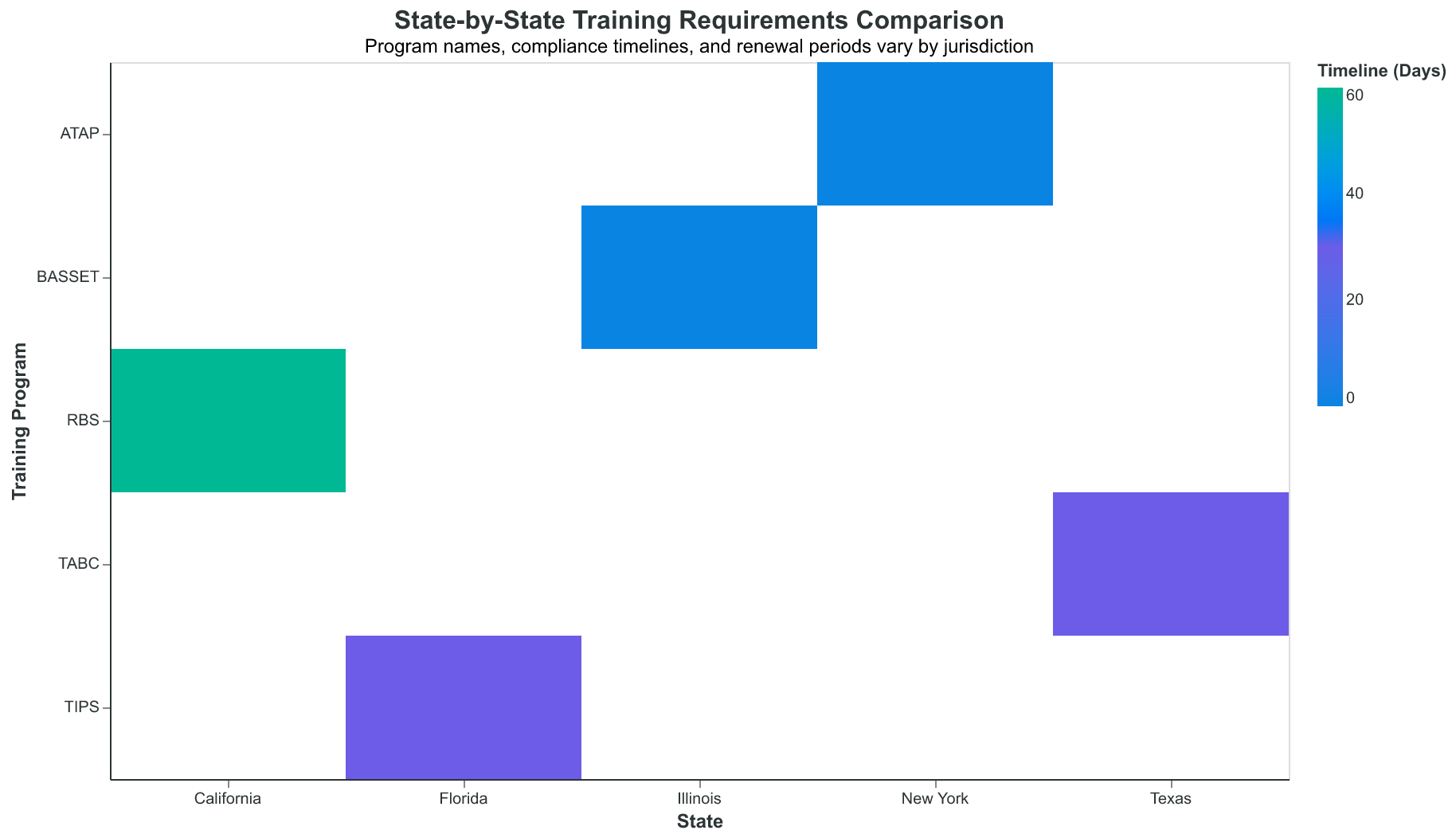
The training landscape varies dramatically by state, but falls into two categories: Responsible Beverage Service (RBS) training and Manager Certification programs. TIPS (Training for Intervention ProcedureS) and ServSafe Alcohol are the two most recognized national programs, but many states mandate their own specific certifications.
California requires RBS training for all alcohol servers within 60 days of hire, with manager-level certification for supervisory staff. The training covers alcohol absorption rates, recognizing intoxication signs, proper ID checking procedures, and liability protection strategies. Cost: $15-45 per person, with 2-year renewal cycles.
Texas mandates TABC (Texas Alcoholic Beverage Commission) seller-server training for anyone who serves, sells, or delivers alcoholic beverages. This includes bartenders, servers, managers, and even delivery drivers for off-premise sales. The certification lasts two years and costs $15, but the liability protection it provides is invaluable.
New York requires Alcohol Training Awareness Program (ATAP) certification for managers and optional-but-recommended training for servers. The state also mandates “dram shop” liability training that covers your legal exposure when customers are over-served.
| State | Server Training | Manager Training | Renewal Cycle | Cost Per Person |
|---|---|---|---|---|
| California | RBS (Required) | RBS Manager (Required) | 3 years | $15-$45 |
| Texas | TABC (Required) | TABC (Required) | 2 years | $15 |
| New York | ATAP (Recommended) | ATAP (Required) | 3 years | $25-$40 |
| Florida | RBS (Required) | RBS (Required) | 3 years | $30 |
| Illinois | BASSET (Required) | BASSET (Required) | 3 years | $15 |
The Liability Protection Factor
Proper training isn’t just regulatory compliance — it’s legal armor. When trained staff follow proper procedures, your restaurant gains “affirmative defense” protection against dram shop lawsuits. This means if a customer causes an accident after leaving your establishment, proper training and documentation can limit your liability exposure.
The alternative is devastating: liquor liability lawsuits regularly reach six-figure settlements, and insurance companies can deny coverage if staff weren’t properly trained. The $500 you spend on training prevents the $50,000 lawsuit.
Your License Comes with a Compliance Scorecard — Here’s What They’re Tracking
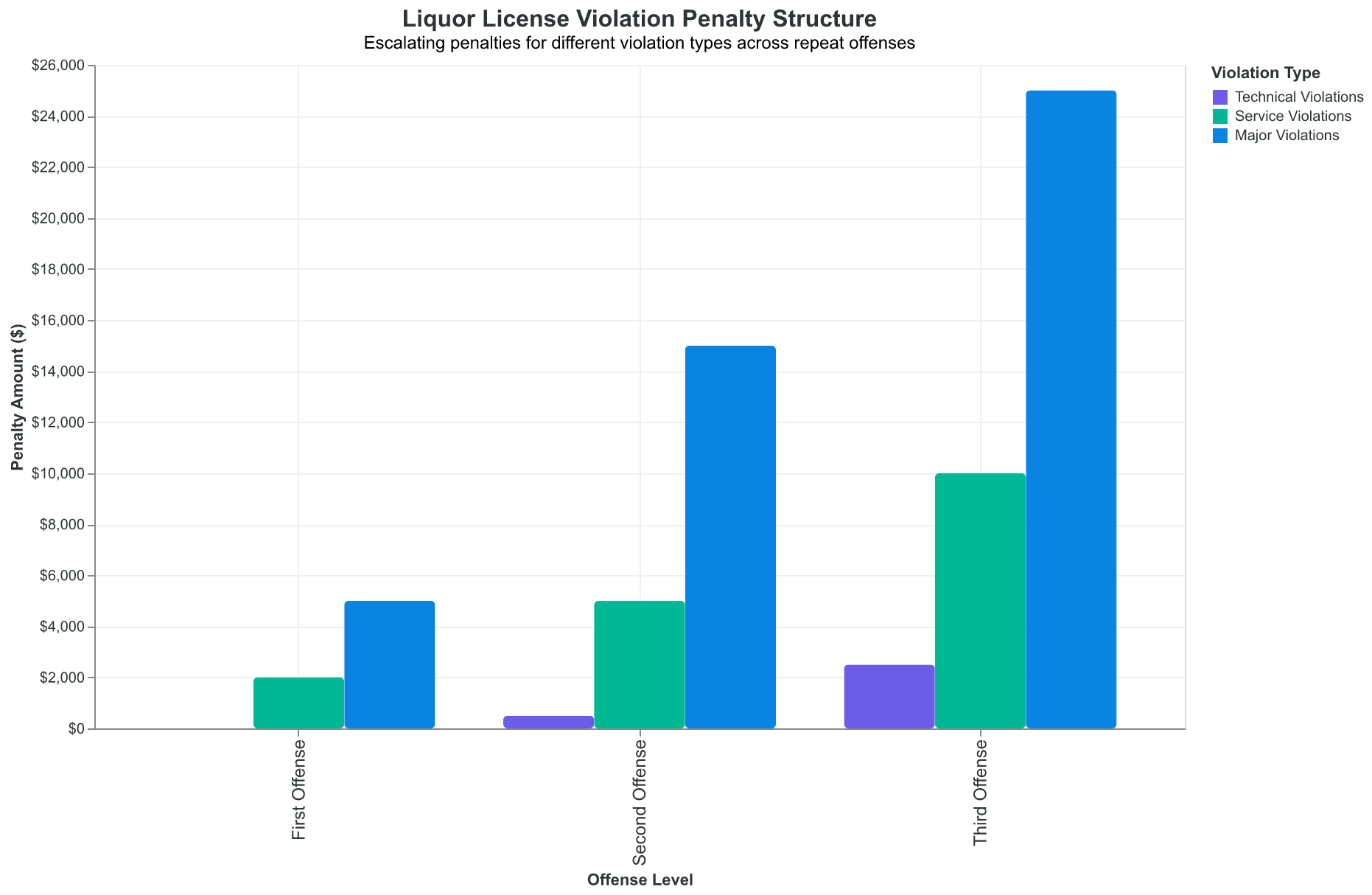
Your liquor license isn’t a permanent pass — it’s a probationary permit that requires ongoing demonstration of compliance. State alcohol control boards maintain detailed enforcement databases that track every violation, warning, and complaint associated with your license. License renewals aren’t automatic — they’re merit-based reviews of your compliance history where a single serious violation can derail years of successful operation.
The Three-Strike Reality
Most states operate informal three-strike systems where violations accumulate points against your license. Minor infractions (serving without checking ID, improper storage) typically earn 1-2 points. Serious violations (serving minors, over-serving intoxicated customers) jump to 5-10 points. Accumulate 15-20 points within a three-year window, and you’re facing license suspension or revocation.
The scoring isn’t published, but patterns are consistent across states. California’s ABC tracks violations using a “progressive discipline” model where penalties escalate with repeat offenses. A first-time minor serving violation might result in a warning and mandatory retraining. The second violation triggers a 10-day suspension. The third means license revocation proceedings.
What Triggers Enforcement Action
State investigators don’t randomly audit restaurants — they respond to specific triggers that put you on their radar. Community complaints about noise, fights, or parking issues lead to increased scrutiny. Failed health department inspections often trigger alcohol compliance checks. And competitor complaints (usually anonymous) can initiate undercover sting operations.
The most common violations aren’t serving minors — they’re operational compliance failures. Improper storage (alcohol visible from public areas in some states), incorrect pricing displays, missing required signage, and inadequate ID checking procedures account for 70% of violations according to ABC enforcement data.
| Violation Category | Point Value | Common Examples | Penalty Range |
|---|---|---|---|
| Minor Operational | 1-2 points | Missing signage, improper storage | Warning to $500 fine |
| ID/Age Verification | 3-5 points | Inadequate checking, expired scanner | $500-$2,000 fine |
| Service Violations | 5-8 points | Over-service, after-hours sales | $1,000-$5,000 fine |
| Major Violations | 10+ points | Serving minors, unlicensed sales | Suspension/Revocation |
Documentation as Defense
Successful restaurants treat compliance as an operational system, not a regulatory burden. This means maintaining training records for all staff, incident logs for any alcohol-related issues, and digital copies of all renewal filings and inspection reports. When violations occur — and they will — proper documentation transforms potentially serious penalties into minor administrative corrections.
Sarah’s Boston tapas restaurant survived a surprise ABC inspection that found expired certifications for two servers. Because she maintained complete training records and could prove the renewals were already scheduled, the inspector issued a written warning instead of fines. “The paperwork saved us $2,000 and kept our perfect compliance record,” she notes. “ABC agents appreciate restaurants that take compliance seriously.”
Your 6-Month Liquor License Action Plan
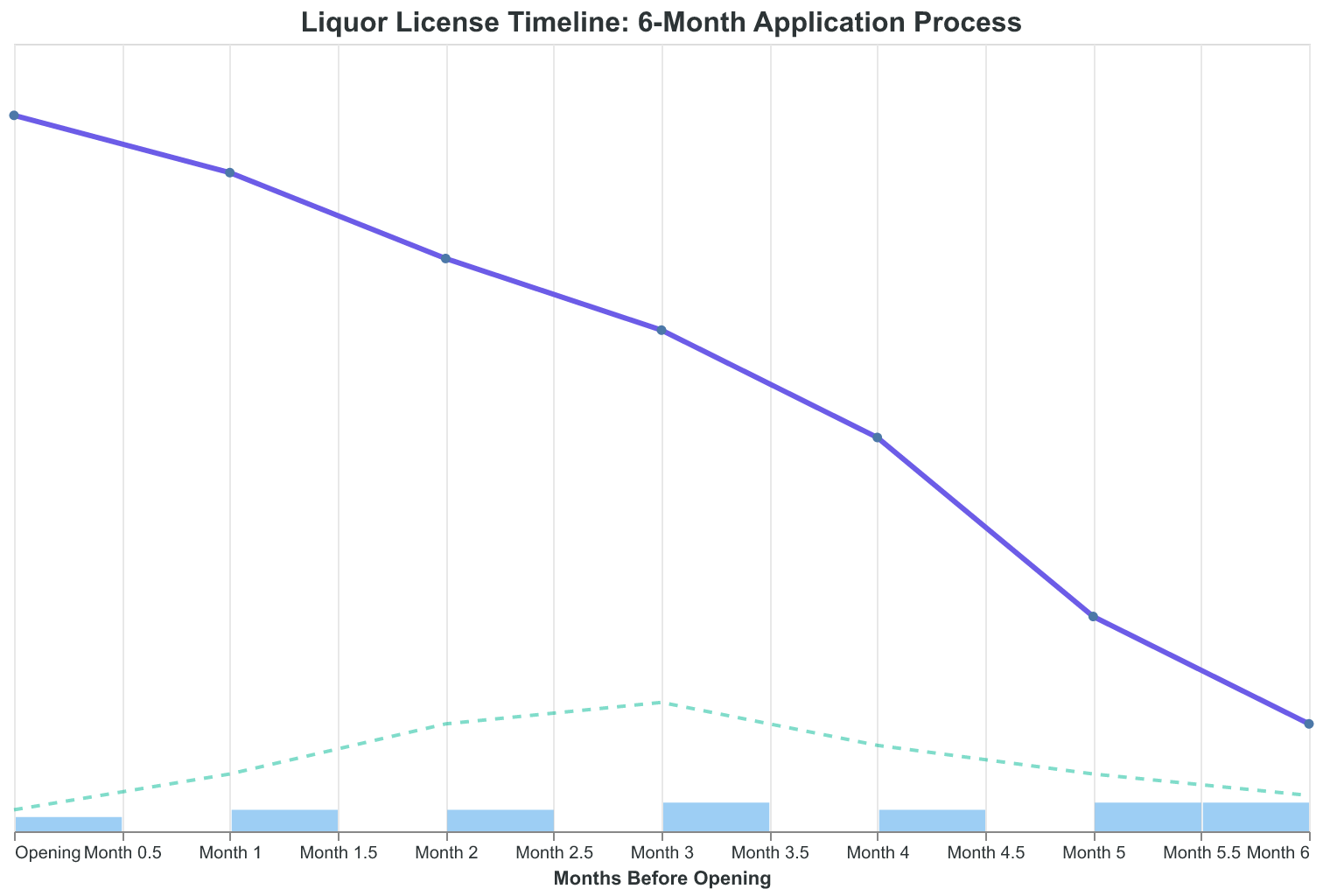
Month 6 Before Opening: Start Your Research
Before you sign that lease, identify your state’s specific license types and quota system. California operates on first-come, first-served for most California Liquor License On Premises applications, while states like New Jersey strictly limit available licenses. This single factor determines whether you’re looking at a $500 application fee or a $200,000+ secondary market purchase.
Month 5: Lock Down Your True Budget
Quota states require brutal honesty about costs. Budget for the license purchase price, plus application fees, plus attorney fees (usually $3,000-$8,000), plus holding costs while you wait. Non-quota states still have hidden costs: expedited processing fees, multiple hearings, and compliance consulting. The sticker shock happens here — not at closing.
Month 4: File Your Application
Your lease should be signed and your Food Service Establishment License application submitted before you touch liquor paperwork. Most states require proof of business legitimacy and location control. Incomplete applications sit in limbo for months.
Month 3-2: Prepare for Hearings
Public hearings aren’t rubber stamps. Research past objections in your area — parking complaints, noise concerns, proximity to schools. Prepare responses and bring neighborhood support letters. One vocal opponent can derail months of work.
Month 1: Get Your Team Licensed
Your managers need Training Certification before opening day. Book these courses early — popular dates fill up 4-6 weeks out, and some states require specific renewal cycles.
When to Call for Help
You need professional help if: you’re in a quota state, your location had previous violations, you’re facing public opposition, or you’re opening in multiple jurisdictions. The DIY approach works for straightforward applications in non-quota states with clean locations.
Red Flag: Timeline Compression
If you’re starting this process less than 4 months before opening, your timeline is already compromised. Plan for delays and have contingency revenue models ready.
Navigate Multi-Jurisdictional Liquor License Requirements
The challenge isn’t just knowing what permits you need — it’s understanding the sequence. Most restaurant owners discover too late that liquor licenses require other permits to be in place first. Your Food Service License, Certificate of Occupancy, and sometimes even your Health Permit must be approved before alcohol licensing boards will review your application.
This sequencing becomes critical in multi-jurisdictional situations. A restaurant in Chicago needs state liquor licensing, city business licensing, and ward-level approval — and each jurisdiction has different timelines and requirements. The city might approve your business license in 30 days, while the state takes 90 days for liquor licensing, but the ward alderman only reviews new applications quarterly.
ApronPrep tracks these dependencies across 847 jurisdictions, automatically generating compliance timelines that account for permit sequencing, hearing schedules, and seasonal variations in government processing times. Instead of discovering sequence requirements through expensive delays, restaurant owners get complete compliance roadmaps before signing leases.
Essential Resources for Your Liquor License Application
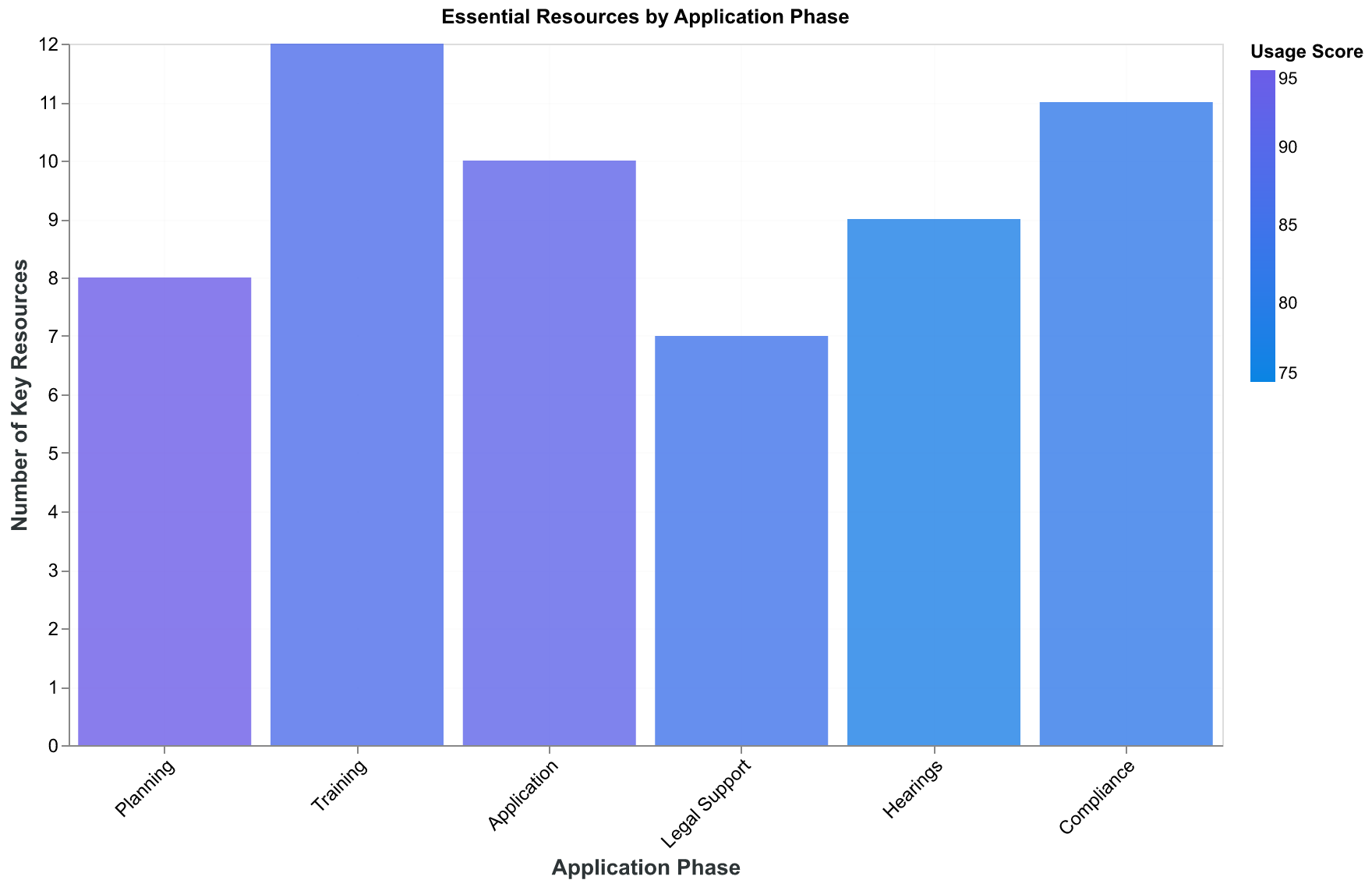
Start with your state ABC/ABCC authority — these agencies maintain official license requirements, application forms, and fee schedules. But state websites only give you baseline requirements. City and county overlays add complexity that isn’t documented in state resources.
State-Level Resources:
- California Department of Alcoholic Beverage Control (abc.ca.gov)
- Texas Alcoholic Beverage Commission (tabc.texas.gov)
- New York State Liquor Authority (sla.ny.gov)
- Illinois Liquor Control Commission (ilcc.gov)
- Florida Division of Alcoholic Beverages and Tobacco (myfloridalicense.com)
Professional Associations:
- National Restaurant Association (restaurant.org) — industry compliance guidance
- Restaurant Law Center — legal resource library
- State restaurant associations — local regulatory updates
Legal and Consulting Resources:
- Liquor license attorneys (essential for quota states)
- Compliance consultants (for multi-state operations)
- License brokers (quota state secondary markets)
Critical Research Questions:
- Does your state operate quota systems?
- What license types match your service model?
- Are public hearings required?
- What’s the realistic timeline from application to approval?
- What training requirements apply to your staff?
- How do city/county requirements overlay state law?
Documentation You’ll Need:
- Business formation documents (LLC/Corp filings)
- Federal Tax ID (EIN)
- Lease agreement or property deed
- Floor plans and capacity calculations
- Background check authorization for all owners/managers
- Financial statements and source of funds documentation
- Workers compensation and general liability insurance
Most states require this documentation to be current within 30-60 days of application, so don’t prepare everything six months in advance. The key is understanding what you need and having systems in place to produce current versions quickly when application windows open.
Marcus Chen’s second attempt went exactly as planned. He started his liquor license application four months before his target opening date, applied for the correct Class 47 license after researching California’s specific requirements, and prepared thoroughly for his ABC hearing with local zoning documentation and community support letters. His restaurant opened on schedule, with liquor service from day one.
The difference wasn’t luck — it was understanding that liquor licensing isn’t just paperwork, it’s a regulated process that rewards preparation and punishes assumptions. Every state has different license classes, fee structures, and approval timelines. Some require public hearings. Others have secondary markets where license values fluctuate like real estate.
Your California Liquor License On Premises application is sitting in someone’s inbox right now, or it should be if you’re opening in the next six months. The clock started ticking the moment you signed your lease, not when you finally get around to compliance.
Start researching your state’s requirements this week. Factor the true costs — application fees, legal counsel, potential secondary market purchases — into your opening budget. Treat compliance as an ongoing operational requirement, not a one-time hurdle.
Because when the inspectors knock, you want to be Marcus on his second try, not his first.
Be Ready When They Knock.
Check your state’s liquor license requirements and get realistic cost estimates before you sign that lease. Our compliance analyzer shows you exactly what permits you need, true costs including secondary markets, and realistic timelines for your specific location.
Check Your Liquor License Requirements
This article is part of the ApronPrep Compliance Intelligence Library. Data sourced from 150 cities across 50 states. Last verified: July 2026.