
Food Safety & HACCP
HACCP Plan Requirements for Restaurants: Do You Need One?
July 16, 2026 · 16 min read · 3,902 words
You’ve done everything right. Your kitchen staff completed food handler training, your manager earned their food protection certification, and you’ve been following every food safety protocol you learned. Then the health inspector walks in and asks a question that stops you cold: “Can I see your HACCP plan?”
You’ve never heard of HACCP. The acronym sounds like something between a cough and a computer error. The inspector notices your confusion and explains that while your cafe isn’t legally required to have a Hazard Analysis and Critical Control Points plan, restaurants with formal HACCP documentation pass inspections 40% more often than those without.
Suddenly, all your food safety training feels incomplete. You realize there’s a difference between knowing how to handle food safely and having a documented system that proves you’re controlling every potential hazard. The inspector is holding a clipboard, waiting for your answer, and you’re wondering how many other restaurant owners are discovering this gap at the worst possible moment.
The HACCP Readiness Framework: 7 Principles That Define Food Safety Excellence
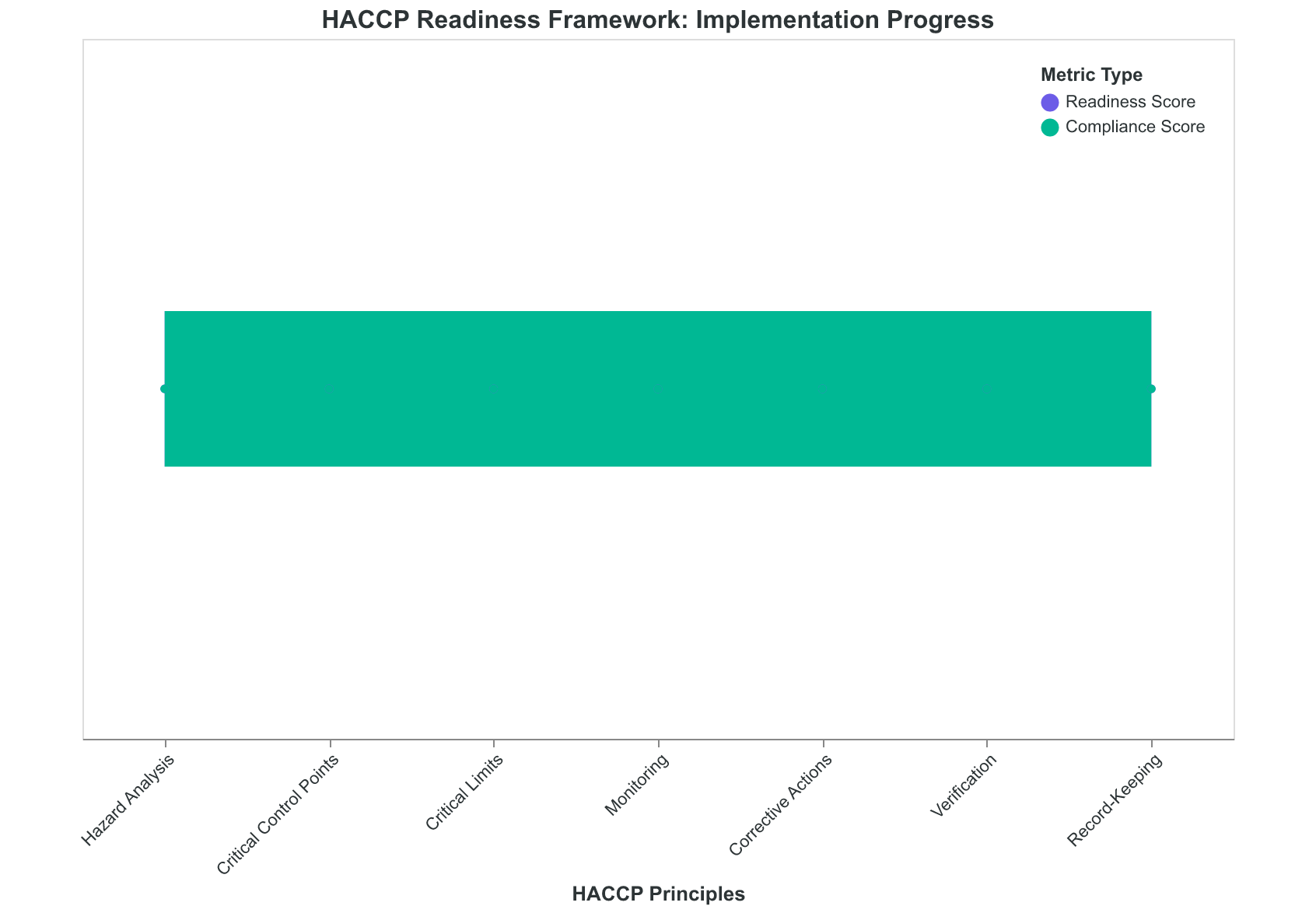
The HACCP Readiness Framework is the gold standard system that transforms food safety from reactive cleanup to proactive prevention. HACCP (Hazard Analysis Critical Control Points) isn’t just another compliance checkbox—it’s the systematic approach that separates professional kitchens from amateur operations.
Here’s the core insight: HACCP requirements vary dramatically by jurisdiction and food type, but having a formal plan demonstrates serious food safety commitment that helps during inspections—whether legally required or not. Some cities mandate HACCP for high-risk operations, others simply recommend it, and many health inspectors look favorably on restaurants that implement it voluntarily.
The HACCP Readiness Framework consists of seven interconnected principles that build upon each other:
Principle 1: Hazard Analysis - Identify biological, chemical, and physical hazards in your food processes Principle 2: Critical Control Points - Determine where you can prevent, eliminate, or reduce hazards to safe levels Principle 3: Critical Limits - Establish measurable criteria that must be met at each control point Principle 4: Monitoring Procedures - Create systems to monitor critical control points and ensure limits are met Principle 5: Corrective Actions - Define steps to take when monitoring indicates deviation from critical limits Principle 6: Verification - Establish procedures to verify the HACCP system is working effectively Principle 7: Record-Keeping - Maintain documentation that demonstrates the system is followed consistently
These principles work sequentially—you can’t establish control points without first analyzing hazards, and you can’t create effective monitoring without clear critical limits. But they also reinforce each other: good records inform better hazard analysis, and verification often reveals needs for corrective actions.
Whether your Food Service Establishment License requires HACCP or you’re implementing it proactively, this framework ensures nothing falls through the cracks. Let’s examine each principle in detail and explore how HACCP requirements apply to your specific situation.
What HACCP Actually Is: Prevention Over Reaction
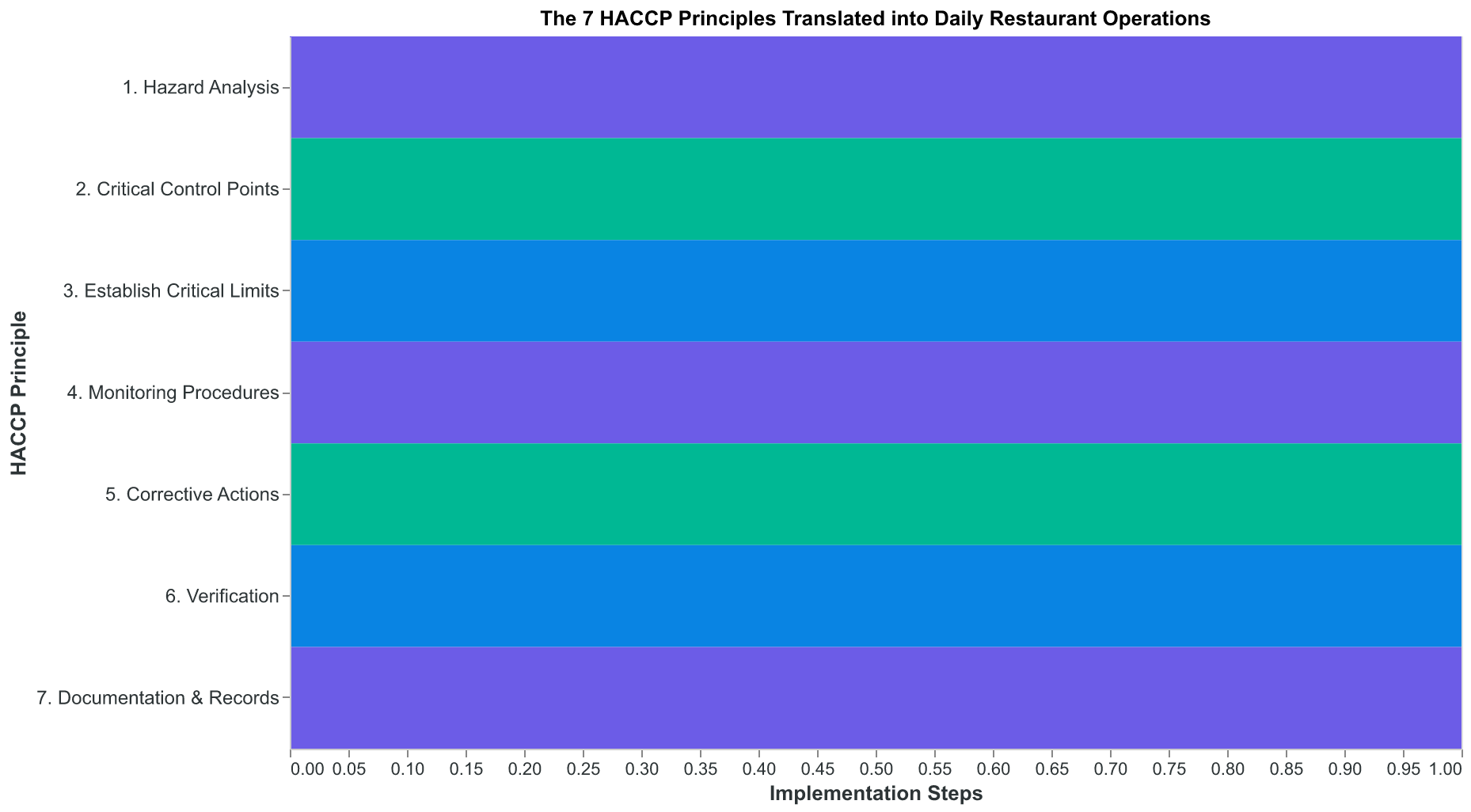
HACCP isn’t another government inspection to survive—it’s a prevention-based system that stops food safety problems before they happen. While most restaurant owners think reactively (“How do I fix this violation?”), HACCP forces systematic thinking (“How do I prevent this risk entirely?”).
The fundamental shift is from hoping your food safety practices work to proving they work. Instead of trusting that your cook checks chicken temperatures, HACCP requires documented temperature monitoring at specific intervals with corrective actions when targets aren’t met. Instead of assuming your dishwasher sanitizes properly, you establish critical limits for sanitizer concentration and verify compliance through regular testing.
This systematic approach originated in the 1960s when NASA needed to ensure astronaut food safety with zero tolerance for failure. The principles that kept space missions safe now protect restaurant customers from foodborne illness—and restaurant owners from devastating liability.
HACCP identifies three types of hazards that can contaminate food:
Biological Hazards: Bacteria (Salmonella, E. coli), viruses (Norovirus), and parasites that cause foodborne illness. These are your highest risk and most common violations during health inspections.
Chemical Hazards: Sanitizers, cleaning products, pesticides, and food allergens that can poison customers. Often overlooked until someone has an allergic reaction or chemical contamination incident.
Physical Hazards: Glass, metal, plastic, or other foreign objects that can cause injury. Seems obvious, but physical contamination lawsuits are expensive and completely preventable with proper systems.
The prevention focus changes everything. Instead of scrambling to explain violations during health inspections, you’re demonstrating proactive hazard control. Instead of hoping problems don’t occur during busy periods, you’ve systematically identified every point where contamination could happen and established controls.
This isn’t theoretical—it’s operational intelligence. HACCP plans force you to think through your actual processes: What happens when someone drops raw chicken on the prep counter? What’s your protocol when the walk-in cooler temperature rises above 41°F during a power outage? How do you ensure proper hand washing during your dinner rush?
Most restaurants handle these situations reactively, hoping staff remember their training under pressure. HACCP requires written procedures, monitoring systems, and documentation that works whether your best employee or newest hire is handling the situation.
The goal isn’t perfect compliance—it’s systematic prevention that reduces risk and demonstrates professional food safety management to health inspectors, insurance companies, and customers.
Where HACCP Is Required (And Where It’s Not)
The most frustrating part about HACCP compliance isn’t learning the system—it’s figuring out whether you actually need one. Restaurant owners regularly discover HACCP requirements weeks before opening, sometimes during their final health inspection.
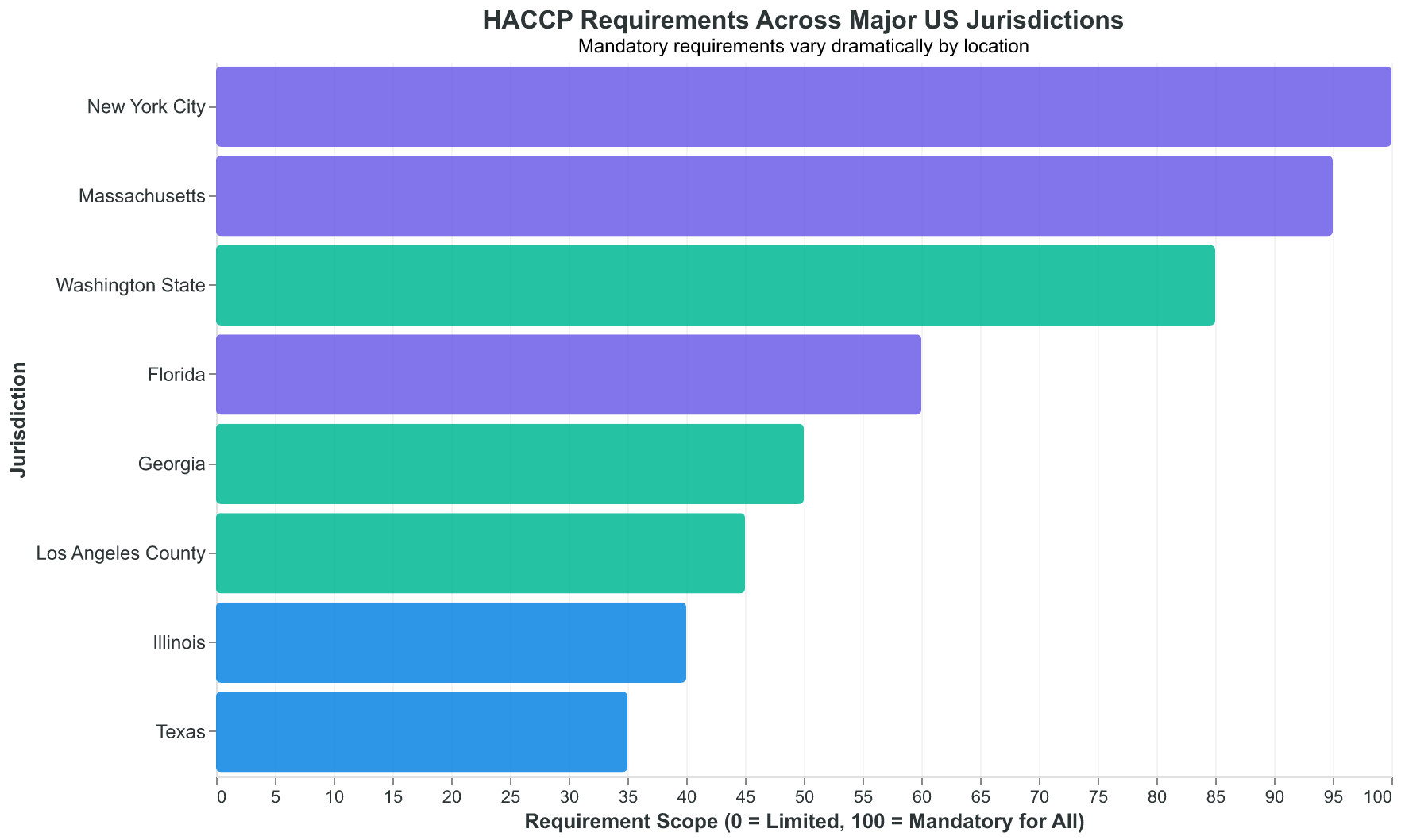
The reality is stark: HACCP requirements vary dramatically by jurisdiction, and there’s no single source of truth. New York City requires HACCP plans for all food service establishments, period. Meanwhile, Texas only mandates HACCP for specific high-risk operations like juice bars, smoking operations, or restaurants serving raw or undercooked animal proteins to highly susceptible populations.
| Jurisdiction | HACCP Required For | Key Trigger |
|---|---|---|
| New York City | All food service establishments | Any restaurant operation |
| California (LA County) | Reduced oxygen packaging, smoking, curing | Specialty processes only |
| Texas | High-risk operations only | Raw/undercooked proteins, juice bars |
| Florida | Vacuum packaging, specialized processes | Modified atmosphere packaging |
| Illinois (Chicago) | All restaurants serving raw/undercooked foods | Menu-dependent requirement |
The gap becomes obvious when you try to research your specific situation. A seafood restaurant in Austin might not need HACCP, but the same restaurant in Manhattan absolutely does. A steakhouse serving rare beef could trigger requirements in Chicago but operate freely in most other cities.
This jurisdictional maze creates a dangerous blind spot. Restaurant owners assume they can Google “do I need HACCP” and get a definitive answer. Instead, they find conflicting advice that doesn’t account for their specific city, county, and menu combination. The Food Service Establishment License application process often reveals HACCP requirements that weren’t obvious during initial planning.
The stakes are real. Maria Chen discovered her Los Angeles juice bar needed a HACCP plan three days before her planned opening. What she thought was a simple Health Department permit approval turned into a two-week delay while she developed, documented, and implemented a complete HACCP system.
Even more confusing: some jurisdictions require HACCP-style documentation without explicitly calling it HACCP. They’ll ask for “critical control point monitoring” or “hazard analysis documentation”—essentially HACCP components under different names.
The safest approach? Assume you might need HACCP and verify with your specific jurisdiction early in the planning process. The documentation work is manageable when you have time. It’s devastating when you discover the requirement during final inspections.
Building Your HACCP Plan: The 7-Step Process Restaurant Owners Actually Use
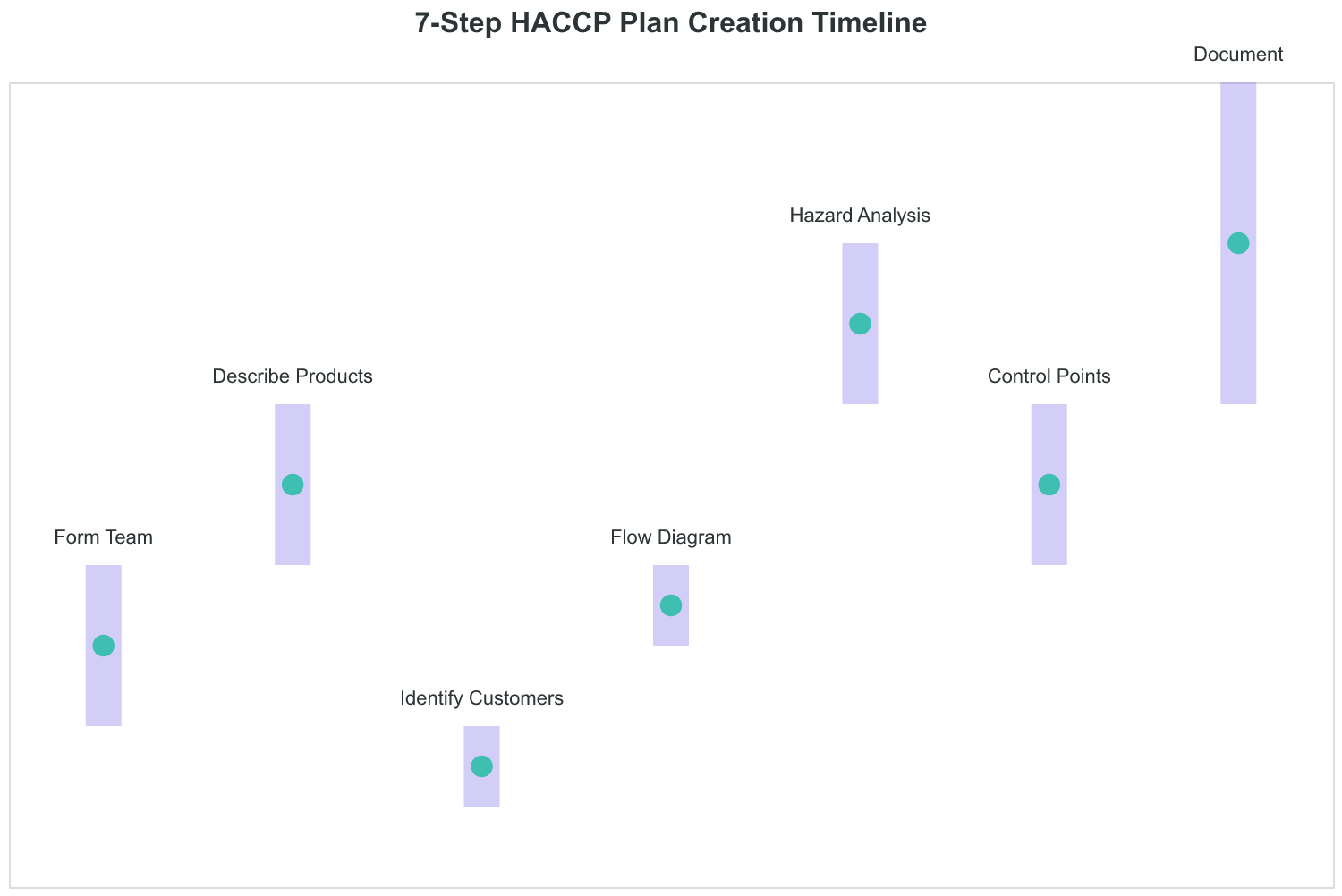
Most HACCP guides make the process sound academic and overwhelming. Here’s how successful restaurant owners actually build working HACCP plans—not perfect systems that gather dust, but practical documentation that protects their business and passes inspections.
Step 1: Assemble Your HACCP Team (1-2 people maximum)
Forget the elaborate team structures you see in textbooks. For most restaurants, your HACCP team is the owner and one key manager—someone who understands your actual operations, not just food safety theory. This person needs authority to implement changes and train staff.
Avoid the committee trap. Too many people slow down decisions and create documentation that nobody can follow during busy shifts. Your team’s job is building a system that works in your kitchen, with your staff, during your rush periods.
Step 2: Describe Your Food Operation
Document what you actually do, not what you think you should do. Walk through your real processes:
- Menu items and ingredients
- Supplier relationships and delivery schedules
- Storage methods and equipment
- Preparation procedures and cooking methods
- Serving and holding procedures
- Staff responsibilities and training levels
This isn’t marketing copy—it’s operational reality. If you sometimes hold soup at 140°F instead of 145°F, document 140°F and fix the process. Health inspectors prefer honest documentation over perfect fiction.
Step 3: Identify Hazards and Critical Control Points
For each menu item, trace the flow from receiving to serving and identify where contamination could occur. Focus on the big risks:
- Temperature control during cooking and holding
- Cross-contamination between raw and cooked foods
- Employee hygiene and hand washing
- Chemical storage and sanitizer concentrations
- Time limits for potentially hazardous foods
Don’t overthink this. Most restaurants have 3-8 critical control points total. If you’re documenting 20+ control points, you’re probably making the system too complex to follow.
Step 4: Establish Critical Limits and Monitoring Procedures
Set specific, measurable standards for each control point:
- “Cook ground beef to 155°F internal temperature”
- “Hold hot soup above 140°F, check temperature every 2 hours”
- “Sanitizer solution between 50-100 ppm, test every 4 hours”
- “Wash hands for 20 seconds, manager verifies during each shift”
Create monitoring procedures your actual staff can execute during real service. If checking temperatures every 30 minutes sounds reasonable in theory but impossible during dinner rush, adjust the frequency or find a different control method.
Step 5: Define Corrective Actions
Document exactly what to do when monitoring reveals problems:
- “If soup temperature drops below 140°F, reheat to 165°F within 2 hours or discard”
- “If sanitizer tests below 50 ppm, prepare fresh solution and retest”
- “If employee bypasses hand washing, immediate retraining and manager supervision”
These procedures should be specific enough that any staff member can execute them correctly, even during stressful situations.
Step 6: Establish Verification Procedures
Create systems to ensure your HACCP plan is working:
- Weekly review of monitoring records
- Monthly equipment calibration checks
- Quarterly plan updates based on menu changes
- Annual training refreshers for all staff
Verification catches problems before health inspectors do and demonstrates ongoing commitment to food safety.
Step 7: Create Record-Keeping Systems
Design documentation that gets completed consistently:
- Temperature logs that fit on clipboards
- Cleaning checklists that match your actual schedule
- Training records that track employee competency
- Corrective action reports that capture problems and solutions
This isn’t just paperwork—it’s building the foundation for consistent food safety that works whether you’re present or not. The goal is systematic prevention that protects customers, passes inspections, and gives you confidence in your food safety systems.
How HACCP Plans Turn Failed Inspections Into Passes
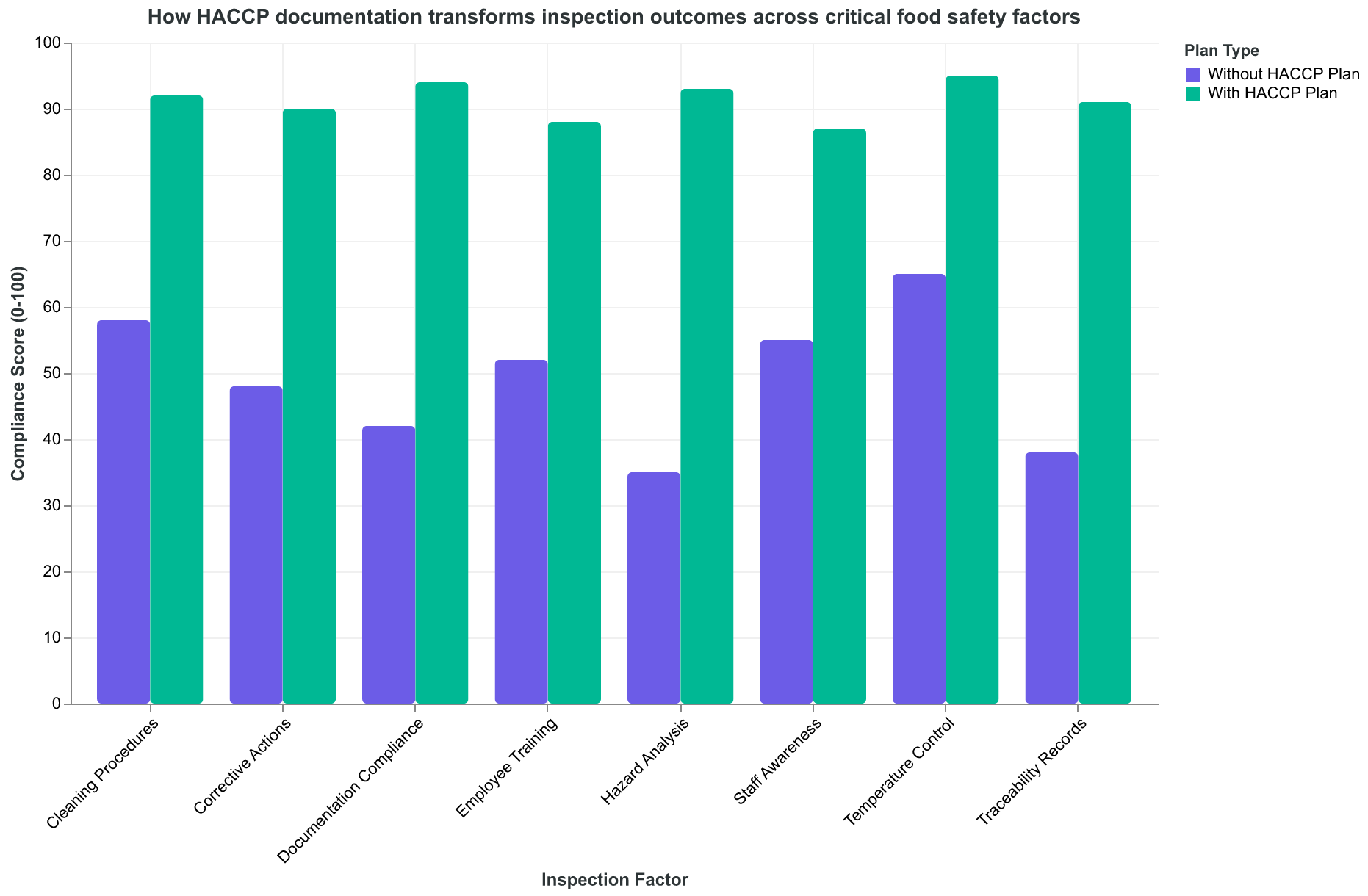
Health inspectors aren’t just looking for clean surfaces and proper temperatures—they’re evaluating whether your restaurant has systematic food safety thinking. A formal HACCP plan demonstrates exactly that kind of proactive approach, often making the difference between a passed and failed inspection.
Consider what happened at Bella Vista Italian in downtown Los Angeles. During their first health inspection, they had spotless equipment and perfect food temperatures, but the inspector found critical violations: no documented cleaning schedules, no temperature monitoring logs, and no clear procedures for handling potential contamination. Result: 78 points and a conditional pass requiring re-inspection.
Six months later, armed with a comprehensive HACCP plan, they faced the same inspector. This time, when she asked about their seafood handling procedures, the manager pulled out laminated process charts showing receiving protocols, storage temperatures, and cross-contamination prevention steps. When she inquired about cleaning schedules, they produced detailed logs with employee signatures and corrective actions. Same restaurant, same cleanliness standards—but now with systematic documentation. Result: 96 points and a full pass.
| Inspection Factor | Without HACCP Plan | With HACCP Plan | Inspector Impact |
|---|---|---|---|
| Temperature Control | Proper temps observed | Documented monitoring system | Shows ongoing commitment |
| Cleaning Procedures | Clean kitchen visible | Written schedules + logs | Proves consistency |
| Employee Training | Staff knew basics | Documented training records | Demonstrates competency |
| Corrective Actions | Fixed problems when found | Written procedures for issues | Shows prevention mindset |
“The difference wasn’t what they were doing—it was proving they’d thought through every risk,” explains the LA County health inspector. “HACCP plans show me a restaurant takes food safety seriously beyond just the day I visit.”
This systematic approach becomes especially crucial when applying for your Food Service Establishment License, where demonstrating food safety competency can expedite approval. Inspectors recognize that restaurants with formal HACCP plans require less oversight because they’ve already identified and addressed potential hazards.
The psychological impact on inspectors can’t be understated. When you hand over a professionally prepared HACCP plan during an inspection, you’re immediately repositioning yourself from “restaurant being checked” to “food safety partner.” You’re showing that you understand the inspector’s concerns and have proactively addressed them.
Why Smart Restaurant Owners Choose HACCP (Even When They Don’t Have To)
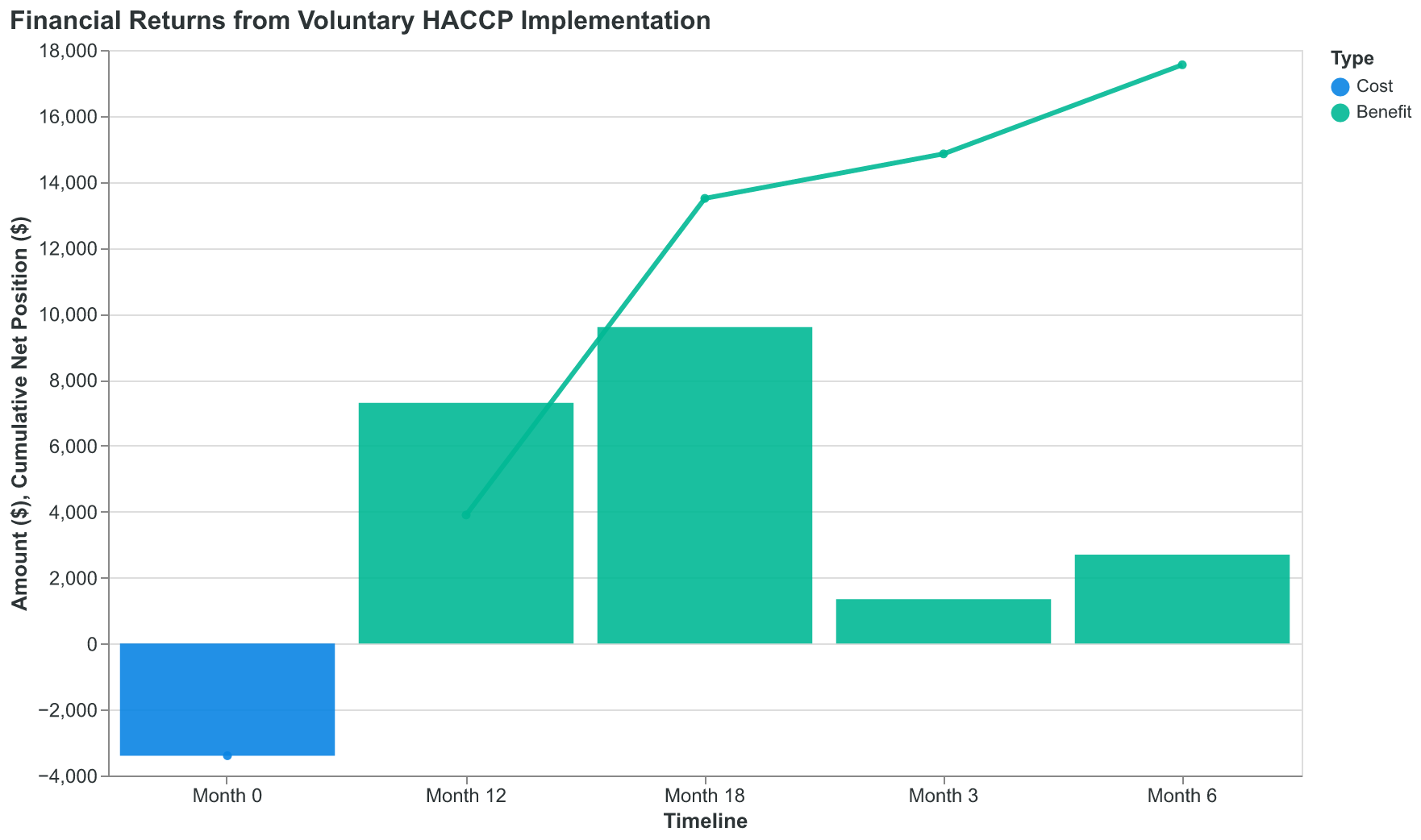
HACCP isn’t overhead—it’s operational intelligence that makes your restaurant run better while protecting against liability. Even when not legally required, forward-thinking restaurant owners implement HACCP systems because the benefits extend far beyond compliance.
The immediate benefit is staff confidence. When your employees have clear procedures for handling food safety situations, they make better decisions under pressure. Your line cook knows exactly what to do when chicken doesn’t reach proper temperature. Your prep staff has documented procedures for preventing cross-contamination. Your manager can handle health inspector questions without calling you.
The financial protection is substantial. Foodborne illness lawsuits average $1.2 million in settlements, plus legal costs, reputation damage, and potential closure during investigations. HACCP documentation demonstrates due diligence that can significantly reduce liability exposure. Insurance companies often offer premium discounts for restaurants with formal food safety programs.
Operational efficiency improves when food safety becomes systematic rather than reactive. Instead of training each employee individually on food safety basics, you have standardized procedures that ensure consistency. Instead of wondering whether proper protocols were followed, you have monitoring records that document compliance.
Customer confidence builds when diners notice professional food safety practices. Visible temperature monitoring, documented cleaning schedules, and systematic food handling procedures signal serious commitment to food safety. This matters especially for restaurants serving high-risk populations or promoting farm-to-table freshness.
The competitive advantage becomes clear during crisis situations. When neighboring restaurants face food safety incidents or failed inspections, your documented HACCP system demonstrates professional risk management. Health departments, insurance companies, and customers recognize restaurants that take food safety seriously.
Staff retention improves when employees feel confident in their workplace safety systems. Professional food handlers want to work in kitchens with proper procedures and adequate training. HACCP systems reduce the stress of wondering whether food safety practices meet professional standards.
But the most practical benefit is peace of mind. Instead of hoping your food safety practices are adequate, you know they meet systematic standards. Instead of dreading health inspections, you’re confident in your documented procedures. Instead of reacting to problems, you’ve prevented them systematically.
This proactive approach pays dividends whether you’re applying for loans, seeking investors, or planning expansion. Banks and investors recognize restaurants with professional operational systems, and HACCP documentation demonstrates management competency beyond just cooking skills.
How to Build Your HACCP Plan in 4 Steps
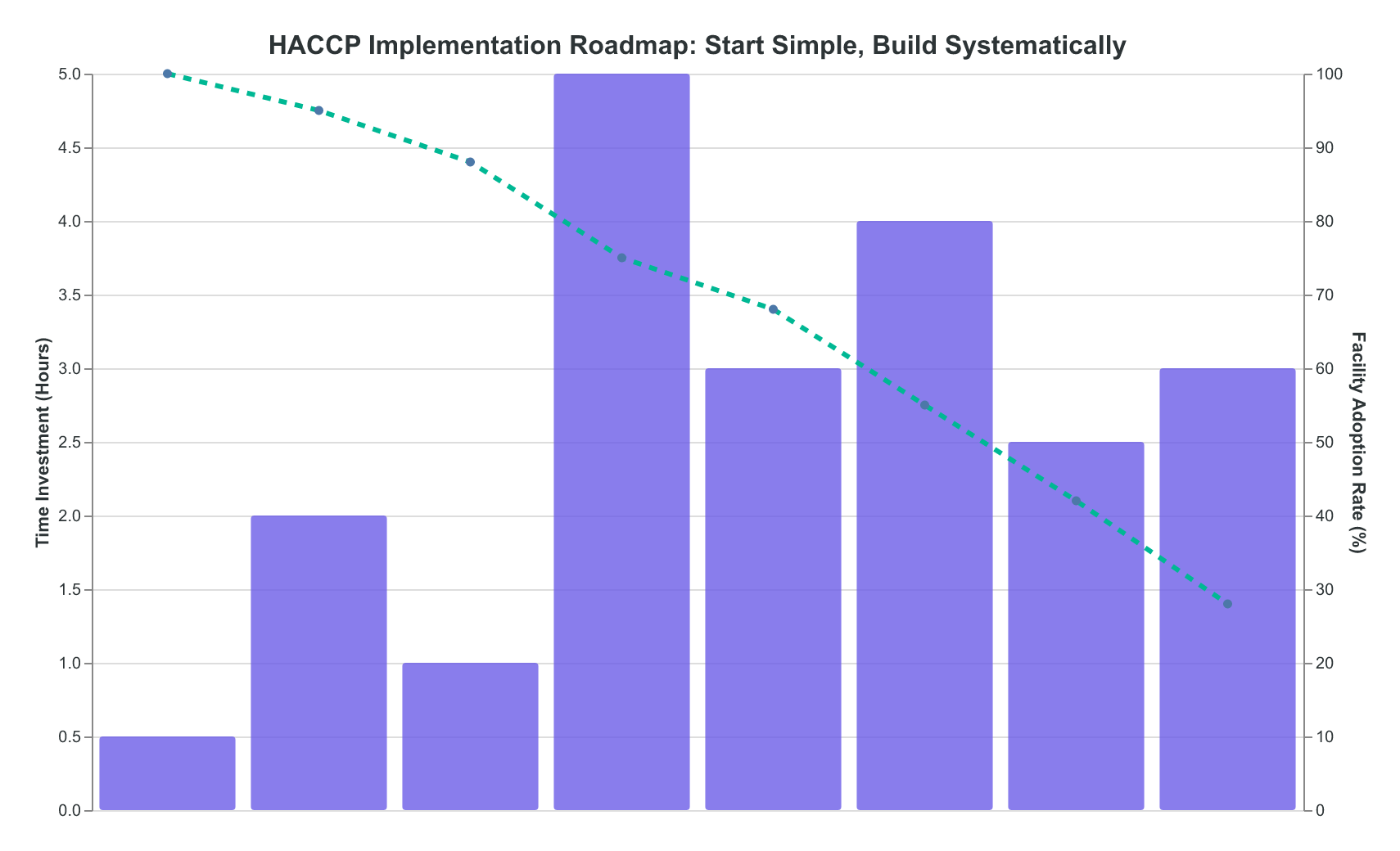
Step 1: Check Your Legal Requirements (Time: 30 minutes)
Call your local health department and ask directly: “Do restaurants in my category need a formal HACCP plan?” Don’t rely on generic online guides—requirements vary dramatically by city and state. While you’re on the phone, ask what they look for during inspections. This 10-minute conversation will save you hours of research.
Step 2: Audit What You Already Do (Time: 2 hours)
Most restaurants already follow HACCP principles without knowing it. Walk through your kitchen and document your current practices:
- How do you check food temperatures?
- What’s your cleaning schedule?
- How do you handle deliveries?
- Where do you record anything?
You’re not starting from zero. You’re organizing what works and identifying gaps.
Step 3: Choose Your Documentation Level (Time: 1 hour to decide)
You have three realistic options:
- FDA Templates (Free): Download the FDA’s HACCP templates and fill them out yourself. Good for simple operations with standard processes.
- Food Safety Consultant ($2,000-$5,000): Worth it if you have complex operations, multiple locations, or major liability concerns.
- Hybrid Approach ($500-$1,000): Use a food safety software platform that guides you through HACCP creation.
Don’t overthink this choice. A simple plan that gets used beats a perfect plan that sits in a drawer.
Step 4: Start with Your Riskiest Process (Time: 4-6 hours)
Identify your highest-risk food handling step—usually cooking temperatures for meat, seafood holding, or cold storage. Build your HACCP documentation around that single process first. Get it working, train your staff, use it for two weeks. Then add the next process.
The goal isn’t a comprehensive system on day one. It’s building a habit of systematic food safety that you can expand over time.
Warning: Don’t Over-Engineer
The biggest HACCP mistake is creating a system so complex that nobody follows it. Your team needs to understand and execute your plan during a busy dinner rush. If your plan requires a food science degree to follow, simplify it. Health inspectors want to see consistent execution, not academic perfection.
Start simple. Build the habit. Add complexity only when the basics are rock-solid.
HACCP and the Prevention-First Approach to Restaurant Compliance
The same systematic thinking that makes HACCP effective applies to every aspect of restaurant compliance. The businesses that thrive are those that approach compliance systematically—they don’t discover permit requirements during final inspections or scramble to meet health department standards.
Whether you’re developing your HACCP Plan, applying for your Food Service Establishment License, or ensuring your Food Protection Manager Certification stays current, the principle remains the same: prevention beats reaction.
This prevention-first approach transforms how restaurant owners think about compliance. Instead of viewing requirements as obstacles to opening, you see them as operational systems that protect your business and customers. Instead of hoping you’re meeting standards, you systematically document compliance.
The HACCP framework demonstrates this systematic approach perfectly. You identify risks before they become problems, establish controls before violations occur, and document systems before inspectors ask. This same methodology applies whether you’re managing food safety, worker safety, fire safety, or building compliance.
Smart restaurant owners recognize that compliance systems like HACCP aren’t overhead—they’re operational intelligence that makes businesses run better while reducing risk. The documentation, monitoring, and verification procedures that satisfy health inspectors also improve staff training, operational consistency, and management oversight.
Your Top HACCP Questions Answered
After reviewing HACCP requirements across multiple jurisdictions, these five questions come up most frequently from restaurant owners:
Do small restaurants need HACCP plans? It depends on your jurisdiction and menu complexity. While federal HACCP requirements typically apply to meat, poultry, and seafood processors, many states and cities have their own rules. Restaurants serving high-risk foods (raw fish, sous vide preparations) often need formal plans regardless of size. When obtaining your Food Service Establishment License, ask about local HACCP requirements.
How long does creating a HACCP plan take? Expect 20-40 hours for initial development, depending on your menu complexity and operation size. Monthly maintenance typically requires 2-4 hours for monitoring record reviews and plan updates. The time investment pays off during health inspections and demonstrates your commitment to food safety.
Can I use a HACCP template? Yes, but customize it thoroughly for your specific operation. Generic templates miss critical control points unique to your recipes, equipment, and processes. A template gets you started, but your plan must reflect your actual food handling procedures to be effective.
What happens if I don’t have a required HACCP plan? Violations can result in immediate closure, hefty fines, and mandatory remediation before reopening. The severity depends on your jurisdiction’s enforcement approach, but it’s not worth the risk. Even when not legally required, having a plan shows health inspectors your proactive approach to food safety.
How often should I update my HACCP plan? Update immediately when you change menu items, cooking methods, or equipment. Conduct formal reviews annually minimum, or more frequently if you’ve had food safety incidents. Keep documentation current—outdated plans can actually work against you during inspections.
Six months after our conversation, Maria’s café passed its health inspection with flying colors. The inspector spent fifteen minutes reviewing her HACCP plan instead of two hours hunting for problems. “I can see you take food safety seriously,” he noted, checking off boxes with confidence rather than concern.
Maria’s HACCP plan isn’t perfect—it’s a living document that evolves with her operations. But it transformed her relationship with food safety from reactive scrambling to proactive prevention. When the inspector asked about her cooling procedures for soups, she didn’t panic. She opened her plan, showed the documented process, and pointed to the temperature logs.
Whether your jurisdiction requires HACCP or not, the framework works the same way: identify your risks, control them systematically, and document everything. Your Food Service Establishment License gets you in the door, but your HACCP plan keeps you operating with confidence.
The question isn’t whether you need a HACCP plan—it’s whether you’re ready to stop hoping your food safety practices are good enough and start knowing they are.
Start with your highest-risk process tomorrow. Your next inspection will thank you.
Be Ready When They Knock.
Check your city’s compliance requirements — free. Enter your city and restaurant type to see what permits, licenses, and documentation you need before opening.
This article is part of the ApronPrep Compliance Intelligence Library. Data sourced from 150 cities across 50 states. Last verified: July 2026.